Геометрия записи
Шаг, ширина, ролик/втулка, штифт, пластина, общая ширина и схема крепления.
Техническое руководство сети пекарен
Conveyor Chain Attachment Spacing Guide is best answered by combining measured chain geometry, machine duty and the operating environment. This guide shows what to inspect, record and discuss before a replacement or new-chain decision.
Conveyor Chain Attachment Spacing Guide should be evaluated from the actual conveyor. Start with chain pitch, transverse geometry, sprocket condition and any carrier attachment, then add temperature, moisture, washdown, load, speed and take-up information. The objective is not to identify a chain by appearance; it is to produce an RFQ that preserves the machine interface and makes application-dependent choices explicit.
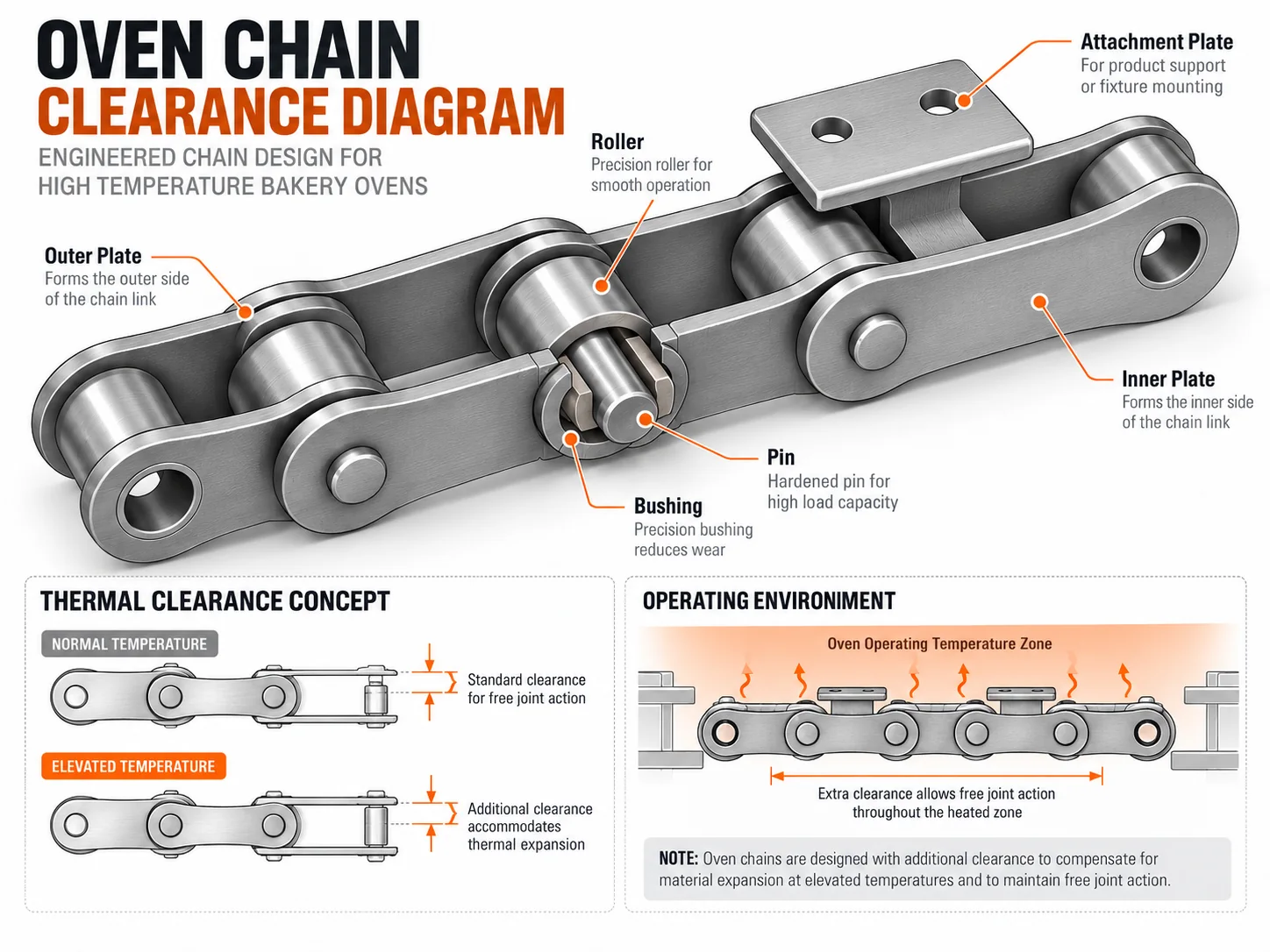
Перед снятием цепи измерьте несколько параметров. Шаг цепи определяет основное передаточное отношение, но внутренняя ширина, диаметр ролика или втулки, диаметр штифта, высота пластины, общая ширина и габаритные размеры крепления позволяют различать конфигурации, которые могут иметь одинаковый номинальный шаг цепи.
Для изношенной цепи измерьте суммарный шаг звеньев на нескольких участках. Сфотографируйте цепь сбоку и с торца, по возможности включив в кадр звездочку.

The same chain geometry can behave differently in a humid proofer, a hot oven, an ambient cooling section or a washdown area. For conveyor chain attachment spacing guide, document the exact machine zone, whether the chain carries product directly or moves pans/fixtures, and whether the joint sees heat, moisture, cleaning chemicals or abrasive residue.
Данные о процессе помогают определить, какие характеристики являются фиксированными благодаря взаимозаменяемости, а какие характеристики — такие как материал, зазор или способ изготовления крепления — следует учитывать применительно к конкретному применению.
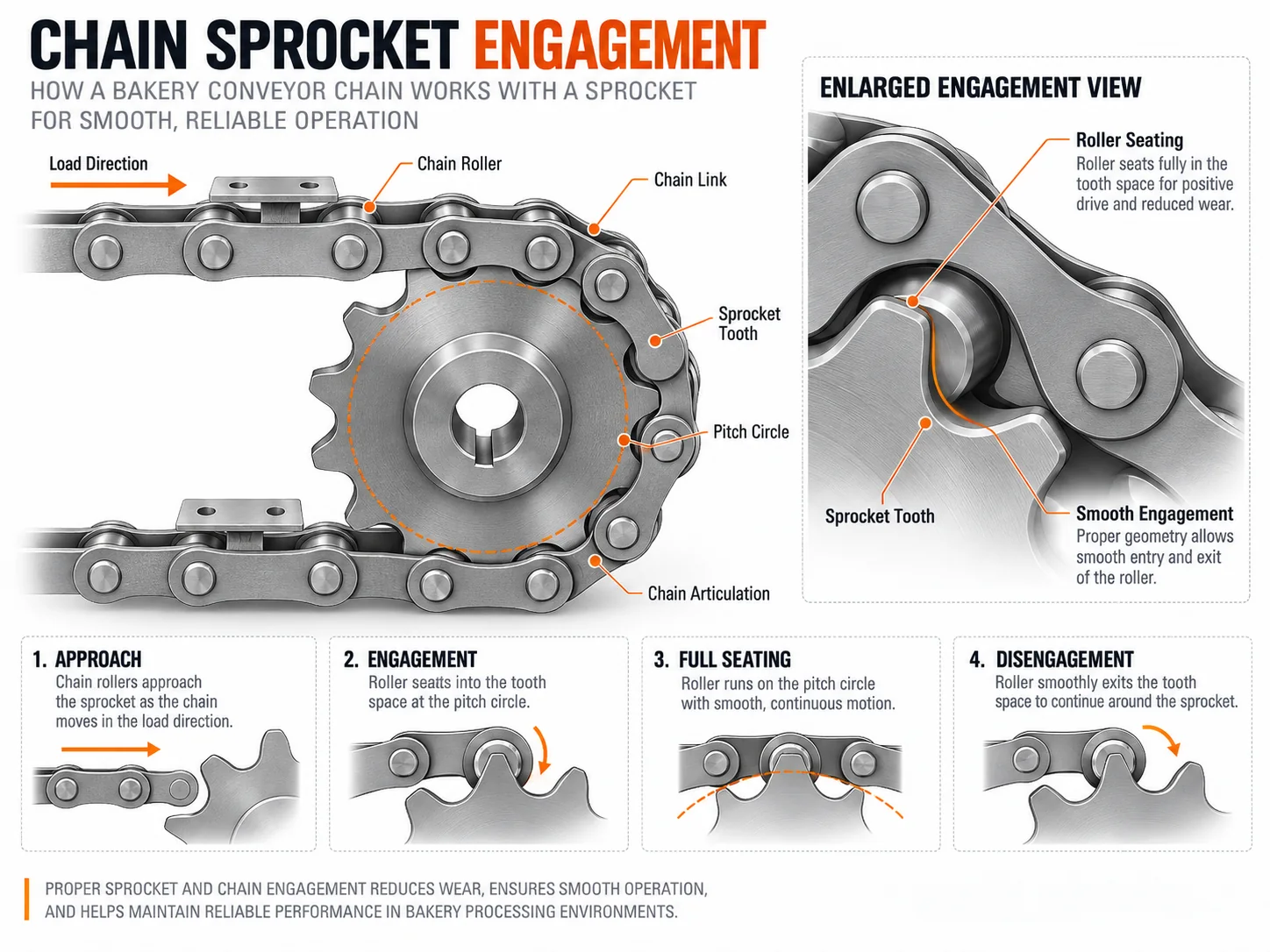
Цепь не работает автономно. Ролики или втулки должны плавно входить и выходить из промежутков между зубьями звездочки, а направляющие дорожки поддерживают цепь, не смещая ее вбок. Загнутые зубья, смещение вала, эксцентриковые звездочки или тугая направляющая могут привести к быстрому износу новой цепи.
Проверьте весь путь цепи по одному полному контуру. Если повреждение повторяется в том же месте, где находится машина, проверьте местную службу поддержки, перевалочного пункта или перевозчика, прежде чем предполагать, что сама цепь неисправна.
Шаг, ширина, ролик/втулка, штифт, пластина, общая ширина и схема крепления.
Температура, влажность, промывка, скорость, загрузка, часы и запуски производства.
Звездочки, направляющие, центры цепей, натяжение, выравнивание и зазоры в несущей конструкции.
Перед установкой необходимо утвердить окончательную заказанную геометрию, материал и конфигурацию, зависящую от конкретного применения.
Спросите, что изменилось до появления проблемы: производительность, вес продукта или лотка, цикл очистки, смазочный материал, температура, интервал технического обслуживания или замененные звездочки. Информация о тенденциях более ценна, чем отдельная фотография, поскольку она показывает, равномерный ли износ или концентрированный.
В ходе планового осмотра обращайте внимание на заедание соединений, износ роликов, подвижность штифтов, трещины или изгибы креплений, ненормальный боковой контакт и неравномерный натяж. Обеспечьте соблюдение защитных ограждений и правил техники безопасности в соответствии с требованиями владельца оборудования.
Укажите измеренные размеры, название станка/процесса, фотографии, чертеж (если имеется), количество или требуемую длину цепи, интервал между креплениями, расстояние между центрами цепей, информацию о звездочке, температуру, условия промывки, нагрузку и целевой диапазон подачи. Просмотрите руководство по выбору сети пекарен и обзор семейства продуктов для следующего этапа принятия решения.
A useful diagnosis starts with evidence that can be repeated by a second person. relating attachment interval to chain pitch, machine index and carrier timing. Record chain pitch, attachment repeat, carrier length, sprocket index and parallel-strand synchronization. When the chain is worn, note which readings may be influenced by joint clearance or deformation, and prefer multi-pitch or multi-point measurements over one isolated dimension.
The chain does not operate by itself. In indexed pan, tray and product-carrier conveyors, inspect the sprockets, guides, return path, take-up and carrier interface at the same time. The symptom to watch is cyclic overload or mistimed carriers from an interval that is one pitch off. A local problem that repeats at one machine position often points to alignment, clearance or mating-hardware issues rather than a uniform chain problem.
The practical decision is to measure several repeated intervals and verify them against the machine sequence. That prevents a common error: changing chain tension, material or size before the root constraint has been identified. Use the chain drawing and the machine envelope together, because a configuration that looks correct in isolation can still interfere with a guard, transfer plate, sensor bracket or carrier.
Опишите рабочий цикл, а не используйте одно прилагательное, например, «горячий», «влажный» или «пищевой». Укажите нормальную и пиковую температуру (где это применимо), влажность или воздействие при очистке, скорость, режим запуска/остановки и ограничения по смазке. Эти детали определяют, нужно ли изменять зазоры, материалы или методы технического обслуживания, при этом основная геометрия остается неизменной.
| Проверять | Почему это важно | Что отправить или подтвердить |
|---|---|---|
| Идентификация | Confirm chain pitch, attachment repeat, carrier length, sprocket index and parallel-strand synchronization. Use a measurement sequence that can be repeated after removal so the installed and bench readings can be compared. | Эскиз с указанием размеров, фотографии с учетом масштаба и любые старые чертежи или номера деталей. |
| Положение по маршруту | Map where the chain runs through indexed pan, tray and product-carrier conveyors. Mark the exact location of cyclic overload or mistimed carriers from an interval that is one pitch off instead of reporting the condition only as a whole-line problem. | На фотографии, иллюстрирующей секцию конвейера, положение привода/хвостовика и обратный путь, показано расположение конвейера. |
| Сопрягаемые детали | Проверьте профиль зубьев, посадку роликов, соосность вала и звездочки, контакт направляющих и запас хода. Эти детали могут создавать следы износа, имитирующие проблему выбора цепи. | Количество зубьев звездочки и фотографии, схема направляющей и текущее положение натяжения. |
| Загрузить путь | Identify how product carriers, pans, rods or fixtures transfer load into the chain. For this topic, the key focus is relating attachment interval to chain pitch, machine index and carrier timing. | Чертеж несущей конструкции, интервал крепления, расстояние между центрами цепей и поддерживаемая масса/сила (если известны). |
| Среда | Регистрируйте ограничения по температуре, влажности, промывке, загрязнению и смазке для каждой зоны оборудования. Разделяйте периоды непрерывного воздействия от кратковременных пиков или периодов очистки. | Сводная информация о состоянии оборудования и правила технического обслуживания/смазки. |
| Выпускать | The final engineering action is to measure several repeated intervals and verify them against the machine sequence. The approved drawing should distinguish fixed interchange dimensions from selectable options. | repeated-spacing measurement, carrier drawing, sprocket data and line speed. |
A uniform change along the whole strand suggests a different mechanism from damage concentrated at one sprocket, guide or transfer. For Conveyor Chain Attachment Spacing Guide, compare left/right sides and loaded/return paths. The distribution of wear can reveal whether the driver is joint wear, side loading, contamination, thermal change or a carrier that is forcing the chain out of its natural path.
Increasing tension can temporarily change noise or tracking without correcting the underlying cause. If the observed issue is cyclic overload or mistimed carriers from an interval that is one pitch off, first confirm alignment, take-up geometry and articulation. Excessive tension can add bearing load and make a marginal guide or attachment problem worse.
Оборудование для хлебопекарного производства может переходить между режимами производства, очистки и остановки. Цепь может нормально вращаться в холодном состоянии и натягиваться при нагревании, или свободно вращаться во время производства, но подвергаться коррозии после многократных остановок из-за влаги. Зафиксируйте состояние, в котором возникает симптом, чтобы выбранное корректирующее действие соответствовало реальному рабочему циклу.
For an unknown chain, one close-up is not enough. Pair a complete machine-zone image with side and end views of several pitches, a sprocket-engagement photo and a clear attachment/carrier view. Place a scale only where it does not hide the feature being measured. This photo set makes relating attachment interval to chain pitch, machine index and carrier timing easier to evaluate remotely.
Record chain pitch, attachment repeat, carrier length, sprocket index and parallel-strand synchronization, chain centers, sprocket tooth count and the carrier interface before changing components.
Describe what happens in indexed pan, tray and product-carrier conveyors, including temperature or moisture changes, speed, load and cleaning/lubrication constraints.
Document where cyclic overload or mistimed carriers from an interval that is one pitch off appears. Compare drive, tail, loaded run, return run and transfer points rather than averaging the entire conveyor.
Include repeated-spacing measurement, carrier drawing, sprocket data and line speed. State the required quantity or chain length and any documentation needed with the order.
Review pitch, widths, pin/roller geometry, attachments and material notes on one controlled drawing revision. For Conveyor Chain Attachment Spacing Guide, the release decision should explicitly address relating attachment interval to chain pitch, machine index and carrier timing.
После установки проверьте как минимум один полный цикл работы цепи, убедитесь в правильности входа/выхода звездочки и зазоре в держателе цепи, а также повторно проверьте натяжение цепи в соответствии с инструкцией производителя станка. Не следует использовать новую цепь для компенсации износа или смещения крепежных элементов.
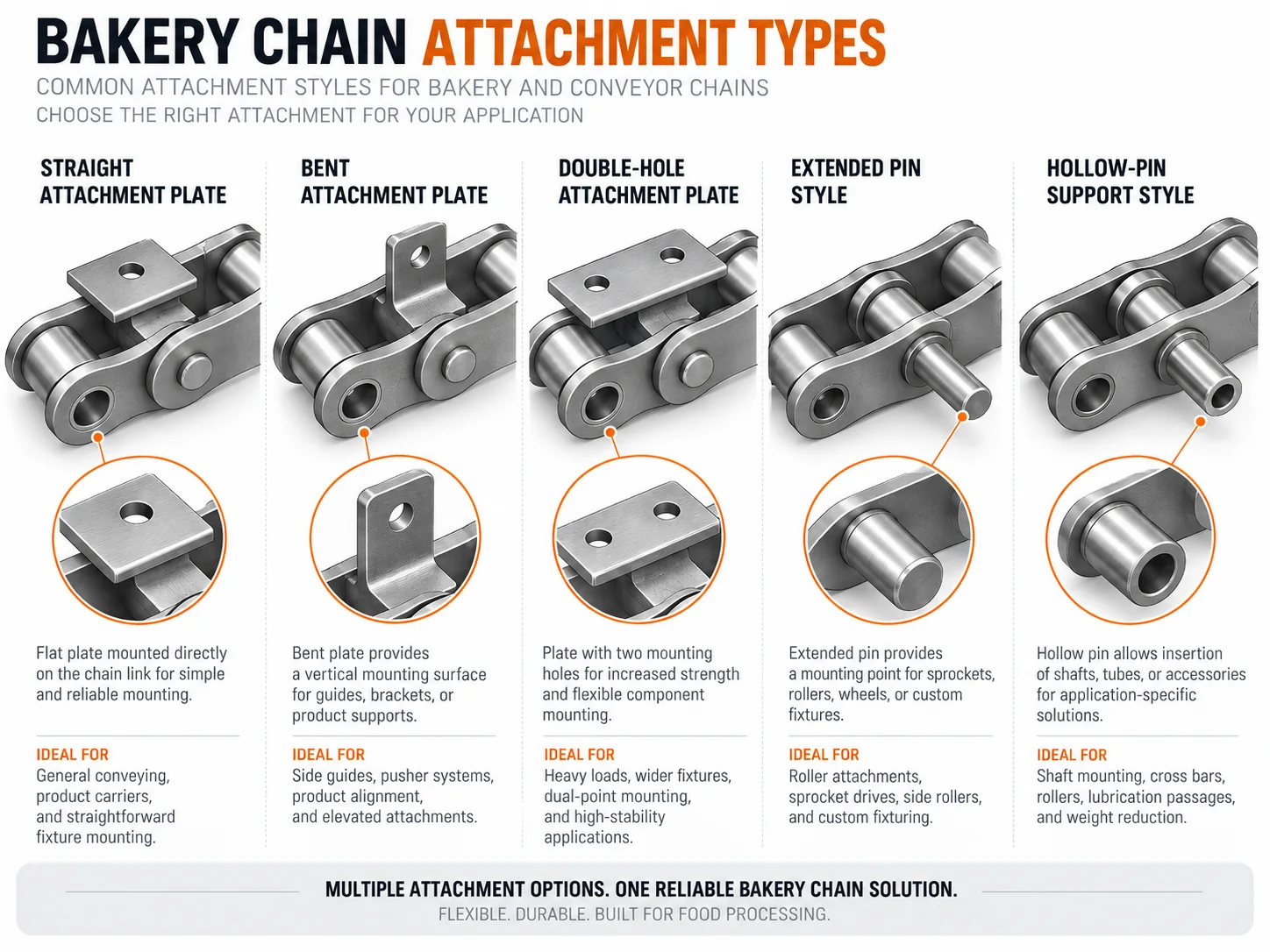
The main reason to keep this process structured is that relating attachment interval to chain pitch, machine index and carrier timing interacts with more than one component. A change that improves one symptom can shift load into another part of the mechanism. For example, correcting guide alignment may reduce side wear but also expose a take-up setting that was previously compensating for the misalignment. Record changes one at a time so the result can be interpreted.
For planned maintenance, compare the present condition with a baseline whenever one exists. If there is no baseline, create one during the next shutdown: photograph the sprockets and guide surfaces, record take-up position, measure a defined number of pitches, and note the chain’s location in indexed pan, tray and product-carrier conveyors. Repeating the same observations later is more informative than relying on general statements such as “the chain has stretched.”
Если имеется готовый чертеж, убедитесь, что установленное оборудование по-прежнему соответствует ему. Хлебопекарное оборудование часто модифицируется в течение срока службы: могут ремонтироваться направляющие, перемещаться рельсы, заменяться звездочки и изменяться интервалы установки оборудования. Чертеж остается полезным, но проверка на месте эксплуатации не позволяет рассматривать исторический документ как доказательство текущей конфигурации.
Procurement and engineering should use the same evidence package. The RFQ should not separate commercial quantity from technical context: repeated-spacing measurement, carrier drawing, sprocket data and line speed. This makes it possible to judge whether a standard series, a modified attachment or a custom replacement is the appropriate route without creating unnecessary back-and-forth.
Finally, treat the website as a preparation tool rather than the controlling product drawing. Measurements and diagrams narrow the family and help organize the RFQ; the released drawing defines the ordered configuration. That distinction is especially important where cyclic overload or mistimed carriers from an interval that is one pitch off could have more than one mechanical cause.
Use Conveyor Chain Attachment Spacing Guide as a machine-level question, not just a chain inspection. Compare the loaded and return runs, drive and tail ends, and any transfer or carrier transition in indexed pan, tray and product-carrier conveyors. Document whether cyclic overload or mistimed carriers from an interval that is one pitch off is distributed along the strand or repeats at one location. That pattern helps separate progressive joint wear from alignment, guide, sprocket or carrier problems that a new chain alone will not correct.
The working record should include chain pitch, attachment repeat, carrier length, sprocket index and parallel-strand synchronization. Mark which values are fixed by the existing machine and which values can be changed to improve service. The central engineering focus is relating attachment interval to chain pitch, machine index and carrier timing. When a legacy part number conflicts with field measurements, hold the RFQ until the installed interface and the controlled drawing can be reconciled.
A useful enquiry combines commercial quantity with the technical package: repeated-spacing measurement, carrier drawing, sprocket data and line speed. Also state whether the request is a direct replacement, a planned modification or a new machine design. The release objective is to measure several repeated intervals and verify them against the machine sequence. This reduces quote revisions and prevents a visually similar chain from being treated as interchangeable before geometry and duty have been checked.
Если имеется, используйте старый артикул, но проверьте установленную геометрию и режим работы. Модификации оборудования, предыдущие замены или износ могут сделать номер детали неполным.
Используйте многошаговое измерение на практическом количестве звеньев и запишите метод. Сравните его с номинальным шагом и пределами технического обслуживания машины, а не полагайтесь на измерение на одном соседнем звене.
При износе зубьев, зацеплении, проблемах с выравниванием или повторяющемся преждевременном износе цепи, цепь и звездочка работают как система зацепления.