Spela in geometri
Stigning, bredd, rulle/bussning, stift, platta, totalbredd och infästningsmönster.
Teknisk guide för bagerikedjor
Conveyor Chain Attachment Spacing Guide is best answered by combining measured chain geometry, machine duty and the operating environment. This guide shows what to inspect, record and discuss before a replacement or new-chain decision.
Conveyor Chain Attachment Spacing Guide should be evaluated from the actual conveyor. Start with chain pitch, transverse geometry, sprocket condition and any carrier attachment, then add temperature, moisture, washdown, load, speed and take-up information. The objective is not to identify a chain by appearance; it is to produce an RFQ that preserves the machine interface and makes application-dependent choices explicit.
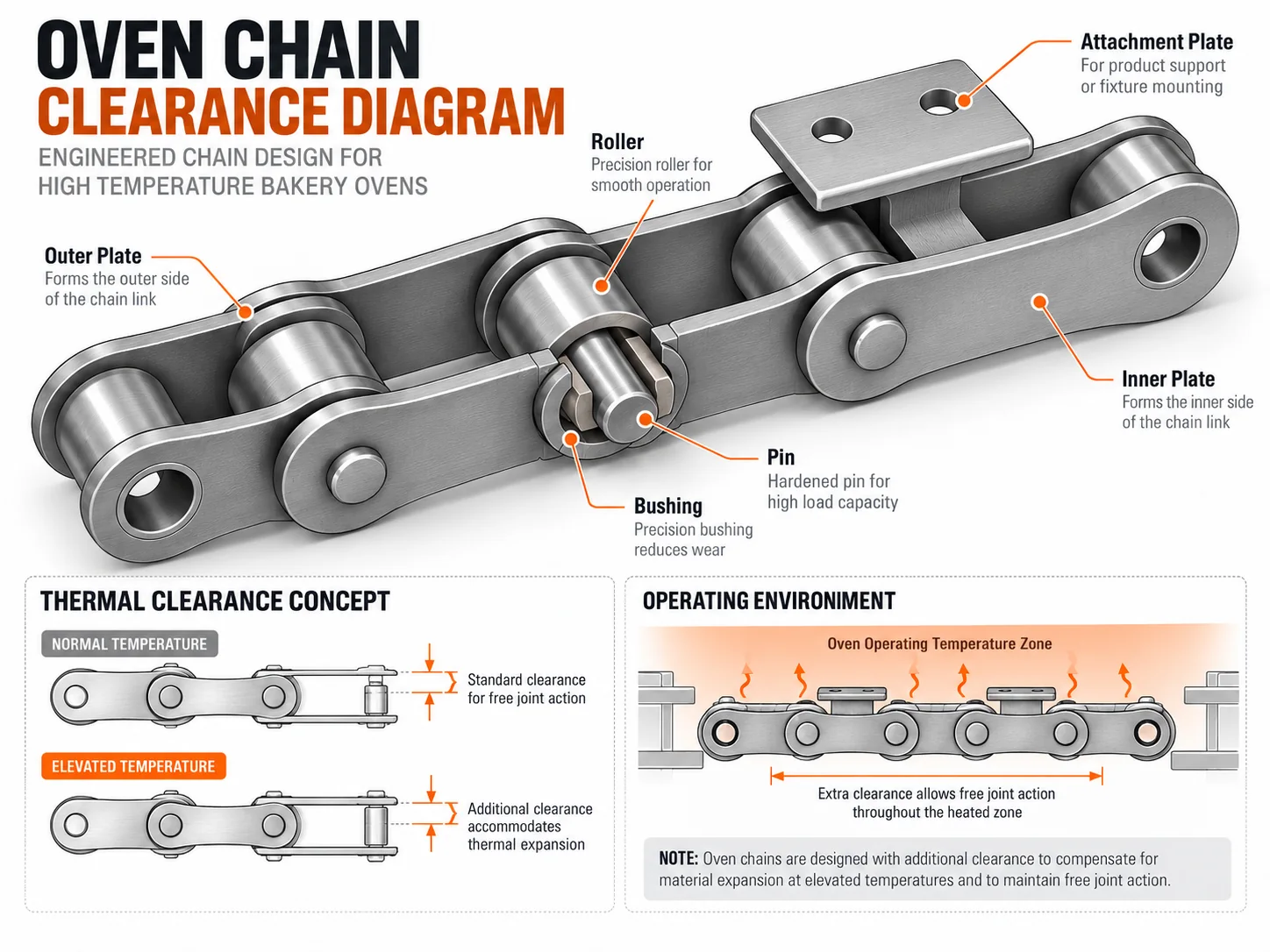
Mät flera egenskaper innan du tar bort kedjan. Stigningen anger det grundläggande kugghjulsförhållandet, men innerbredd, rulle- eller bussningsdiameter, stiftdiameter, platthöjd, totalbredd och infästningsmått skiljer konfigurationer som kan dela samma nominella stigning.
För en sliten tråd, mät den kumulativa stigning över flera länkar. Fotografera kedjan från sidan och änden, och inkludera även kedjehjulet där det är praktiskt möjligt.
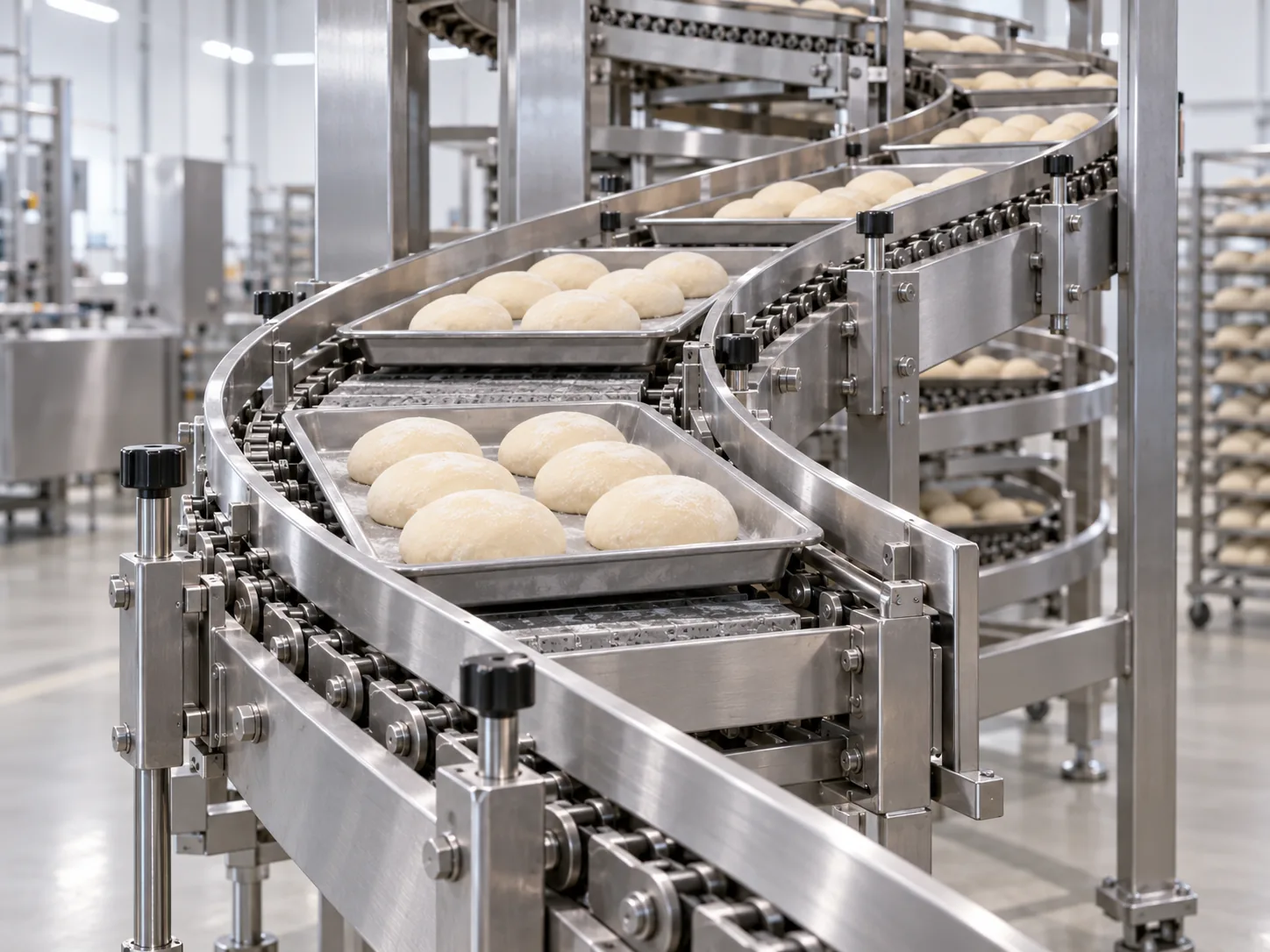
The same chain geometry can behave differently in a humid proofer, a hot oven, an ambient cooling section or a washdown area. For conveyor chain attachment spacing guide, document the exact machine zone, whether the chain carries product directly or moves pans/fixtures, and whether the joint sees heat, moisture, cleaning chemicals or abrasive residue.
Processdata hjälper till att avgöra vilka egenskaper som är fixerade genom utbytbarhet och vilka egenskaper – såsom material, spelrum eller tillverkningsmetod för infästning – som bör granskas för applikationen.
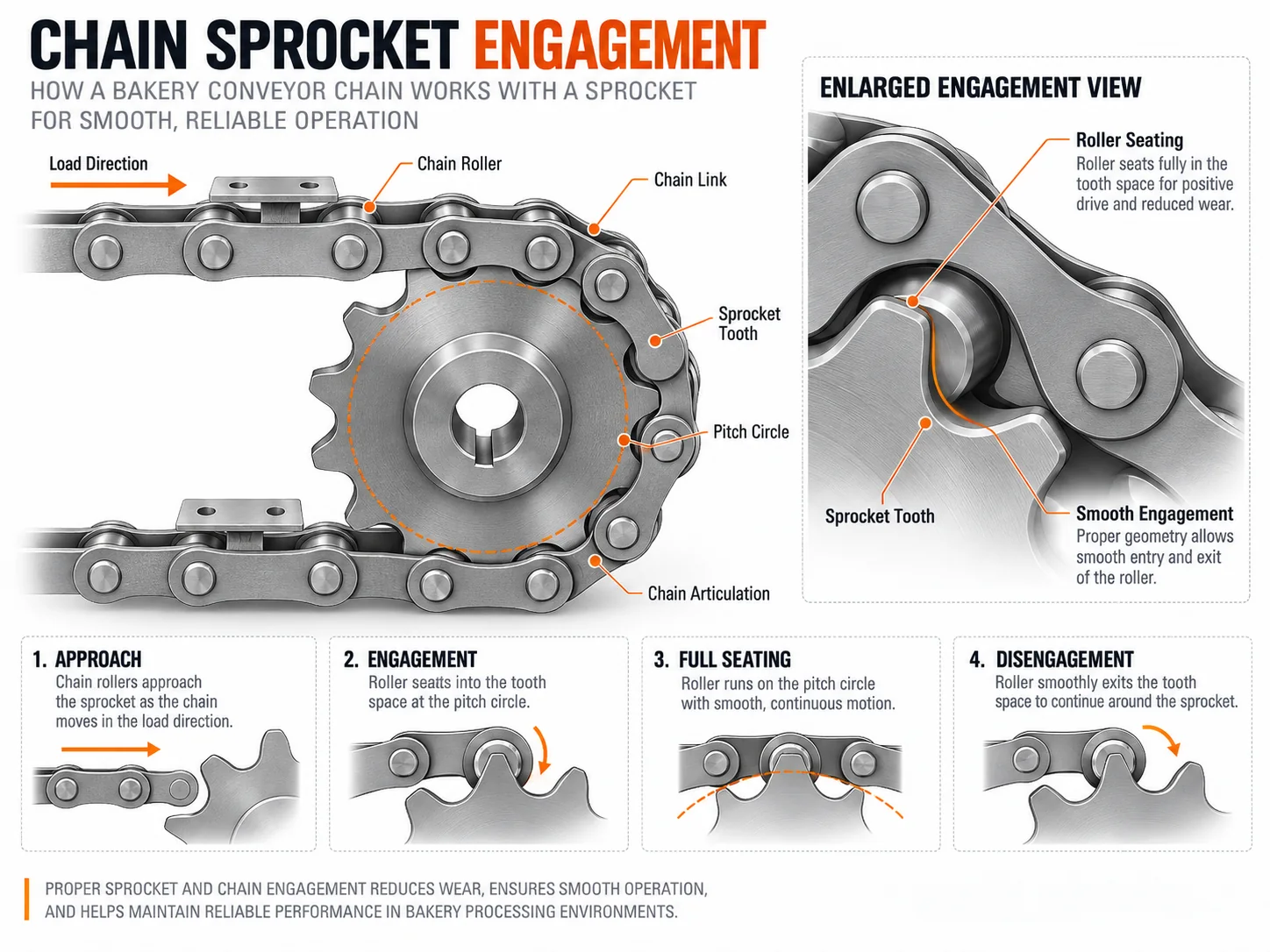
En kedja fungerar inte oberoende. Rullar eller bussningar måste gå in i och ut ur kedjehjulets kuggutrymmen smidigt, medan styrspår stöder kedjan utan att tvinga den i sidled. Krokiga tänder, felställd axel, excentriska kedjehjul eller en snäv styrning kan göra att en ny kedja slits ut snabbt.
Inspektera hela vägen genom en hel krets. Om skadan upprepas på samma maskinplats, undersök det lokala stödet, överföringen eller transportören innan du antar att själva kedjan är defekt.
Stigning, bredd, rulle/bussning, stift, platta, totalbredd och infästningsmönster.
Temperatur, fuktighet, avspolning, hastighet, belastning, produktionstimmar och starter.
Kedjehjul, styrningar, kedjecentrum, upptagning, inriktning och gläns mellan hjulen.
Godkänn den slutgiltiga beställda geometrin, materialet och den applikationsberoende konfigurationen före installation.
Fråga vad som förändrades innan problemet uppstod: produktionshastighet, produkt- eller trågvikt, rengöringscykel, smörjmedel, temperatur, underhållsintervall eller utbytta kedjehjul. Trendinformation är mer värdefull än ett enda fotografi eftersom den visar om slitaget är jämnt eller koncentrerat.
Under rutininspektionen, leta efter stela leder, rullslitage, bultrörelser, spruckna eller böjda infästningar, onormal sidokontakt och ojämn upptagning. Se till att skydd och säkerhetsrutiner är på plats enligt maskinägarens krav.
Inkludera de uppmätta måtten, maskin-/processnamn, foton, ritning om tillgänglig, kvantitet eller erforderlig kedjelängd, fästintervall, kedjecentrumavstånd, information om kedjehjul, temperatur, avspolningsförhållanden, last och målleveransfönster. Granska guide till val av bagerikedjor och den översikt över produktfamiljen för nästa beslutssteg.
A useful diagnosis starts with evidence that can be repeated by a second person. relating attachment interval to chain pitch, machine index and carrier timing. Record chain pitch, attachment repeat, carrier length, sprocket index and parallel-strand synchronization. When the chain is worn, note which readings may be influenced by joint clearance or deformation, and prefer multi-pitch or multi-point measurements over one isolated dimension.
The chain does not operate by itself. In indexed pan, tray and product-carrier conveyors, inspect the sprockets, guides, return path, take-up and carrier interface at the same time. The symptom to watch is cyclic overload or mistimed carriers from an interval that is one pitch off. A local problem that repeats at one machine position often points to alignment, clearance or mating-hardware issues rather than a uniform chain problem.
The practical decision is to measure several repeated intervals and verify them against the machine sequence. That prevents a common error: changing chain tension, material or size before the root constraint has been identified. Use the chain drawing and the machine envelope together, because a configuration that looks correct in isolation can still interfere with a guard, transfer plate, sensor bracket or carrier.
Beskriv driftscykeln snarare än ett enskilt adjektiv som "varm", "våt" eller "livsmedelskvalitet". Ange normal och maximal temperatur där det är relevant, fukt- eller rengöringsexponering, hastighet, start/stopp-beteende och smörjbegränsningar. Dessa detaljer avgör om utrymmen, material eller underhållsrutiner behöver ändras medan den grundläggande geometrin förblir oförändrad.
| Kontrollera | Varför det spelar roll | Vad som ska skickas eller verifieras |
|---|---|---|
| Identifiering | Confirm chain pitch, attachment repeat, carrier length, sprocket index and parallel-strand synchronization. Use a measurement sequence that can be repeated after removal so the installed and bench readings can be compared. | Måttskisser, skalmedvetna foton och eventuella äldre ritningar eller artikelnummer. |
| Ruttposition | Map where the chain runs through indexed pan, tray and product-carrier conveyors. Mark the exact location of cyclic overload or mistimed carriers from an interval that is one pitch off instead of reporting the condition only as a whole-line problem. | Kontextfoto som visar transportbandssektionen, driv-/ändpositioner och returväg. |
| Passande delar | Inspektera kuggprofil, rullläge, axel-/drevuppriktning, styrkontakt och upptagningsreserv. Dessa delar kan skapa slitagemönster som imiterar ett kedjevalsproblem. | Antal kuggar och foton på kedjehjul, guidelayout och aktuell upptagningsposition. |
| Ladda sökväg | Identify how product carriers, pans, rods or fixtures transfer load into the chain. For this topic, the key focus is relating attachment interval to chain pitch, machine index and carrier timing. | Bärarritning, infästningsintervall, kedjans centrumavstånd och stödd massa/kraft där sådan är känd. |
| Miljö | Registrera temperatur, luftfuktighet, avspolning, kontaminering och smörjrestriktioner per maskinzon. Separera kontinuerlig exponering från korta toppar eller rengöringstillfällen. | Sammanfattning av driftsförhållanden och underhålls-/smörjningsrutiner. |
| Släppa | The final engineering action is to measure several repeated intervals and verify them against the machine sequence. The approved drawing should distinguish fixed interchange dimensions from selectable options. | repeated-spacing measurement, carrier drawing, sprocket data and line speed. |
A uniform change along the whole strand suggests a different mechanism from damage concentrated at one sprocket, guide or transfer. For Conveyor Chain Attachment Spacing Guide, compare left/right sides and loaded/return paths. The distribution of wear can reveal whether the driver is joint wear, side loading, contamination, thermal change or a carrier that is forcing the chain out of its natural path.
Increasing tension can temporarily change noise or tracking without correcting the underlying cause. If the observed issue is cyclic overload or mistimed carriers from an interval that is one pitch off, first confirm alignment, take-up geometry and articulation. Excessive tension can add bearing load and make a marginal guide or attachment problem worse.
Bageriutrustning kan röra sig mellan produktions-, rengörings- och avstängningstillstånd. En kedja kan ledas normalt när den svalnar och bli spänd när den värms upp, eller löpa fritt under produktion men korrodera efter upprepade våta avstängningar. Registrera det tillstånd där symptomet uppstår så att den valda korrigerande åtgärden riktar sig mot den verkliga arbetscykeln.
For an unknown chain, one close-up is not enough. Pair a complete machine-zone image with side and end views of several pitches, a sprocket-engagement photo and a clear attachment/carrier view. Place a scale only where it does not hide the feature being measured. This photo set makes relating attachment interval to chain pitch, machine index and carrier timing easier to evaluate remotely.
Record chain pitch, attachment repeat, carrier length, sprocket index and parallel-strand synchronization, chain centers, sprocket tooth count and the carrier interface before changing components.
Describe what happens in indexed pan, tray and product-carrier conveyors, including temperature or moisture changes, speed, load and cleaning/lubrication constraints.
Document where cyclic overload or mistimed carriers from an interval that is one pitch off appears. Compare drive, tail, loaded run, return run and transfer points rather than averaging the entire conveyor.
Include repeated-spacing measurement, carrier drawing, sprocket data and line speed. State the required quantity or chain length and any documentation needed with the order.
Review pitch, widths, pin/roller geometry, attachments and material notes on one controlled drawing revision. For Conveyor Chain Attachment Spacing Guide, the release decision should explicitly address relating attachment interval to chain pitch, machine index and carrier timing.
Efter installationen, observera minst en full krets, kontrollera kedjehjulets in-/utlopp och kedjans spelrum, och kontrollera upptagningen igen enligt maskintillverkarens procedur. Ny kedja bör inte användas för att kompensera för sliten eller feljusterad hårdvara.
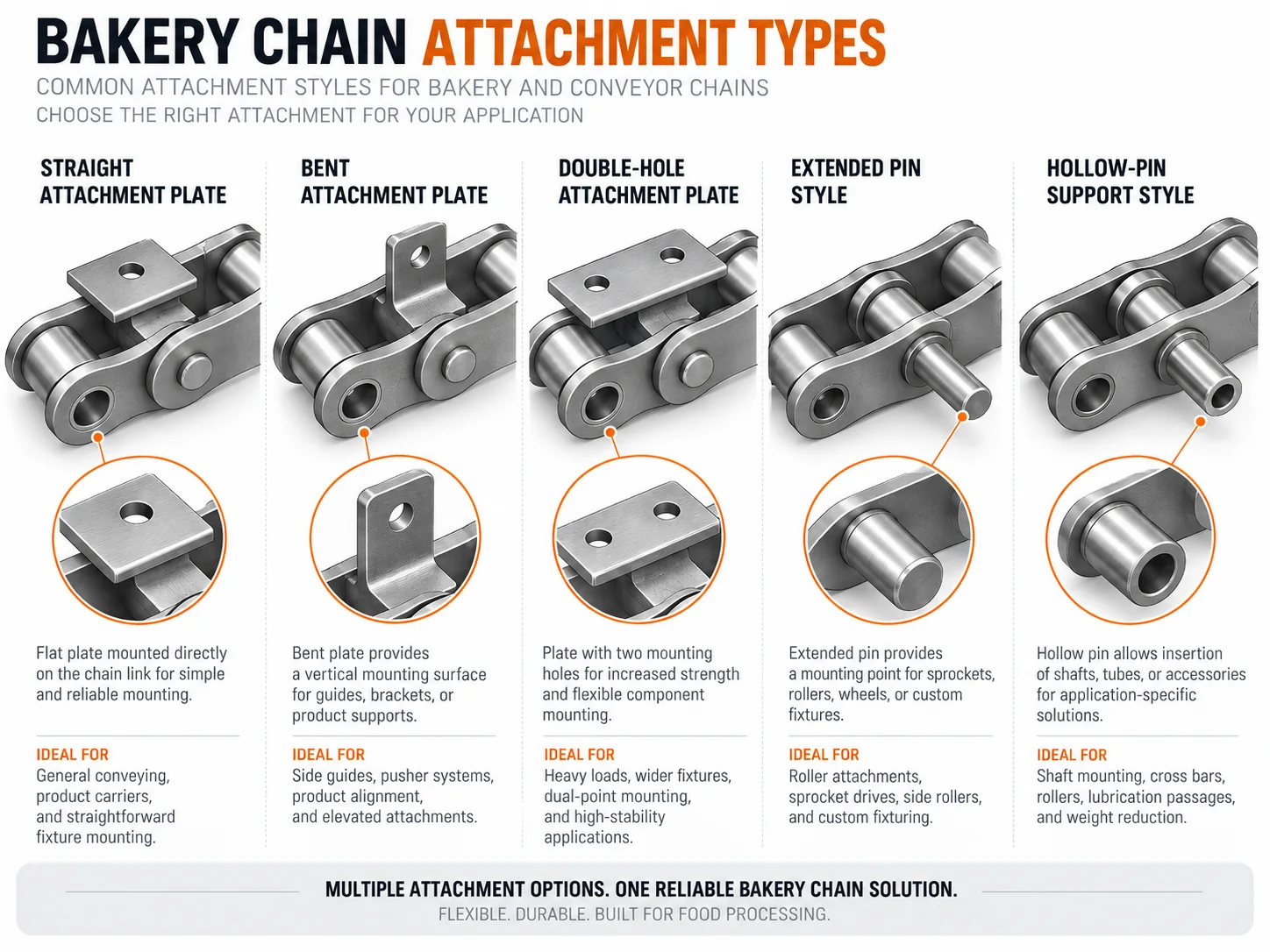
The main reason to keep this process structured is that relating attachment interval to chain pitch, machine index and carrier timing interacts with more than one component. A change that improves one symptom can shift load into another part of the mechanism. For example, correcting guide alignment may reduce side wear but also expose a take-up setting that was previously compensating for the misalignment. Record changes one at a time so the result can be interpreted.
For planned maintenance, compare the present condition with a baseline whenever one exists. If there is no baseline, create one during the next shutdown: photograph the sprockets and guide surfaces, record take-up position, measure a defined number of pitches, and note the chain’s location in indexed pan, tray and product-carrier conveyors. Repeating the same observations later is more informative than relying on general statements such as “the chain has stretched.”
När en befintlig ritning finns tillgänglig, kontrollera att den installerade hårdvaran fortfarande matchar den. Bageriutrustning modifieras ofta under sin livslängd: bärare kan repareras, styrskenor flyttas, kedjehjul bytas ut och fästintervall ändras. Ritningen förblir användbar, men fältverifiering förhindrar att ett historiskt dokument behandlas som bevis på den aktuella konfigurationen.
Procurement and engineering should use the same evidence package. The RFQ should not separate commercial quantity from technical context: repeated-spacing measurement, carrier drawing, sprocket data and line speed. This makes it possible to judge whether a standard series, a modified attachment or a custom replacement is the appropriate route without creating unnecessary back-and-forth.
Finally, treat the website as a preparation tool rather than the controlling product drawing. Measurements and diagrams narrow the family and help organize the RFQ; the released drawing defines the ordered configuration. That distinction is especially important where cyclic overload or mistimed carriers from an interval that is one pitch off could have more than one mechanical cause.
Use Conveyor Chain Attachment Spacing Guide as a machine-level question, not just a chain inspection. Compare the loaded and return runs, drive and tail ends, and any transfer or carrier transition in indexed pan, tray and product-carrier conveyors. Document whether cyclic overload or mistimed carriers from an interval that is one pitch off is distributed along the strand or repeats at one location. That pattern helps separate progressive joint wear from alignment, guide, sprocket or carrier problems that a new chain alone will not correct.
The working record should include chain pitch, attachment repeat, carrier length, sprocket index and parallel-strand synchronization. Mark which values are fixed by the existing machine and which values can be changed to improve service. The central engineering focus is relating attachment interval to chain pitch, machine index and carrier timing. When a legacy part number conflicts with field measurements, hold the RFQ until the installed interface and the controlled drawing can be reconciled.
A useful enquiry combines commercial quantity with the technical package: repeated-spacing measurement, carrier drawing, sprocket data and line speed. Also state whether the request is a direct replacement, a planned modification or a new machine design. The release objective is to measure several repeated intervals and verify them against the machine sequence. This reduces quote revisions and prevents a visually similar chain from being treated as interchangeable before geometry and duty have been checked.
Använd den gamla referensen om sådan finns, men verifiera den installerade geometrin och uppgiften. Maskinmodifieringar, tidigare utbyten eller slitage kan göra ett artikelnummer ensamt ofullständigt.
Använd en mätning med flera stigningar över ett praktiskt antal länkar och registrera metoden. Jämför den med den nominella stignings- och maskinunderhållsgränserna istället för att förlita sig på en mätning av en intilliggande länk.
Närhelst kedjeslitage, hakning, problem med kedjeriktningen eller upprepat för tidigt kedjeslitage förekommer, fungerar kedjan och drevet som ett sammankopplat system.