標準形状
従来のローラーまたはコンベアチェーンのインターフェースが機器に適合する場合に使用してください。
ベーカリーアプリケーション
Bakery Cooling Conveyors require chain selection that considers the process environment, carrier interface, layout and maintenance access as one system.
Bakery Cooling Conveyors sit inside a production flow where product state, temperature and handling sensitivity change from one operation to the next. The conveyor must move the product or carrier without creating an avoidable tracking, contamination or access problem. The chain is therefore selected together with sprockets, guides, supports and take-up.
このアプリケーションでは、まずデューティサイクルをマッピングすることから始めます。つまり、コンベアが起動する頻度、稼働時間、ピッチあたりの搬送質量、チェーン周辺の環境、そして清掃時にジョイントが水や化学薬品にさらされるかどうかなどを確認します。
見積依頼書(RFQ)に記載すべき有用な情報には、製品/搬送物の質量、コンベア速度、チェーン中心間隔、アタッチメント間隔、動作温度、洗浄方法、およびスプロケットの設置配置が含まれます。トレイやパンを搬送する場合は、それらの支持点と必要な向きも記載してください。
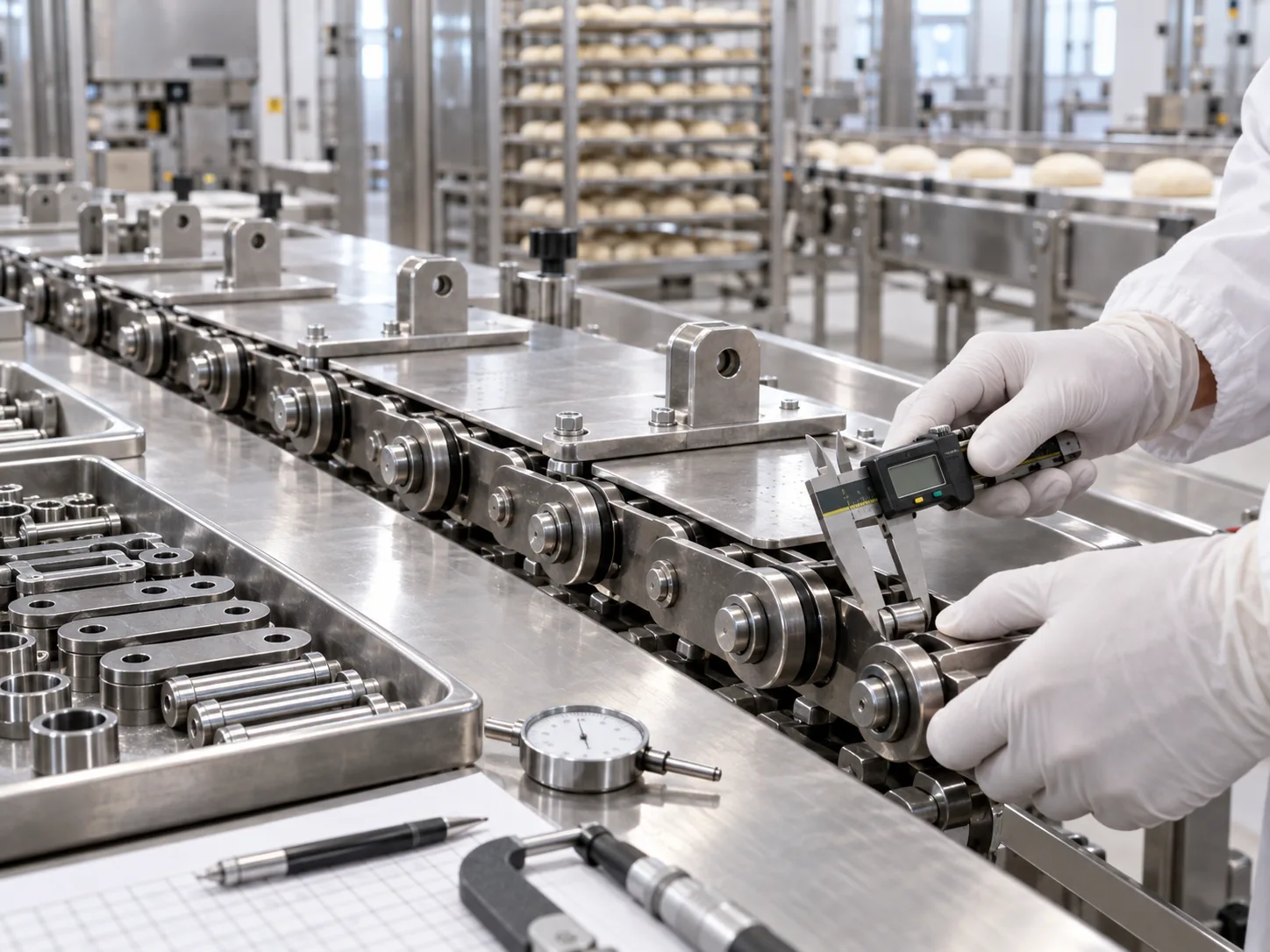
交換作業を行う際は、可能であれば取り外す前にチェーンの寸法を測定してください。摩耗によって長い測定区間でピッチが変化する可能性があるため、隣接するピン間の公称ピッチと、複数のリンクにわたる累積ピッチの両方を記録してください。
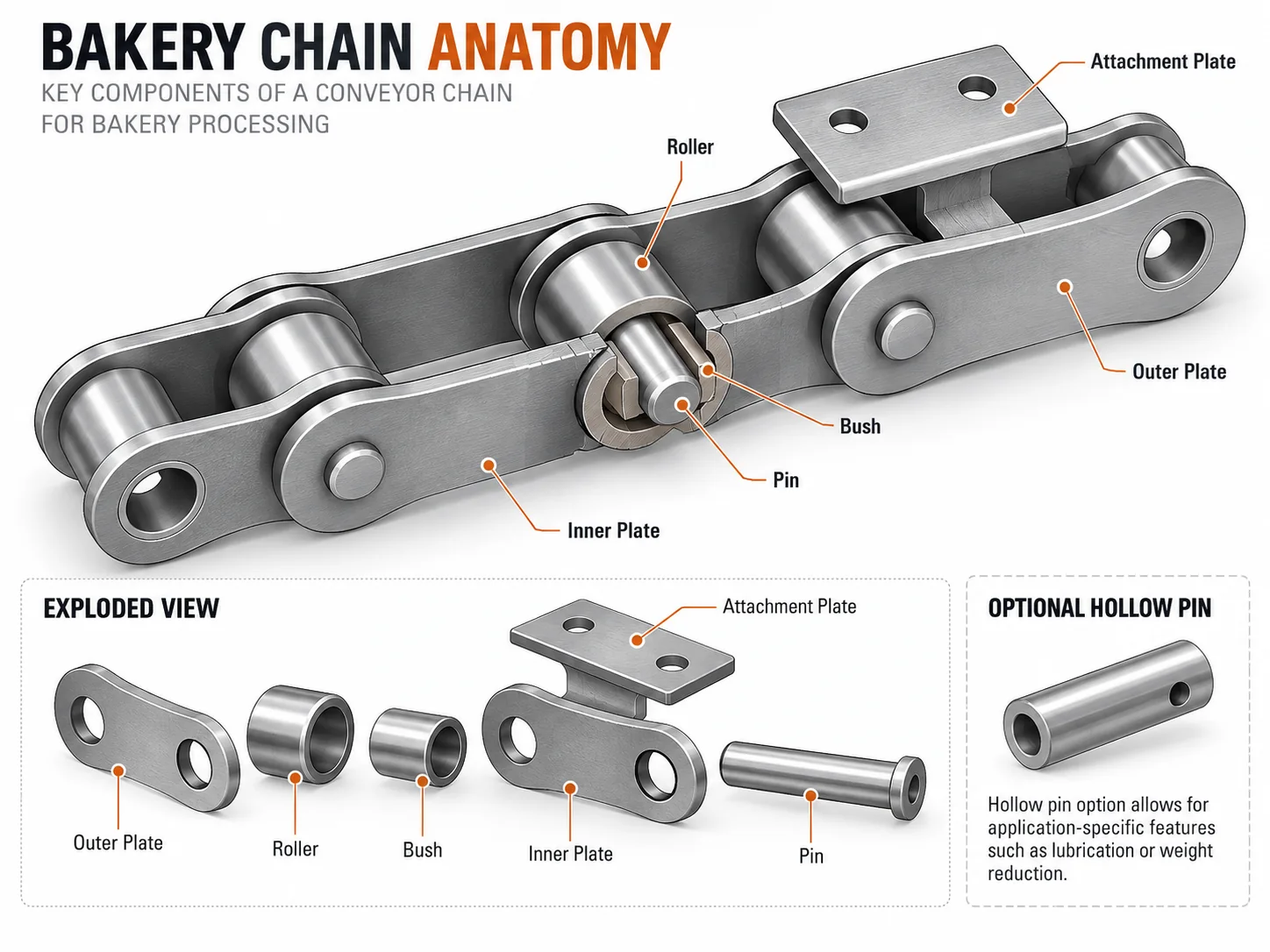
このプロセスにおいて最も関連性の高い出発家族は以下の通りです。 ステンレス製ベーカリーチェーン ダブルピッチベーカリーチェーン最終的な構成は、アプリケーション名だけでなく、実際の形状と用途によって決まります。
従来のローラーまたはコンベアチェーンのインターフェースが機器に適合する場合に使用してください。
湿気、洗浄、腐食に敏感な箇所について点検してください。
トレイ、クロスロッド、固定具、またはキャリアに専用のインターフェースが必要な場合に使用します。
設置形状、材質、または取り付け間隔が標準的でない場合に使用してください。
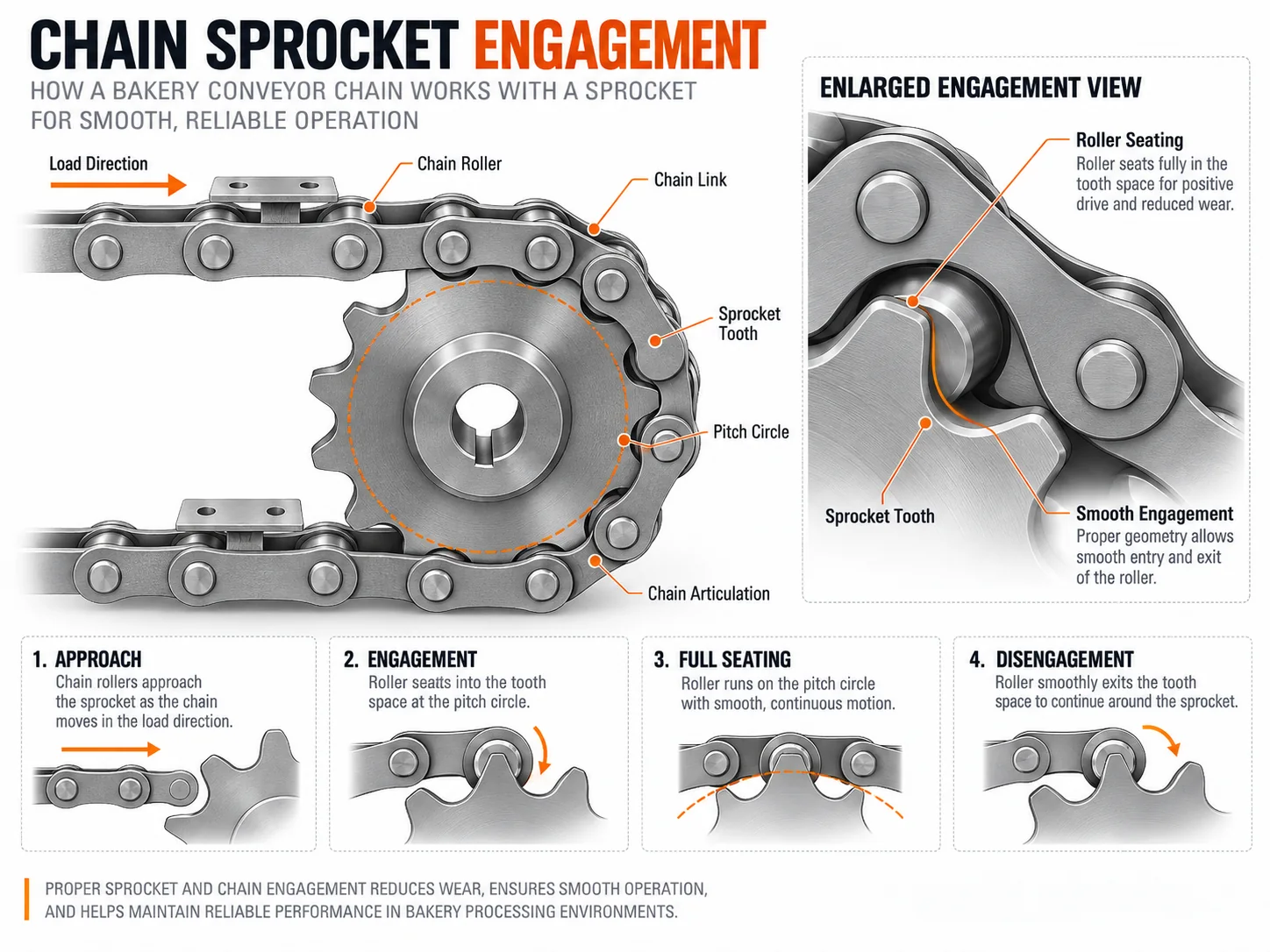
選択したチェーンがスプロケットに正しく装着され、ガイドやフレーム部材に干渉せず、戻り経路全体にわたって十分な可動性を確保していることを確認してください。平行チェーンコンベヤでは、キャリアバーがチェーンを横方向に固定してしまう可能性があるため、チェーン中心間隔と同期した巻き取りが特に重要になります。
深刻なアライメント不良を、張力を増やすことで補おうとしないでください。過度の張力はベアリング圧力を上昇させ、摩耗を加速させる可能性があります。まずは、シャフトのアライメント、ガイドの位置、スプロケットの状態を正しく確認してください。
点検間隔は、熱、湿度、清掃、起動/停止頻度を考慮して設定する必要があります。ジョイントの固着、ローラーの不均一な摩耗、サイドプレートの摩擦、アタッチメントの緩みや変形、スプロケットの歯の摩耗などを確認してください。同じコンベア位置で繰り返し発生する問題は、チェーン全体の問題ではなく、ガイド、キャリア、またはフレームの干渉を示している可能性があります。
新しい配線を依頼する前に、交換理由を記録してください。その情報は、同等の配線への交換が適切かどうか、あるいはクリアランス、材質、取り付け方法、メンテナンスアクセスなどを見直す必要があるかどうかを判断するのに役立ちます。
Treat bakery cooling conveyors as a distinct duty zone. Record where the chain enters and leaves this zone, whether carriers accumulate, and whether the return path experiences different conditions from the product side.
Document long ambient runs, airflow and product transfer between process stages. Use normal conditions and short-duration peaks separately, because material, joint clearance and lubrication decisions can respond differently to continuous exposure and transient events.
Verify guide alignment and low-disturbance transfer. For parallel strands, compare chain centers, attachment intervals and carrier squareness so one strand is not forced to absorb alignment error created elsewhere in the machine.
The first families to review are stainless, double-pitch and conveyor chains. That is a screening direction, not an automatic recommendation; final selection still depends on the installed geometry, load path, sprocket set and requested documentation.
| チェック | なぜそれが重要なのか | 送信または確認すべき事項 |
|---|---|---|
| 機械ルート | 駆動/後端スプロケット、ガイドトラック、トランスファー、リターンパス、およびテイクアップ。 | レイアウト図と背景写真。 |
| チェーン形状 | ピッチ、内幅、ローラー/ブッシュ、ピン、プレート、および全体の幅。 | 複数ピッチの測定と端面図。 |
| キャリアインターフェース | guide alignment and low-disturbance transfer. | キャリアの図面、取り付け間隔、およびチェーンの中心。 |
| 職務と環境 | long ambient runs, airflow and product transfer between process stages. | 温度・湿度・洗浄データ、速度、および対応負荷。 |
| 維持管理の証拠 | 摩耗パターン、潤滑方法、テークアップ履歴、スプロケットの状態。 | 接写写真と最近の観察結果。 |
機械の種類、処理ゾーン、写真、図面(あれば)、ピッチ、内幅、ローラー/ブッシュ径、ピンサイズ、アタッチメント寸法、チェーン中心間距離、スプロケット歯数、速度、積載荷重、温度、洗浄条件、および必要数量をお送りください。 ベーカリーチェーン選択ガイド チェックリストとして。
Walk the complete bakery cooling conveyors chain route and verify guards, guides, sprocket alignment, take-up reserve and the carrier interface. Confirm guide alignment and low-disturbance transfer. A static clearance problem should be corrected before speed or tension is used to mask it.
一定の速度で運転し、負荷がかかった状態と戻ってきた状態の両方を観察してください。ジョイントが引っかかる箇所、キャリアが傾く箇所、ローラーがスプロケットに不均一に入る箇所、チェーンがガイドに擦れる箇所などがあれば、その場所をマークしてください。場所ごとに症状が繰り返されることは、機械のインターフェースの診断に特に役立ちます。
Recheck after the equipment reaches its normal long ambient runs, airflow and product transfer between process stages. Compare articulation, tracking and take-up position with the cold or idle condition. This is where thermal growth, moisture or cleaning-related changes can become visible.
After the system is stable, record take-up position, selected measurements, sprocket condition and representative photographs. Keep that baseline with the approved drawing for stainless, double-pitch and conveyor chains; it gives maintenance and purchasing a reproducible reference for later wear checks or replacement requests.
Identify the bakery cooling conveyors section, chain path, drive and tail sprockets, take-up arrangement and any transfer points that constrain the chain envelope.
Document guide alignment and low-disturbance transfer, including repeated attachment spacing, chain-center distance and the parts that actually transfer load into the chain.
Describe long ambient runs, airflow and product transfer between process stages together with speed, start/stop behavior, cleaning and lubrication limitations. Separate steady production conditions from short peaks or washdown events.
Use stainless, double-pitch and conveyor chains as a starting family, then confirm the dimensions and machine interfaces on the quotation drawing before treating a configuration as interchangeable.