Mô tả sản phẩm
DANH SÁCH SẢN PHẨM CỦA CHÚNG TÔI:
Xích con lăn đơn/đôi/ba tiêu chuẩn dòng A và B và xích con lăn không tiêu chuẩn
| DIN/ISO | ANSI | Sân bóng đá | Con lăn | Chiều rộng | Ghim | Ghim | Lnner | Đĩa | Tối thượng | Trung bình | cân nặng | |
| KIN/ISO | ANSL | giữa | đường kính | chiều dài | đĩa | dày | lực kéo | lực kéo | mỗi | |||
| Xích | Xích | tấm bên trong | độ sâu | -tính chất | sức mạnh | sức mạnh | mét | |||||
| KHÔNG. | KHÔNG. | P | d1 | b1 | d2 | L | Lc | h2 | T | Q | Q0 | q |
| tối đa | phút | tối đa | tối đa | tối đa | tối đa | tối đa | phút | |||||
| mm | mm | mm | mm | mm | mm | mm | mm | kN/LB | kN | kg/m | ||
| *03C | *15 | 4.7625 | 2.48 | 2.38 | 1.62 | 6.1 | 6.9 | 4.3 | 0.6 | 1.80/409 | 2 | 0.08 |
| *04C-1 | *25 | 6.35 | 3.3 | 3.18 | 2.31 | 7.9 | 8.4 | 6 | 0.8 | 3.50/795 | 4.6 | 0.15 |
| *06C-1 | *35 | 9.525 | 5.08 | 4.77 | 3.58 | 12.4 | 13.17 | 9 | 1.3 | 7.90/1795 | 10.8 | 0.33 |
| 085-1 | 41 | 12.7 | 7.77 | 6.25 | 3.58 | 13.75 | 15 | 9.91 | 1.3 | 6.67/1516 | 12.6 | 0.41 |
| 08A-1 | 40 | 12.7 | 7.95 | 7.85 | 3.96 | 16.6 | 17.8 | 12 | 1.5 | 14.10/3205 | 17.5 | 0.62 |
| 10A-1 | 50 | 15.875 | 10.16 | 9.4 | 5.08 | 20.7 | 22.2 | 15.09 | 2.03 | 22.20/5045 | 29.4 | 1.02 |
| 12A-1 | 60 | 19.05 | 11.91 | 12.57 | 5.94 | 25.9 | 27.7 | 18 | 2.42 | 31.80/7227 | 41.5 | 1.5 |
| 16A-1 | 80 | 25.4 | 15.88 | 15.75 | 7.92 | 32.7 | 35 | 24 | 3.25 | 59.70/12886 | 69.4 | 2.6 |
| 20A-1 | 100 | 31.75 | 19.05 | 18.9 | 9.53 | 40.4 | 44.7 | 30 | 4 | 88.50/20114 | 109.2 | 3.91 |
| 24A-1 | 120 | 38.1 | 22.23 | 25.22 | 11.1 | 50.3 | 54.3 | 35.7 | 4.8 | 127.00/28864 | 156.3 | 5.62 |
| 28A-1 | 140 | 44.45 | 25.4 | 25.22 | 12.7 | 54.4 | 59 | 41 | 5.6 | 172.40/39182 | 212 | 7.5 |
| 32A-1 | 160 | 50.8 | 28.58 | 31.55 | 14.27 | 64.8 | 69.6 | 47.8 | 6.4 | 226.80/51545 | 278.9 | 1.1 |
| 36A-1 | 180 | 57.15 | 35.71 | 35.48 | 17.46 | 72.8 | 78.6 | 53.6 | 7.2 | 280.20/63682 | 341.8 | 13.45 |
| 40A-1 | 200 | 63.5 | 39.68 | 37.85 | 19.85 | 80.3 | 87.2 | 60 | 8 | 353.80/80409 | 431.6 | 16.15 |
| 48A-1 | 240 | 76.2 | 47.63 | 47.35 | 23.81 | 90.5 | 103 | 72.39 | 9.5 | 51.30/115977 | 622.5 | 23.2 |
| DIN/ISO | Sân bóng đá | Con lăn | Chiều rộng | Ghim | Ghim | Lnner | Đĩa | Tối thượng | Trung bình | cân nặng | |
| KIN/ISO | giữa | đường kính | chiều dài | đĩa | dày | lực kéo | lực kéo | mỗi | |||
| Xích | tấm bên trong | độ sâu | -tính chất | sức mạnh | sức mạnh | mét | |||||
| KHÔNG. | P | d1 | b1 | d2 | L | Lc | h2 | T | Q | Q0 | q |
| tối đa | phút | tối đa | tối đa | tối đa | tối đa | tối đa | phút | ||||
| mm | mm | mm | mm | mm | mm | mm | mm | kN/LB | kN | kg/m | |
| 04B-1 | 6 | 4 | 2.8 | 1.85 | 6.8 | 7.8 | 5 | 0.6 | 3.2/682 | 3.2 | 0.11 |
| 05B-1 | 8 | 5 | 3 | 2.31 | 8.2 | 8.9 | 7.1 | 0.8 | 5.0/1136 | 5.9 | 0.2 |
| *06B-1 | 9.525 | 6.35 | 5.72 | 3.28 | 13.15 | 14.1 | 8.2 | 1.3 | 9.0/2045 | 10.4 | 0.41 |
| 08B-1 | 12.7 | 8.51 | 7.75 | 4.45 | 16.7 | 18.2 | 11.8 | 1.6 | 18.0/4091 | 19.4 | 0.69 |
| 10B-1 | 15.875 | 10.16 | 9.65 | 5.08 | 19.5 | 20.9 | 14.7 | 1.7 | 22.4/5091 | 27.5 | 0.93 |
| 12B-1 | 19.05 | 12.07 | 11.68 | 5.72 | 22.5 | 24.2 | 16 | 1.85 | 29.0/6591 | 32.2 | 1.15 |
| 16B-1 | 25.4 | 15.88 | 17.02 | 8.28 | 36.1 | 37.4 | 21 | 4.15/3.1 | 60.0/13636 | 72.8 | 2.71 |
| 20B-1 | 31.75 | 19.05 | 19.56 | 10.19 | 41.3 | 45 | 26.4 | 4.5/3.5 | 95.0/21591 | 106.7 | 3.7 |
| 24B-1 | 38.1 | 25.4 | 25.4 | 14.63 | 53.4 | 57.8 | 33.2 | 6.0/4.8 | 160.0/36364 | 178 | 7.1 |
| 28B-1 | 44.45 | 27.94 | 30.99 | 15.9 | 65.1 | 69.5 | 36.7 | 7.5/6.0 | 200.0/45455 | 222 | 8.5 |
| 32B-1 | 50.8 | 29.21 | 30.99 | 17.81 | 66 | 71 | 42 | 7.0/6.0 | 250.0/56818 | 277.5 | 10.25 |
| 40B-1 | 63.5 | 39.37 | 38.1 | 22.89 | 82.2 | 89.2 | 52.96 | 8.5/8.0 | 355.0/80682 | 394 | 16.35 |
| 48B-1 | 76.2 | 48.26 | 45.72 | 29.24 | 99.1 | 107 | 63.8 | 560.0/127272 | 621.6 | 25 | |
Sản phẩm trưng bày
Our workshop and hot treatment equipment.
Câu hỏi thường gặp
Câu 1. Điều khoản đóng gói của bạn là gì?
A: Thông thường, chúng tôi đóng gói hàng hóa trong hộp màu đơn sắc. Nếu bạn có yêu cầu đặc biệt về đóng gói, vui lòng thương lượng trước với chúng tôi, chúng tôi có thể đóng gói hàng hóa theo yêu cầu của bạn.
Câu 2. Điều khoản thanh toán của bạn là gì?
A: Thanh toán đặt cọc 30% bằng chuyển khoản ngân hàng (T/T), và 70% trước khi giao hàng. Chúng tôi sẽ gửi ảnh sản phẩm và bao bì cho bạn xem.
Trước khi bạn thanh toán số tiền còn lại. Về các điều khoản thanh toán khác, vui lòng thương lượng trước với chúng tôi, chúng ta có thể thảo luận thêm.
Câu 3. Điều khoản giao hàng của bạn là gì?
A: EXW, FOB, CFR, CIF.
Câu 4. Thời gian giao hàng của bạn như thế nào?
A: Thông thường, sẽ mất từ 25 đến 30 ngày sau khi nhận được tiền đặt cọc. Thời gian giao hàng cụ thể phụ thuộc vào...
Về các mặt hàng và số lượng đơn đặt hàng của bạn.
Câu 5. Bạn có thể sản xuất theo mẫu không?
A: Vâng, chúng tôi có thể sản xuất theo mẫu hoặc bản vẽ kỹ thuật của bạn. Chúng tôi có thể chế tạo khuôn và đồ gá.
Câu 6. Chính sách mẫu của bạn là gì?
A: Chúng tôi có thể cung cấp mẫu nếu có sẵn linh kiện trong kho, nhưng khách hàng phải trả phí mẫu và phí vận chuyển.
Chi phí vận chuyển. Chúng tôi hoan nghênh đơn đặt hàng mẫu.
Câu 7. Bạn có kiểm tra tất cả hàng hóa trước khi giao hàng không?
A: Vâng, chúng tôi có bài kiểm tra 100% trước khi giao hàng.
Câu 8: Làm thế nào để chúng ta xây dựng mối quan hệ kinh doanh lâu dài và tốt đẹp?
1. Chúng tôi duy trì chất lượng tốt và giá cả cạnh tranh để đảm bảo lợi ích cho khách hàng;
2. Chúng tôi tôn trọng mọi khách hàng như những người bạn và chúng tôi chân thành kinh doanh cũng như kết bạn với họ.
Bất kể họ đến từ đâu.
| Vật liệu: | Hợp kim |
|---|---|
| Kết cấu: | Xích con lăn |
| Xử lý bề mặt: | Đánh bóng |
| Kích thước dây chuyền: | 1/2"*11/128" |
| Tính năng: | Chống cháy, chống dầu, chịu nhiệt |
| Gói vận chuyển: | Thùng gỗ không hun trùng, vận chuyển bằng đường hàng không, đường biển. |
| Mẫu: |
US$ 2/Mét
1 mét (Số lượng đặt hàng tối thiểu) | |
|---|
| Tùy chỉnh: |
Có sẵn
| Yêu cầu tùy chỉnh |
|---|
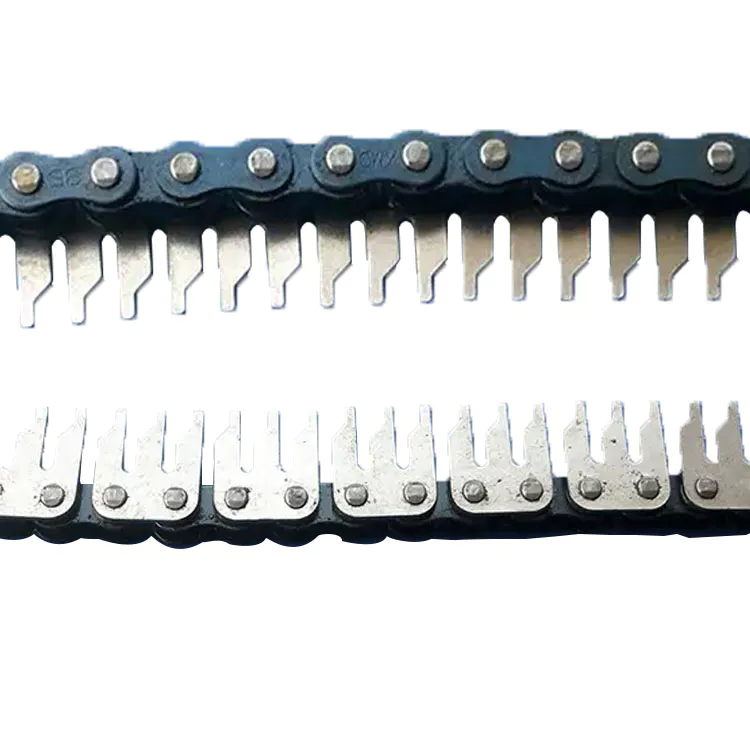
Can a conveyor chain be used in automotive assembly lines?
Yes, a conveyor chain can be effectively used in automotive assembly lines. Here are the reasons why:
1. Efficient Material Handling:
– Conveyor chains provide a reliable and efficient means of transporting automotive components and parts along the assembly line. They can handle heavy loads and withstand the demanding requirements of automotive manufacturing.
2. Versatility:
– Conveyor chains offer versatility in terms of design and configuration. They can be customized to accommodate various assembly processes, such as body welding, painting, assembly, and final inspection.
3. Precise Positioning:
– Conveyor chains allow precise positioning and synchronization of automotive components, ensuring accurate assembly and alignment during the production process. This helps maintain consistent quality and reduces errors.
4. Automation Integration:
– Conveyor chains can be easily integrated with automation systems in automotive assembly lines. They can work in conjunction with robotic arms, vision systems, and other automated equipment to optimize the production process and improve efficiency.
5. Assembly Line Flexibility:
– Conveyor chains provide flexibility in terms of line configuration and layout. They can be designed to accommodate different assembly line layouts, including straight sections, curves, inclines, and declines, to meet the specific requirements of automotive assembly processes.
6. Space Optimization:
– Conveyor chains help optimize space utilization in automotive assembly plants. They can be designed to navigate around existing equipment and infrastructure, making efficient use of available floor space.
7. Safety:
– Conveyor chains are designed with safety features to protect operators and prevent accidents. Emergency stop controls, guarding, and interlocking mechanisms ensure the safe operation of the assembly line.
8. Increased Production Speed:
– By using conveyor chains, automotive assembly lines can achieve higher production speeds, allowing for faster manufacturing cycles and increased output.
Overall, conveyor chains play a crucial role in enhancing the efficiency, productivity, and safety of automotive assembly lines, contributing to the smooth and streamlined production of vehicles.
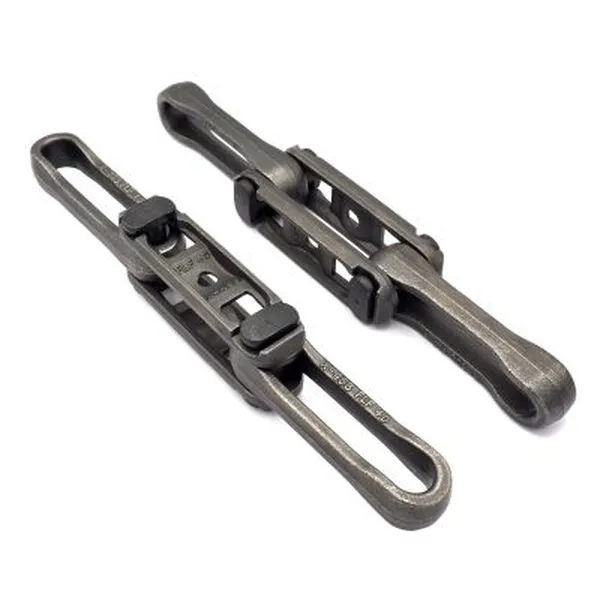
What are the safety measures for working with heavy-duty conveyor chains?
Working with heavy-duty conveyor chains requires strict adherence to safety measures to protect the workers and maintain a safe working environment. Here are some important safety measures to consider:
1. Proper Training: All personnel involved in working with conveyor chains should receive comprehensive training on the safe operation and maintenance of the equipment. This includes understanding the potential hazards, safety procedures, and proper use of personal protective equipment (PPE).
2. Equipment Inspection: Regular inspection of the conveyor chain and associated components is crucial to identify any signs of wear, damage, or malfunction. This includes checking for loose fasteners, worn sprockets, misalignment, and any other potential hazards. Any issues should be addressed promptly to prevent accidents.
3. Lockout/Tagout: Before performing any maintenance or repair tasks on the conveyor chain, proper lockout/tagout procedures must be followed. This ensures that the equipment is de-energized and isolated from any power source to prevent accidental startup or movement.
4. Personal Protective Equipment (PPE): Workers should wear appropriate PPE, including safety glasses, gloves, steel-toed boots, and hearing protection. The specific PPE requirements may vary depending on the nature of the work and the potential hazards involved.
5. Safe Work Practices: Workers should follow safe work practices, such as avoiding loose clothing or jewelry that can get caught in the chain, keeping hands and clothing clear of moving parts, and using proper lifting techniques when handling heavy loads.
6. Emergency Stop Systems: Conveyor systems should be equipped with emergency stop buttons or pull cords that allow workers to quickly stop the chain in case of an emergency or hazardous situation.
7. Regular Maintenance: Scheduled maintenance and lubrication of the conveyor chain should be performed according to the manufacturer’s recommendations. This helps to ensure optimal performance and minimize the risk of unexpected failures.
8. Clear Warning Signs and Labels: Proper signage, warning labels, and safety instructions should be clearly displayed near the conveyor chain system to remind workers of potential hazards and safe operating procedures.
9. Regular Safety Training and Communication: Ongoing safety training and communication among the workforce are vital to reinforce safe practices and raise awareness of any changes or updates to safety protocols.
By implementing these safety measures and fostering a safety-conscious culture, the risks associated with working with heavy-duty conveyor chains can be minimized, ensuring the well-being of the workers and the efficient operation of the equipment.
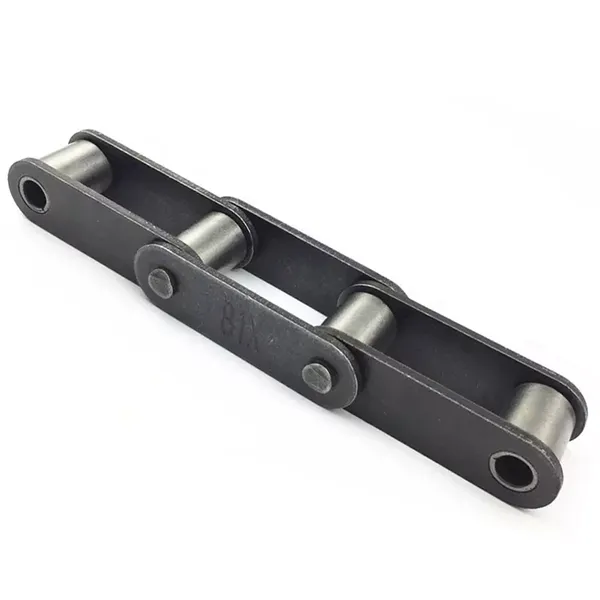
What are the common causes of conveyor chain failures?
Conveyor chain failures can occur due to various reasons, and identifying the root cause is crucial for preventing future issues. Here are some common causes of conveyor chain failures:
- Lack of Lubrication: Insufficient or improper lubrication can lead to increased friction and wear on the chain components, resulting in premature failure.
- Excessive Load: Overloading the conveyor chain beyond its rated capacity can cause excessive stress and strain, leading to chain elongation, deformation, or link breakage.
- Misalignment: Improper alignment of the conveyor chain can cause uneven loading and excessive wear on specific areas, leading to chain failure.
- Environmental Factors: Harsh operating environments, such as high temperatures, corrosive substances, or abrasive materials, can accelerate chain wear and corrosion, leading to failure.
- Foreign Objects: The presence of foreign objects or debris on the conveyor system can interfere with the movement of the chain, causing jamming, binding, or chain damage.
- Poor Maintenance: Inadequate maintenance practices, such as irregular inspections, failure to address minor issues promptly, or neglecting to replace worn components, can contribute to chain failures.
- Incorrect Installation: Improper installation, including incorrect tensioning, misalignment, or using incompatible components, can result in premature chain failure.
- Fatigue and Wear: Continuous operation over time can lead to fatigue and wear in the chain, especially in high-speed or heavy-duty applications, resulting in eventual failure.
Regular maintenance, proper lubrication, adequate training for operators, and adherence to manufacturer guidelines can help mitigate these common causes of conveyor chain failures. Conducting routine inspections, promptly addressing issues, and replacing worn components can also significantly extend the life of the conveyor chain.


editor by CX 2023-10-11