جیومیٹری ریکارڈ کریں۔
پچ، چوڑائی، رولر/بش، پن، پلیٹ، مجموعی چوڑائی اور منسلک پیٹرن.
بیکری چین ٹیکنیکل گائیڈ
Corrosion Problems in Food Conveyor Chains is best answered by combining measured chain geometry, machine duty and the operating environment. This guide shows what to inspect, record and discuss before a replacement or new-chain decision.
Corrosion Problems in Food Conveyor Chains should be evaluated from the actual conveyor. Start with chain pitch, transverse geometry, sprocket condition and any carrier attachment, then add temperature, moisture, washdown, load, speed and take-up information. The objective is not to identify a chain by appearance; it is to produce an RFQ that preserves the machine interface and makes application-dependent choices explicit.
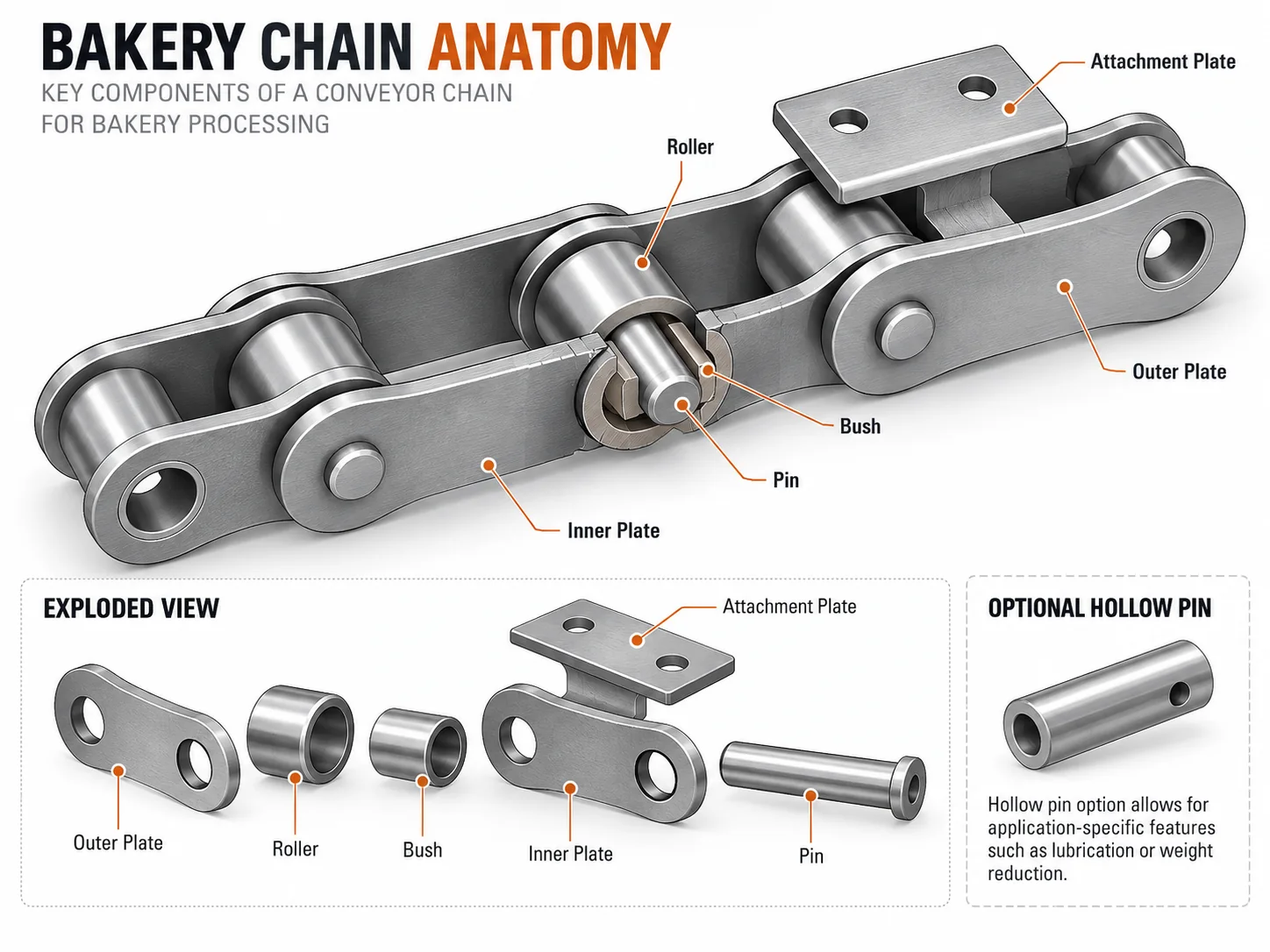
زنجیر کو ہٹانے سے پہلے کئی خصوصیات کی پیمائش کریں۔ پچ بنیادی گیئرنگ تعلق کو تلاش کرتی ہے، لیکن اندر کی چوڑائی، رولر یا بش کا قطر، پن کا قطر، پلیٹ کی اونچائی، مجموعی چوڑائی اور منسلکہ طول و عرض کنفیگریشنز کو الگ کرتے ہیں جو ایک ہی برائے نام پچ کو شیئر کر سکتے ہیں۔
گھسے ہوئے اسٹرینڈ کے لیے، متعدد لنکس میں مجموعی پچ کی پیمائش کریں۔ زنجیر کی سائیڈ اور سرے سے تصویر کھینچیں، اور اسپراکیٹ کو شامل کریں جہاں عملی ہو۔

The same chain geometry can behave differently in a humid proofer, a hot oven, an ambient cooling section or a washdown area. For corrosion problems in food conveyor chains, document the exact machine zone, whether the chain carries product directly or moves pans/fixtures, and whether the joint sees heat, moisture, cleaning chemicals or abrasive residue.
پراسیس ڈیٹا اس بات کا تعین کرنے میں مدد کرتا ہے کہ کون سی خصوصیات بدلنے کی صلاحیت کے ذریعے طے کی جاتی ہیں اور کن خصوصیات جیسے کہ مواد، کلیئرنس یا منسلکہ مینوفیکچرنگ کا طریقہ درخواست کے لیے جائزہ لیا جانا چاہیے۔
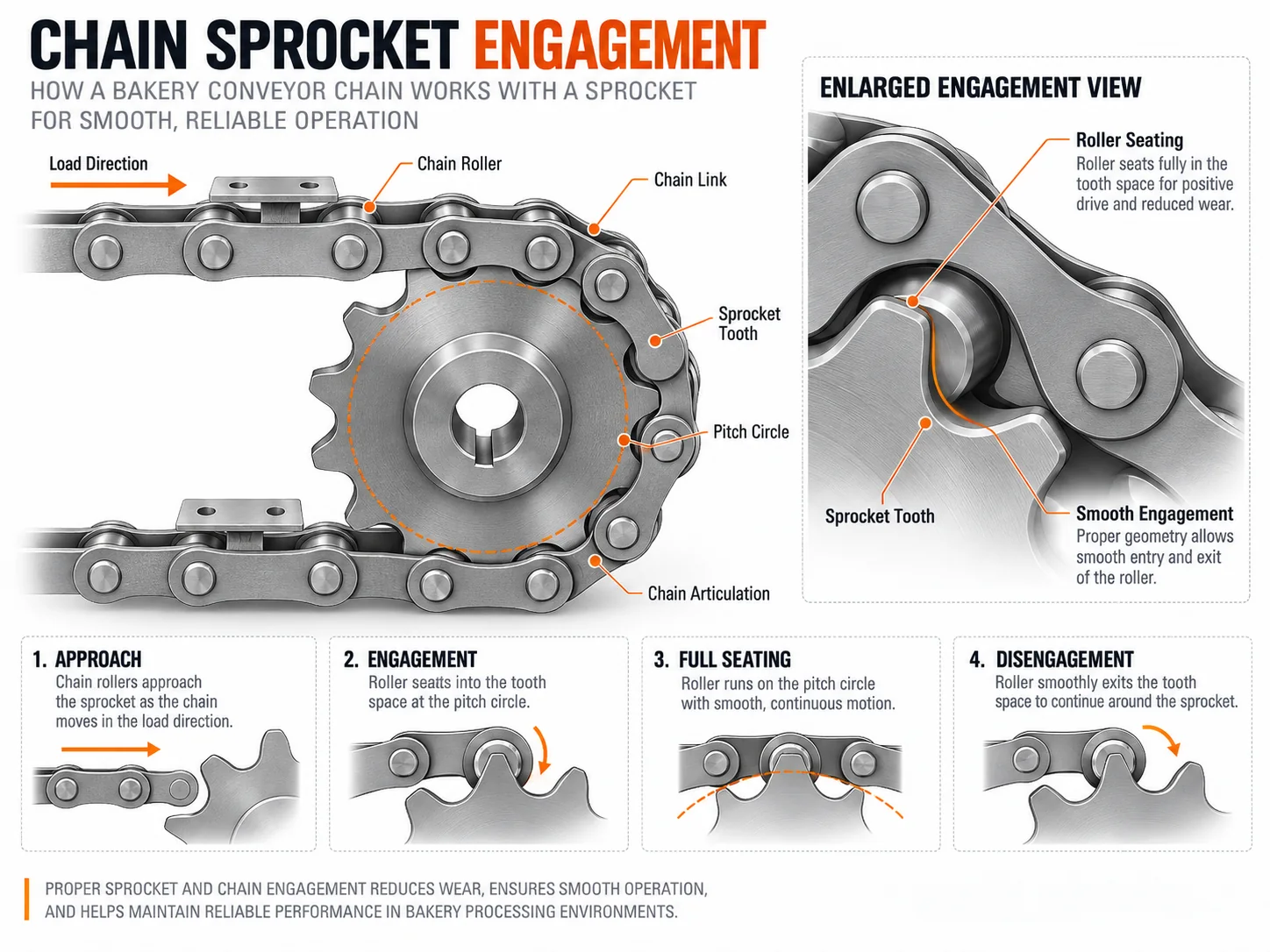
ایک سلسلہ آزادانہ طور پر کام نہیں کرتا ہے۔ رولرس یا جھاڑیوں کو سپروکیٹ کے دانتوں کی جگہوں میں آسانی سے داخل ہونا اور چھوڑنا چاہیے، جب کہ گائیڈ ٹریکس اسٹرینڈ کو بغیر کسی مجبور کے سپورٹ کرتے ہیں۔ کانٹے دار دانت، شافٹ کی غلط ترتیب، سنکی اسپروکیٹس یا سخت گائیڈ ایک نئی زنجیر کو تیزی سے پہنا سکتا ہے۔
ایک مکمل سرکٹ کے ذریعے مکمل راستے کا معائنہ کریں۔ اگر نقصان ایک ہی مشین کے مقام پر دہرایا جاتا ہے، تو یہ ماننے سے پہلے کہ زنجیر خود خراب ہے، مقامی سپورٹ، ٹرانسفر یا کیریئر کی چھان بین کریں۔
پچ، چوڑائی، رولر/بش، پن، پلیٹ، مجموعی چوڑائی اور منسلک پیٹرن.
درجہ حرارت، نمی، واش ڈاؤن، رفتار، بوجھ، پیداوار کے اوقات اور آغاز۔
سپروکیٹس، گائیڈز، چین سینٹرز، ٹیک اپ، الائنمنٹ اور کیریئر کلیئرنس۔
تنصیب سے پہلے حتمی ترتیب شدہ جیومیٹری، مواد اور ایپلیکیشن پر منحصر ترتیب کو منظور کریں۔
پوچھیں کہ مسئلہ ظاہر ہونے سے پہلے کیا بدلا ہے: پیداوار کی شرح، پروڈکٹ یا پین کا وزن، صفائی کا چکر، چکنا کرنے والا، درجہ حرارت، دیکھ بھال کا وقفہ یا بدلے ہوئے اسپراکٹس۔ رجحان کی معلومات ایک تصویر سے زیادہ قیمتی ہے کیونکہ یہ ظاہر کرتی ہے کہ لباس یکساں ہے یا مرتکز۔
معمول کے معائنے کے دوران، سخت جوڑوں، رولر پہننے، پن کی حرکت، پھٹے ہوئے یا جھکے ہوئے اٹیچمنٹ، غیر معمولی طرف سے رابطہ اور ناہموار ٹیک اپ کو دیکھیں۔ مشین کے مالک کی ضروریات کے مطابق گارڈز اور حفاظتی طریقہ کار کو اپنی جگہ پر رکھیں۔
ناپے ہوئے طول و عرض، مشین/پروسیس کا نام، تصاویر، اگر دستیاب ہو تو ڈرائنگ، مقدار یا مطلوبہ زنجیر کی لمبائی، اٹیچمنٹ وقفہ، چین سینٹر اسپیسنگ، سپروکیٹ کی معلومات، درجہ حرارت، دھونے کی حالت، لوڈ اور ٹارگٹ ڈیلیوری ونڈو شامل کریں۔ کا جائزہ لیں۔ بیکری چین سلیکشن گائیڈ اور پروڈکٹ فیملی کا جائزہ اگلے فیصلے کے لیے۔
اگر دستیاب ہو تو پرانا حوالہ استعمال کریں، لیکن نصب جیومیٹری اور ڈیوٹی کی تصدیق کریں۔ مشین میں ترمیم، پچھلے متبادل یا پہننے سے حصہ نمبر اکیلے نامکمل ہو سکتا ہے۔
لنکس کی عملی تعداد میں ملٹی پچ پیمائش کا استعمال کریں اور طریقہ ریکارڈ کریں۔ ایک ملحقہ-لنک پیمائش پر انحصار کرنے کے بجائے برائے نام پچ اور مشین کی دیکھ بھال کی حد سے اس کا موازنہ کریں۔
جب بھی دانتوں کے پہننے، ہکنگ، سیدھ میں ہونے کے خدشات یا بار بار قبل از وقت زنجیر کے لباس موجود ہوتے ہیں۔ زنجیر اور سپروکیٹ میشنگ سسٹم کے طور پر کام کرتے ہیں۔
For Corrosion Problems in Food Conveyor Chains, begin with a measurement record that another engineer can reproduce. Note the measurement tool, the points used, and whether the chain was loaded or relaxed. A multi-pitch measurement is useful for detecting elongation, while transverse dimensions such as inside width and pin projection help identify the original construction even when the joints are worn.
Map the chain route on the machine before deciding that the strand itself is the only cause of a problem. Mark drive and tail sprockets, guides, return tracks, take-up positions, transfer points and carrier interfaces. Repeated scuffing at one location usually deserves a local alignment or clearance check rather than an automatic increase in chain tension.
Temperature data should distinguish normal running conditions from short peaks. Metal components expand as temperature rises, lubricants change viscosity, and product residue can alter the way joints move. A useful RFQ therefore states where temperature is measured, how long the chain remains in that zone and whether the conveyor cools completely during normal shutdowns.
Washdown information should describe frequency, water temperature, cleaning chemistry and whether the chain is rinsed and dried. Stainless steel can improve corrosion resistance, but material selection does not remove the need for suitable joint design, drainage, compatible lubrication and inspection. Cleaning practice is part of the engineering condition, not a separate housekeeping detail.
Where pans, trays or cross bars are fitted, the attachment interface should be treated as a load path. Record hole diameter, hole center distance, bend height, offset from the chain centerline and the repeated attachment interval. Also identify whether the carrier is rigidly fixed or allowed to articulate, because an over-constrained carrier can force parallel strands out of alignment.
Sprocket condition is especially important on a replacement project. Check tooth profile, visible hooking, eccentric wear, hub security and alignment to the chain track. A new chain can appear to stretch quickly when it is actually seating into worn tooth spaces. When sprockets are questionable, include clear side photographs and tooth count in the RFQ.
Take-up travel provides useful evidence about system condition. Record the present take-up position and any adjustment made during the service life of the chain. If the take-up is near its limit, measure cumulative pitch over several links before removing the chain so wear can be separated from a simple installation-length issue.
Lubrication decisions must account for temperature, contamination and food-production practices. The correct approach is application-specific: some joints require a lubricant that can reach the pin/bush bearing surfaces, while some process zones impose restrictions on where and how lubrication can be applied. State the existing method and any limitations rather than assuming a universal interval.
For a new machine, document expected product throughput separately from chain load. The mass carried by the chain includes pans, trays, carrier bars and fixtures in addition to the baked product. Acceleration, incline, transfer resistance and accumulation can create forces that are not obvious from product weight alone.
For an existing machine, photographs are most useful when they show context and detail together. Include one image of the entire conveyor section, one of the chain on the sprocket, one side view of several pitches, one end view showing transverse width and one close-up of the attachment. Add a ruler or caliper only where it does not hide the component being measured.
A procurement specification should separate dimensions that must match from characteristics that can be optimized. Pitch, chain centers and carrier mounting geometry may be fixed by the machine; material, surface treatment, joint clearance or attachment manufacturing method may have room for review. Making that distinction avoids unnecessary redesign while still allowing an improved configuration.
Before release, compare the proposed configuration with the actual installed envelope. Check nearby guards, sensor brackets, guide rails and transfer plates as well as the sprockets. The final production drawing is the controlling reference for dimensions and ordered options; website values are best used to prepare the discussion and identify the likely chain family.
For Corrosion Problems in Food Conveyor Chains, begin with a measurement record that another engineer can reproduce. Note the measurement tool, the points used, and whether the chain was loaded or relaxed. A multi-pitch measurement is useful for detecting elongation, while transverse dimensions such as inside width and pin projection help identify the original construction even when the joints are worn.
Map the chain route on the machine before deciding that the strand itself is the only cause of a problem. Mark drive and tail sprockets, guides, return tracks, take-up positions, transfer points and carrier interfaces. Repeated scuffing at one location usually deserves a local alignment or clearance check rather than an automatic increase in chain tension.
Temperature data should distinguish normal running conditions from short peaks. Metal components expand as temperature rises, lubricants change viscosity, and product residue can alter the way joints move. A useful RFQ therefore states where temperature is measured, how long the chain remains in that zone and whether the conveyor cools completely during normal shutdowns.
Washdown information should describe frequency, water temperature, cleaning chemistry and whether the chain is rinsed and dried. Stainless steel can improve corrosion resistance, but material selection does not remove the need for suitable joint design, drainage, compatible lubrication and inspection. Cleaning practice is part of the engineering condition, not a separate housekeeping detail.
Where pans, trays or cross bars are fitted, the attachment interface should be treated as a load path. Record hole diameter, hole center distance, bend height, offset from the chain centerline and the repeated attachment interval. Also identify whether the carrier is rigidly fixed or allowed to articulate, because an over-constrained carrier can force parallel strands out of alignment.
Sprocket condition is especially important on a replacement project. Check tooth profile, visible hooking, eccentric wear, hub security and alignment to the chain track. A new chain can appear to stretch quickly when it is actually seating into worn tooth spaces. When sprockets are questionable, include clear side photographs and tooth count in the RFQ.
Take-up travel provides useful evidence about system condition. Record the present take-up position and any adjustment made during the service life of the chain. If the take-up is near its limit, measure cumulative pitch over several links before removing the chain so wear can be separated from a simple installation-length issue.
Lubrication decisions must account for temperature, contamination and food-production practices. The correct approach is application-specific: some joints require a lubricant that can reach the pin/bush bearing surfaces, while some process zones impose restrictions on where and how lubrication can be applied. State the existing method and any limitations rather than assuming a universal interval.
For a new machine, document expected product throughput separately from chain load. The mass carried by the chain includes pans, trays, carrier bars and fixtures in addition to the baked product. Acceleration, incline, transfer resistance and accumulation can create forces that are not obvious from product weight alone.
For an existing machine, photographs are most useful when they show context and detail together. Include one image of the entire conveyor section, one of the chain on the sprocket, one side view of several pitches, one end view showing transverse width and one close-up of the attachment. Add a ruler or caliper only where it does not hide the component being measured.
A procurement specification should separate dimensions that must match from characteristics that can be optimized. Pitch, chain centers and carrier mounting geometry may be fixed by the machine; material, surface treatment, joint clearance or attachment manufacturing method may have room for review. Making that distinction avoids unnecessary redesign while still allowing an improved configuration.
Before release, compare the proposed configuration with the actual installed envelope. Check nearby guards, sensor brackets, guide rails and transfer plates as well as the sprockets. The final production drawing is the controlling reference for dimensions and ordered options; website values are best used to prepare the discussion and identify the likely chain family.
For Corrosion Problems in Food Conveyor Chains, begin with a measurement record that another engineer can reproduce. Note the measurement tool, the points used, and whether the chain was loaded or relaxed. A multi-pitch measurement is useful for detecting elongation, while transverse dimensions such as inside width and pin projection help identify the original construction even when the joints are worn.
Map the chain route on the machine before deciding that the strand itself is the only cause of a problem. Mark drive and tail sprockets, guides, return tracks, take-up positions, transfer points and carrier interfaces. Repeated scuffing at one location usually deserves a local alignment or clearance check rather than an automatic increase in chain tension.
Temperature data should distinguish normal running conditions from short peaks. Metal components expand as temperature rises, lubricants change viscosity, and product residue can alter the way joints move. A useful RFQ therefore states where temperature is measured, how long the chain remains in that zone and whether the conveyor cools completely during normal shutdowns.
Washdown information should describe frequency, water temperature, cleaning chemistry and whether the chain is rinsed and dried. Stainless steel can improve corrosion resistance, but material selection does not remove the need for suitable joint design, drainage, compatible lubrication and inspection. Cleaning practice is part of the engineering condition, not a separate housekeeping detail.
Where pans, trays or cross bars are fitted, the attachment interface should be treated as a load path. Record hole diameter, hole center distance, bend height, offset from the chain centerline and the repeated attachment interval. Also identify whether the carrier is rigidly fixed or allowed to articulate, because an over-constrained carrier can force parallel strands out of alignment.
Sprocket condition is especially important on a replacement project. Check tooth profile, visible hooking, eccentric wear, hub security and alignment to the chain track. A new chain can appear to stretch quickly when it is actually seating into worn tooth spaces. When sprockets are questionable, include clear side photographs and tooth count in the RFQ.