Opis produktu
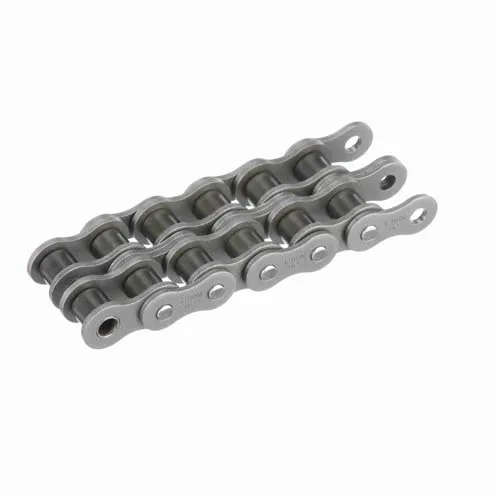
Professional Industrial Custom Made Good Quality 16A-G2 Top Rubber Conveyor Chain
Opis produktu
1. Chain Material: Alloy steel & Stainless steel
2. Rubber Material: NBR & NR
3. Rubber hardness: Shore hardness 65-75, 75-85
4. Chain Surface Treatment: Shot peening & Blackening & Bluing
5. Chain Size:
08B-G1; 08B-G2, 10B-G1; 10B-G2, 12B-G1, 12B-G2, 16B-G1; 16B-G2, 20B-G1, 20B-G2; 24B-G1
| Product name | 16A-G2 Top Rubber Conveyor Chain |
| Materials Available | 1. Stainless Steel: SS304, SS316, etc |
| 2. Alloy Steel: 45Mn, 42CrMo, 20CrMo, etc | |
| 3. Appurtenant material: NR, NBR | |
| 4. OEM according to your request | |
| Surface Treatment | Shot peening, Blackening, Oxygenation, Polishing, Zinc-plated, Nickel-plated, Anodized, etc. |
| Characteristic | Fire Resistant, Oil Resistant, Heat Resistant |
| Design criterion | ISO DIN ANSI & Customer’s Drawing |
| Size | Customer’s Drawing & ISO standard |
| Application | Wood product factory, plywood factory |
| Package | Wooden Case / Container and pallet, or made-to-order |
| Certificate | ISO9001: 2008 |
| Advantage | First quality, Best service, Competitive price, Fast delivery |
| Delivery Time | 20 days for samples. 45 days for official order. |
Detailed Photos
View more products,please click here…
Profil firmy
/* 22 stycznia 2571 19:08:37 */!function(){function s(e,r){var a,o={};try{e&&e.split(„”,).forEach(function(e,t){e&&(a=e.match(/(.*?):(.*)$/))&&1
| Tworzywo: | Carbon Steel |
|---|---|
| Struktura: | Rubber Chain |
| Obróbka powierzchni: | Kwitnienie oleju |
| Rozmiar łańcucha: | 16A-G2 |
| Funkcja: | Oil Resistant |
| Sample: | for Free |
| Próbki: |
US$ 0/Meter
1 metr (minimalne zamówienie) | |
|---|
| Personalizacja: |
Dostępny
| Spersonalizowane żądanie |
|---|

Jakie kwestie należy wziąć pod uwagę przy wyborze łańcucha przenośnikowego odpornego na korozję?
When selecting a corrosion-resistant conveyor chain, several factors need to be considered to ensure the chain’s longevity and performance in corrosive environments. Here are some key considerations:
1. Material Selection: Choose a chain material that is inherently resistant to corrosion. Stainless steel, such as AISI 304 or AISI 316, is a common choice due to its excellent corrosion resistance properties. Other materials like plastic chains or special alloys can also be considered based on the specific application requirements.
2. Coatings and Surface Treatments: In some cases, additional protective coatings or surface treatments can be applied to enhance the chain’s corrosion resistance. These coatings, such as zinc plating, galvanizing, or epoxy coatings, create a barrier between the chain material and corrosive substances, preventing direct contact and reducing the risk of corrosion.
3. Environmental Compatibility: Consider the specific corrosive agents present in the environment where the conveyor chain will be used. Different corrosive substances, such as acids, alkalis, or saltwater, require specific resistance properties. Ensure that the selected chain material and coatings are compatible with the corrosive agents present in the operating environment.
4. Maintenance and Lubrication: Proper maintenance and lubrication play a crucial role in preventing corrosion and extending the life of a conveyor chain. Regular cleaning, inspection, and application of appropriate lubricants can help remove corrosive contaminants and protect the chain surface from degradation.
5. Testing and Certification: Consider chains that have undergone testing and certification for corrosion resistance in relevant industry standards. Look for certifications such as ISO 9227 (salt spray test) or ASTM B117 (corrosion resistance test) to ensure the chain’s performance in corrosive environments.
By carefully considering these factors and consulting with conveyor chain manufacturers or corrosion-resistant experts, you can select a chain that is well-suited for your specific corrosive environment, minimizing the risk of corrosion-related issues and ensuring optimal performance and longevity.
Jakie są korzyści ze stosowania modułowego systemu przenośników łańcuchowych?
Modułowy system przenośników łańcuchowych oferuje szereg korzyści pod względem elastyczności, wydajności i łatwości konserwacji. Oto kilka kluczowych zalet:
1. Wszechstronność: Modułowe łańcuchy przenośnikowe są zaprojektowane z blokowanymi modułami, które można łatwo łączyć i rozłączać. Pozwala to na elastyczność w konfiguracji systemu przenośnikowego zgodnie ze specyficznymi wymaganiami dotyczącymi układu, potrzebami produkcyjnymi lub ograniczeniami przestrzennymi. Moduły można dodawać, usuwać lub zmieniać ich położenie, aby dostosować je do zmieniających się procesów produkcyjnych lub wariantów produktów.
2. Możliwość dostosowania: Modułowa konstrukcja systemu przenośników łańcuchowych umożliwia dostosowanie go do specyficznych wymagań aplikacji. Dostępne są różne typy modułów, w tym odcinki proste, łuki, pochyłości, spadki, połączenia i odgałęzienia. Akcesoria, takie jak prowadnice boczne, kliny lub uchwyty produktów, można łatwo zintegrować z systemem.
3. Szybka instalacja i modyfikacja: Modułowe łańcuchy przenośnikowe zostały zaprojektowane z myślą o łatwej instalacji i modyfikacji. Dzięki połączeniom zatrzaskowym lub zatrzaskowym moduły można szybko montować i demontować, co skraca czas przestoju podczas instalacji lub rekonfiguracji systemu. Funkcja ta ułatwia również konserwację, naprawy i przyszłą rozbudowę.
4. Zwiększona wydajność: Modułowość systemu przenośników łańcuchowych umożliwia sprawne przemieszczanie materiałów i optymalizację przepływu pracy. Płynny transfer między modułami minimalizuje zatory i niewspółosiowość produktów, zapewniając ciągły i spójny przepływ materiałów. Możliwość uwzględnienia łuków lub nachyleń w systemie umożliwia efektywne wykorzystanie powierzchni i ułatwia transport produktów na różnych wysokościach.
5. Łatwa konserwacja: Modułowe systemy przenośników łańcuchowych zostały zaprojektowane z myślą o łatwości konserwacji. Dostęp do poszczególnych modułów i ich wymiana są łatwe bez konieczności demontażu całego systemu. Skraca to czas i koszty konserwacji. Dodatkowo, otwarta konstrukcja modułów umożliwia łatwe czyszczenie, usuwanie zanieczyszczeń i inspekcję.
6. Trwałość i niezawodność: Modułowe łańcuchy przenośnikowe są zazwyczaj wykonane z wysokiej jakości materiałów, takich jak tworzywo sztuczne lub stal nierdzewna, co zapewnia trwałość i długotrwałą wydajność. Są odporne na zużycie, korozję i uszkodzenia chemiczne, dzięki czemu nadają się do stosowania w różnych środowiskach przemysłowych. Konstrukcja blokująca zapewnia stabilność i zapobiega poślizgowi łańcucha podczas pracy.
7. Zabezpieczenia: Modułowe systemy przenośników łańcuchowych mogą być wyposażone w zabezpieczenia, takie jak przyciski zatrzymania awaryjnego, zabezpieczenia lub czujniki wykrywające blokady lub nadmierne obciążenia. Zabezpieczenia te pomagają utrzymać bezpieczne środowisko pracy operatorów i chronić integralność transportowanych produktów.
Ogólnie rzecz biorąc, modułowy system przenośników łańcuchowych oferuje wszechstronność, możliwość dostosowania, wydajność i łatwość konserwacji. Jest to niezawodne rozwiązanie do transportu materiałów w branżach takich jak produkcja, pakowanie, dystrybucja i logistyka.
What are the industry standards and regulations for conveyor chains?
In the field of conveyor chains, there are several industry standards and regulations that help ensure safety, performance, and quality. Some of the commonly recognized standards include:
1. ISO 1977:2013 – Conveyor chains, attachments, and sprockets: This International Organization for Standardization (ISO) standard specifies the requirements and dimensions for various types of conveyor chains, attachments, and sprockets used in general industrial applications.
2. ANSI/ASME B29.1 – Precision Power Transmission Roller Chains, Attachments, and Sprockets: This American National Standard Institute (ANSI) standard provides guidelines for the design, dimensions, and performance of roller chains, attachments, and sprockets used in power transmission systems, including conveyor chains.
3. CEMA – Conveyor Equipment Manufacturers Association: CEMA publishes various standards and technical documents related to conveyor systems, including conveyor chains. These standards cover topics such as safety, design, installation, maintenance, and operation of conveyor equipment.
4. OSHA – Occupational Safety and Health Administration: OSHA is a regulatory agency in the United States that sets and enforces safety standards for workplaces. They have specific regulations related to conveyor systems, including requirements for guarding, maintenance, and employee safety.
5. Local and National Building Codes: Depending on the location and application, there may be specific building codes or regulations that dictate the design, installation, and operation of conveyor chains. These codes ensure compliance with safety and structural requirements.
It’s important for conveyor chain manufacturers, system integrators, and end-users to adhere to these industry standards and regulations to ensure the safe and reliable operation of conveyor systems. Compliance with these standards helps to maintain worker safety, promote system performance, and ensure compatibility and interchangeability of conveyor chain components.


editor by CX 2024-04-29