記録ジオメトリ
ピッチ、幅、ローラー/ブッシュ、ピン、プレート、全体の幅、および取り付けパターン。
ベーカリーチェーン向け技術ガイド
How to Inspect Chain and Sprocket Wear is best answered by combining measured chain geometry, machine duty and the operating environment. This guide shows what to inspect, record and discuss before a replacement or new-chain decision.
How to Inspect Chain and Sprocket Wear should be evaluated from the actual conveyor. Start with chain pitch, transverse geometry, sprocket condition and any carrier attachment, then add temperature, moisture, washdown, load, speed and take-up information. The objective is not to identify a chain by appearance; it is to produce an RFQ that preserves the machine interface and makes application-dependent choices explicit.
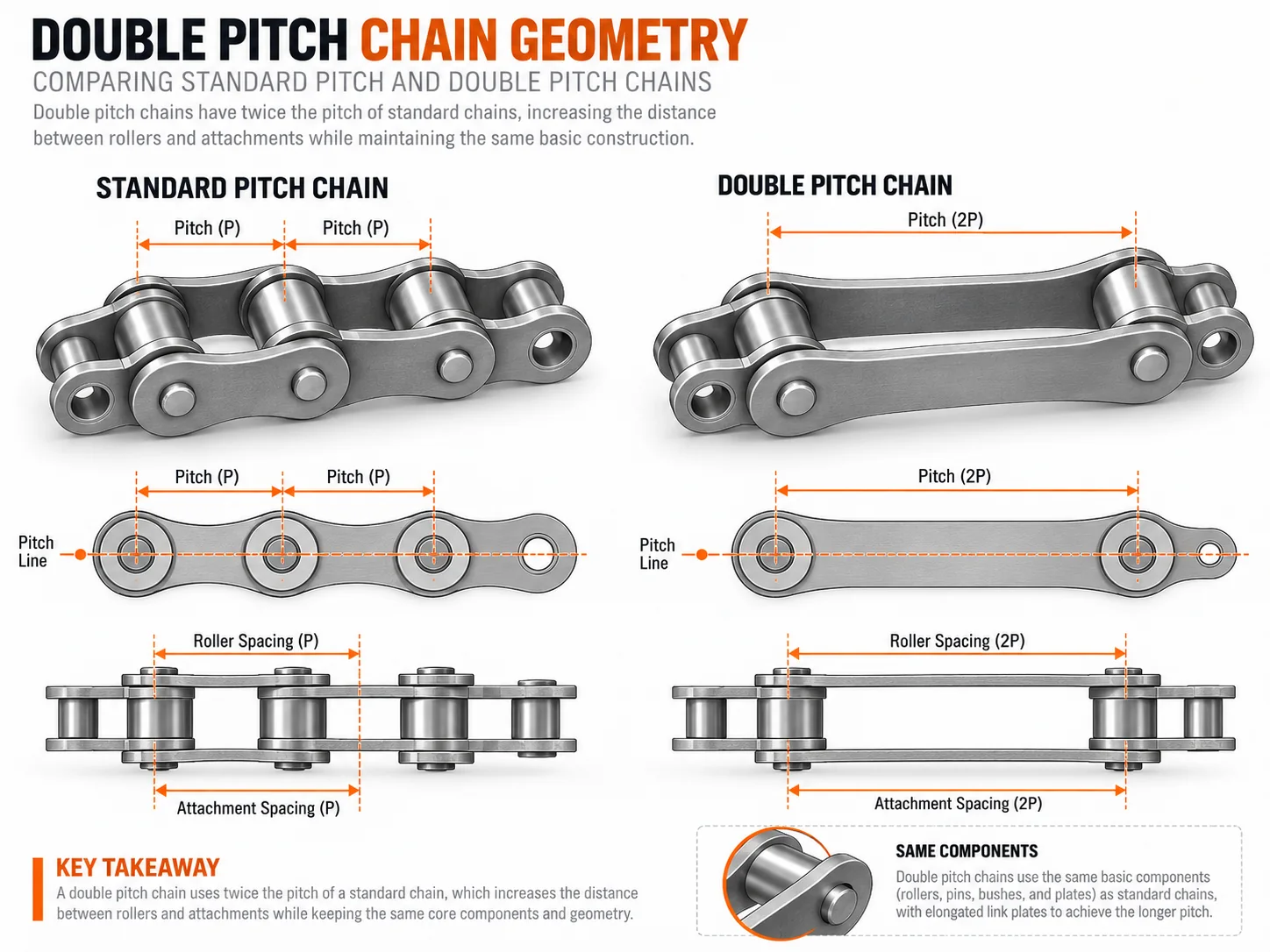
チェーンを取り外す前に、いくつかの特性を測定してください。ピッチは基本的なギア比を示しますが、内幅、ローラーまたはブッシュの直径、ピンの直径、プレートの高さ、全体の幅、および取り付け寸法によって、同じ公称ピッチを持つ構成を区別することができます。
摩耗したチェーンの場合は、複数のリンクにわたる累積ピッチを測定してください。チェーンを側面と端から撮影し、可能であればスプロケットも一緒に撮影してください。
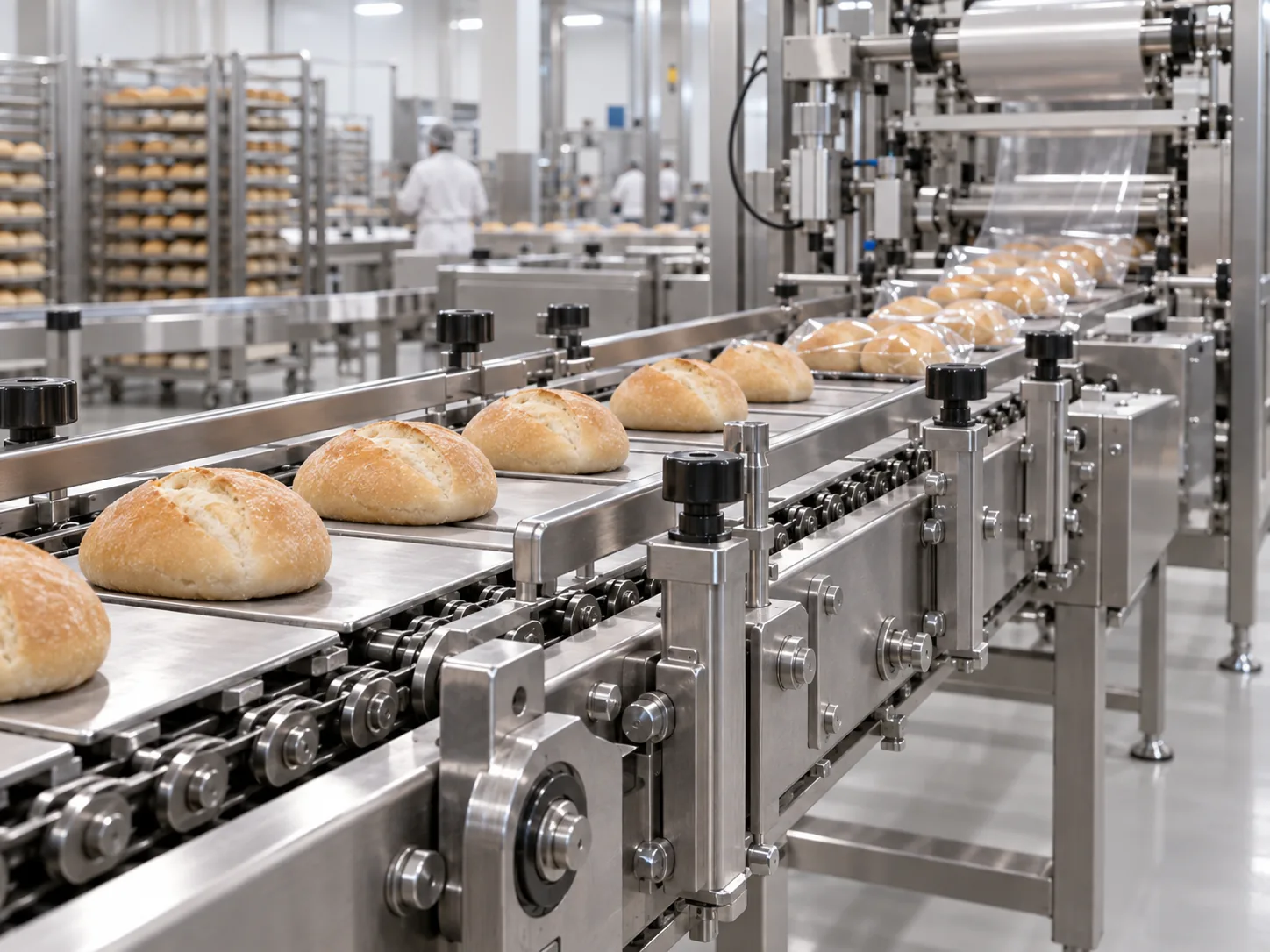
The same chain geometry can behave differently in a humid proofer, a hot oven, an ambient cooling section or a washdown area. For how to inspect chain and sprocket wear, document the exact machine zone, whether the chain carries product directly or moves pans/fixtures, and whether the joint sees heat, moisture, cleaning chemicals or abrasive residue.
プロセスデータは、互換性によって固定される特性と、材料、クリアランス、取り付け方法などの、用途に応じて見直すべき特性を判断するのに役立ちます。
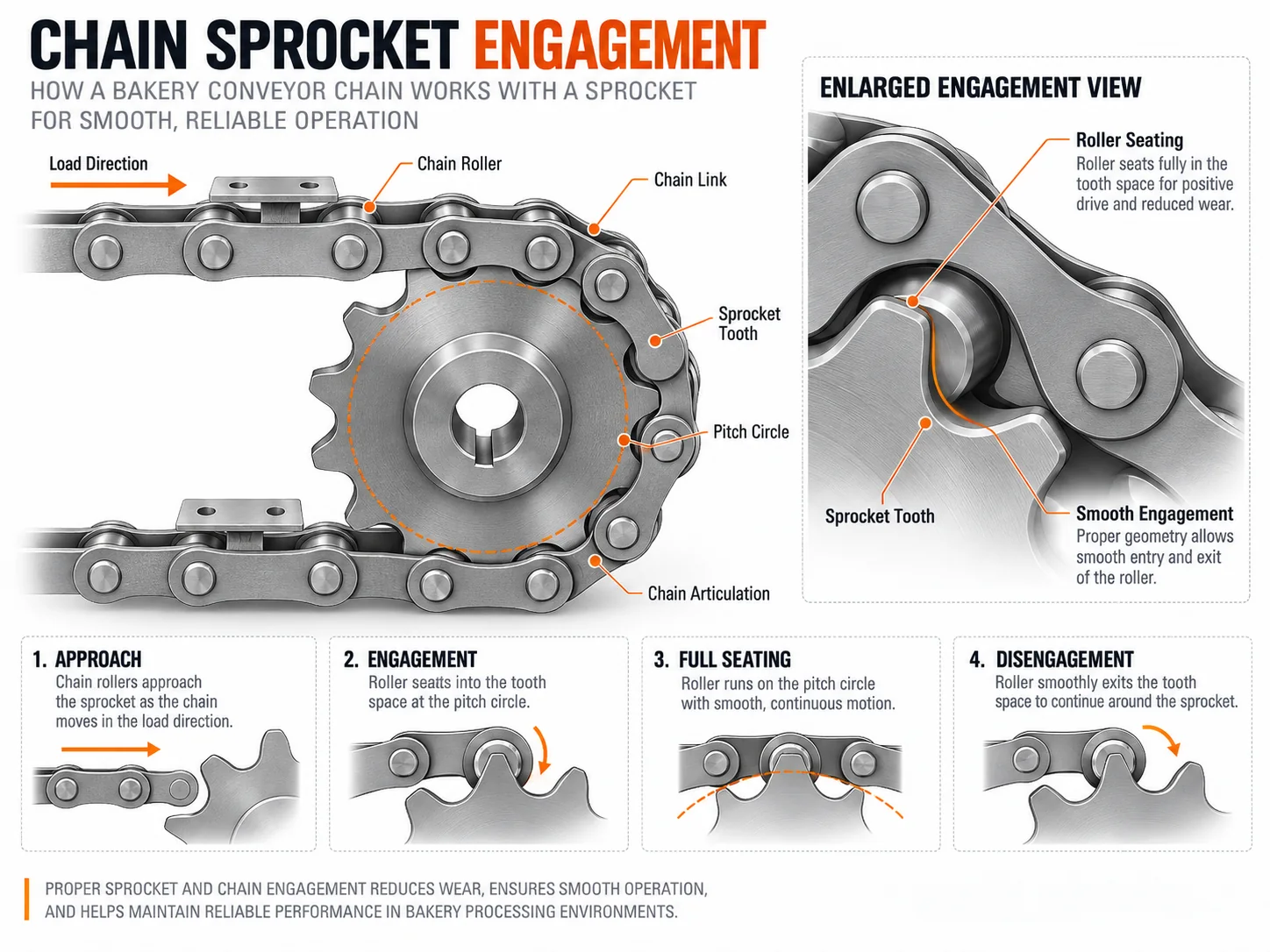
チェーンは単独では動作しません。ローラーやブッシュはスプロケットの歯間をスムーズに通過する必要があり、ガイドトラックはチェーンを横方向に無理に動かすことなく支えます。歯の引っかかり、シャフトのずれ、スプロケットの偏心、またはガイドの締め付けがきつすぎると、新しいチェーンでもすぐに摩耗してしまいます。
回路全体を通して経路全体を検査してください。同じ機械箇所で損傷が繰り返される場合は、チェーン自体に欠陥があると判断する前に、その箇所の支持部、搬送部、または搬送装置を調査してください。
ピッチ、幅、ローラー/ブッシュ、ピン、プレート、全体の幅、および取り付けパターン。
温度、湿度、洗浄、速度、負荷、生産時間、起動回数。
スプロケット、ガイド、チェーンセンター、テークアップ、アライメント、キャリアクリアランス。
設置前に、最終的な注文形状、材質、および用途に応じた構成を承認してください。
問題が発生する前に何が変わったのかを尋ねてください。生産量、製品またはパンの重量、洗浄サイクル、潤滑剤、温度、メンテナンス間隔、またはスプロケットの交換などです。摩耗が均一か集中しているかを示すため、単一の写真よりも傾向情報の方が価値があります。
定期点検では、ジョイントの固着、ローラーの摩耗、ピンのずれ、アタッチメントのひび割れや曲がり、異常な側面接触、および巻き取りの不均一性を確認してください。機械所有者の要件に従って、ガードと安全手順を適切に維持してください。
測定寸法、機械/プロセス名、写真、図面(入手可能な場合)、数量または必要なチェーン長、取り付け間隔、チェーン中心間隔、スプロケット情報、温度、洗浄条件、負荷、目標配送範囲を含めてください。 ベーカリーチェーン選択ガイド そして 製品ファミリーの概要 次の意思決定ステップに向けて。
For an additional allocated product reference, review chain and sprocket options while preparing the sprocket-side details of the RFQ.
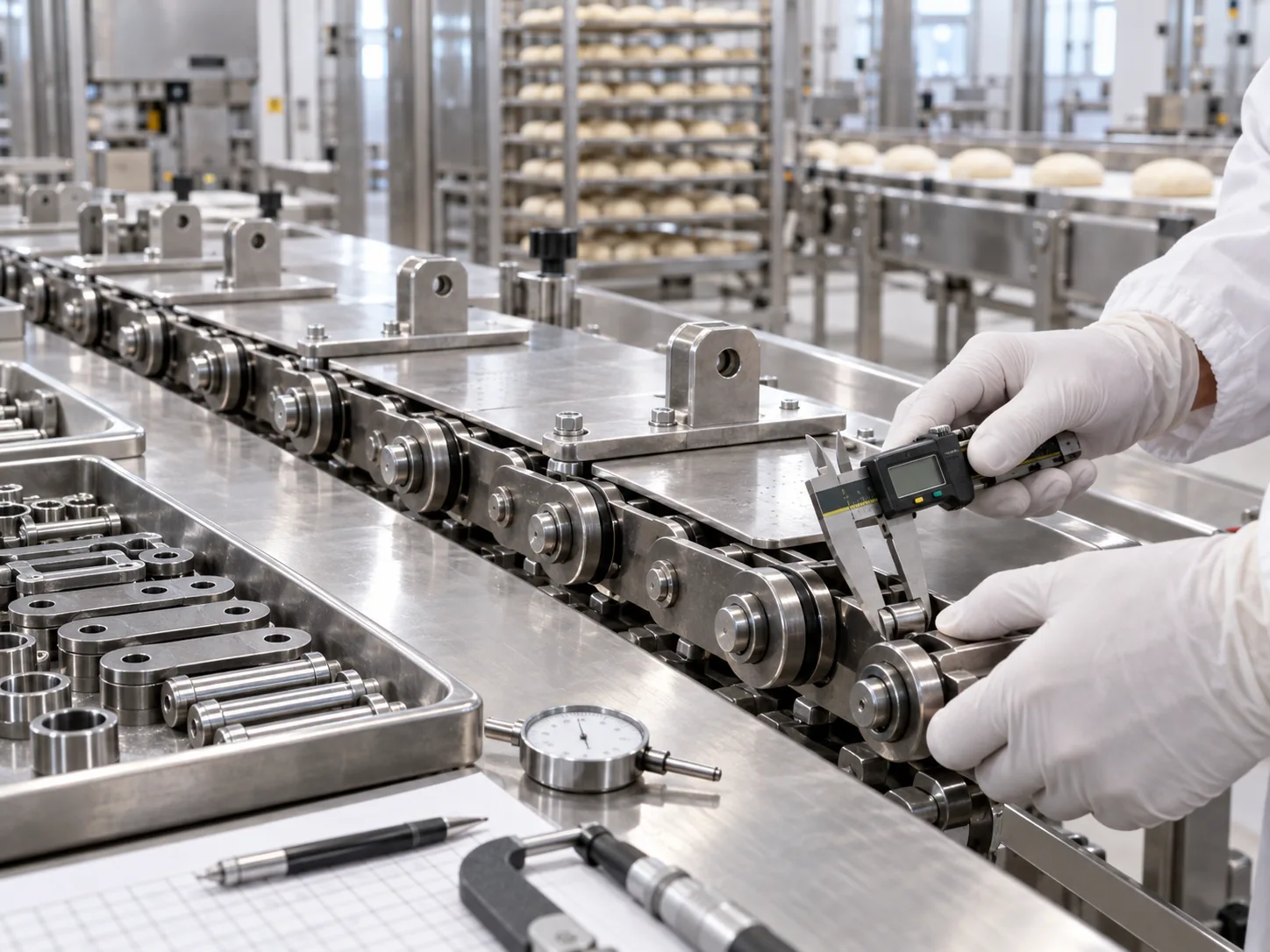
A useful diagnosis starts with evidence that can be repeated by a second person. evaluating the chain and sprocket as a mating wear system. Record multi-pitch elongation, roller/bush condition, tooth profile, seating, alignment and take-up position. When the chain is worn, note which readings may be influenced by joint clearance or deformation, and prefer multi-pitch or multi-point measurements over one isolated dimension.
The chain does not operate by itself. In drive and tail sprockets on bakery conveyors, inspect the sprockets, guides, return path, take-up and carrier interface at the same time. The symptom to watch is hooked teeth, irregular seating, pitch growth or vibration at engagement. A local problem that repeats at one machine position often points to alignment, clearance or mating-hardware issues rather than a uniform chain problem.
The practical decision is to compare chain wear and tooth wear together so a new component is not paired with a damaging mate. That prevents a common error: changing chain tension, material or size before the root constraint has been identified. Use the chain drawing and the machine envelope together, because a configuration that looks correct in isolation can still interfere with a guard, transfer plate, sensor bracket or carrier.
「高温」「湿潤」「食品グレード」といった単一の形容詞ではなく、動作サイクルを詳細に記述してください。該当する場合は、通常温度と最高温度、水分や洗浄への曝露、速度、起動/停止動作、潤滑制限などを明記してください。これらの詳細によって、基本的な形状は固定したまま、クリアランス、材料、またはメンテナンス方法を変更する必要があるかどうかが判断されます。
| チェック | なぜそれが重要なのか | 送信または確認すべき事項 |
|---|---|---|
| 識別 | Confirm multi-pitch elongation, roller/bush condition, tooth profile, seating, alignment and take-up position. Use a measurement sequence that can be repeated after removal so the installed and bench readings can be compared. | 寸法入りのスケッチ、縮尺を考慮した写真、および過去の図面や部品番号。 |
| ルート位置 | Map where the chain runs through drive and tail sprockets on bakery conveyors. Mark the exact location of hooked teeth, irregular seating, pitch growth or vibration at engagement instead of reporting the condition only as a whole-line problem. | コンベア部分、駆動/後端位置、および戻り経路を示す状況写真。 |
| 嵌合部品 | 歯形、ローラーの着座状態、シャフト/スプロケットのアライメント、ガイドの接触状態、および歯の食い込み予備量を点検してください。これらの部品の摩耗パターンは、チェーン選択の問題を模倣する可能性があります。 | スプロケットの歯数と写真、ガイドのレイアウト、現在の引き込み位置。 |
| ロードパス | Identify how product carriers, pans, rods or fixtures transfer load into the chain. For this topic, the key focus is evaluating the chain and sprocket as a mating wear system. | キャリアの図面、取り付け間隔、チェーン中心間隔、および既知の場合は支持質量/力。 |
| 環境 | 機械ゾーンごとに、温度、湿度、洗浄、汚染、潤滑に関する制限事項を記録します。連続的な曝露と、短時間のピーク曝露または洗浄イベントを区別します。 | 運転状況の概要および保守・潤滑手順。 |
| リリース | The final engineering action is to compare chain wear and tooth wear together so a new component is not paired with a damaging mate. The approved drawing should distinguish fixed interchange dimensions from selectable options. | wear measurements, tooth count, photos, chain dimensions, alignment observations and maintenance history. |
A uniform change along the whole strand suggests a different mechanism from damage concentrated at one sprocket, guide or transfer. For How to Inspect Chain and Sprocket Wear, compare left/right sides and loaded/return paths. The distribution of wear can reveal whether the driver is joint wear, side loading, contamination, thermal change or a carrier that is forcing the chain out of its natural path.
Increasing tension can temporarily change noise or tracking without correcting the underlying cause. If the observed issue is hooked teeth, irregular seating, pitch growth or vibration at engagement, first confirm alignment, take-up geometry and articulation. Excessive tension can add bearing load and make a marginal guide or attachment problem worse.
製パン機器は、製造、洗浄、停止の各状態を繰り返すことがあります。チェーンは、冷えているときは正常に動くのに加熱すると固くなったり、製造中はスムーズに動くのに、湿った状態での停止を繰り返すと腐食したりすることがあります。症状が発生した状態を記録し、適切な是正措置を講じることで、実際の稼働サイクルに対応できるようにしてください。
For an unknown chain, one close-up is not enough. Pair a complete machine-zone image with side and end views of several pitches, a sprocket-engagement photo and a clear attachment/carrier view. Place a scale only where it does not hide the feature being measured. This photo set makes evaluating the chain and sprocket as a mating wear system easier to evaluate remotely.
Record multi-pitch elongation, roller/bush condition, tooth profile, seating, alignment and take-up position, chain centers, sprocket tooth count and the carrier interface before changing components.
Describe what happens in drive and tail sprockets on bakery conveyors, including temperature or moisture changes, speed, load and cleaning/lubrication constraints.
Document where hooked teeth, irregular seating, pitch growth or vibration at engagement appears. Compare drive, tail, loaded run, return run and transfer points rather than averaging the entire conveyor.
Include wear measurements, tooth count, photos, chain dimensions, alignment observations and maintenance history. State the required quantity or chain length and any documentation needed with the order.
Review pitch, widths, pin/roller geometry, attachments and material notes on one controlled drawing revision. For How to Inspect Chain and Sprocket Wear, the release decision should explicitly address evaluating the chain and sprocket as a mating wear system.
取り付け後、少なくとも1回路全体を点検し、スプロケットの進入/退出とキャリアのクリアランスを確認し、機械メーカーの手順に従って巻き取りを再確認してください。摩耗または位置ずれした部品を補うために新しいチェーンを使用しないでください。
The main reason to keep this process structured is that evaluating the chain and sprocket as a mating wear system interacts with more than one component. A change that improves one symptom can shift load into another part of the mechanism. For example, correcting guide alignment may reduce side wear but also expose a take-up setting that was previously compensating for the misalignment. Record changes one at a time so the result can be interpreted.
For planned maintenance, compare the present condition with a baseline whenever one exists. If there is no baseline, create one during the next shutdown: photograph the sprockets and guide surfaces, record take-up position, measure a defined number of pitches, and note the chain’s location in drive and tail sprockets on bakery conveyors. Repeating the same observations later is more informative than relying on general statements such as “the chain has stretched.”
既存の図面がある場合は、設置済みのハードウェアが図面と一致していることを確認してください。製パン機器は、使用期間中にしばしば改造されます。例えば、搬送装置の修理、ガイドレールの移動、スプロケットの交換、取り付け間隔の変更などです。図面は依然として有用ですが、現場での検証を行うことで、過去の文書を現在の構成の証明として扱うことを防ぐことができます。
Procurement and engineering should use the same evidence package. The RFQ should not separate commercial quantity from technical context: wear measurements, tooth count, photos, chain dimensions, alignment observations and maintenance history. This makes it possible to judge whether a standard series, a modified attachment or a custom replacement is the appropriate route without creating unnecessary back-and-forth.
Finally, treat the website as a preparation tool rather than the controlling product drawing. Measurements and diagrams narrow the family and help organize the RFQ; the released drawing defines the ordered configuration. That distinction is especially important where hooked teeth, irregular seating, pitch growth or vibration at engagement could have more than one mechanical cause.
Use How to Inspect Chain and Sprocket Wear as a machine-level question, not just a chain inspection. Compare the loaded and return runs, drive and tail ends, and any transfer or carrier transition in drive and tail sprockets on bakery conveyors. Document whether hooked teeth, irregular seating, pitch growth or vibration at engagement is distributed along the strand or repeats at one location. That pattern helps separate progressive joint wear from alignment, guide, sprocket or carrier problems that a new chain alone will not correct.
The working record should include multi-pitch elongation, roller/bush condition, tooth profile, seating, alignment and take-up position. Mark which values are fixed by the existing machine and which values can be changed to improve service. The central engineering focus is evaluating the chain and sprocket as a mating wear system. When a legacy part number conflicts with field measurements, hold the RFQ until the installed interface and the controlled drawing can be reconciled.
A useful enquiry combines commercial quantity with the technical package: wear measurements, tooth count, photos, chain dimensions, alignment observations and maintenance history. Also state whether the request is a direct replacement, a planned modification or a new machine design. The release objective is to compare chain wear and tooth wear together so a new component is not paired with a damaging mate. This reduces quote revisions and prevents a visually similar chain from being treated as interchangeable before geometry and duty have been checked.
可能であれば以前の参照番号を使用してください。ただし、設置時の形状と使用状況を必ず確認してください。機械の改造、以前の部品交換、または摩耗により、部品番号だけでは不完全な場合があります。
実用的な数のリンクにわたって複数ピッチ測定を行い、その方法を記録してください。隣接するリンク1箇所の測定値だけに頼るのではなく、公称ピッチや機械の保守限界値と比較してください。
歯の摩耗、引っ掛かり、アライメントの問題、またはチェーンの早期摩耗が繰り返される場合は、チェーンとスプロケットが噛み合いシステムとして機能します。