Geometri rekaman
Jarak antar gigi, lebar, rol/bantalan, pin, pelat, lebar keseluruhan, dan pola pemasangan.
Panduan Teknis Rantai Toko Roti
Selecting Chain Materials for Hot and Humid Equipment is best answered by combining measured chain geometry, machine duty and the operating environment. This guide shows what to inspect, record and discuss before a replacement or new-chain decision.
Selecting Chain Materials for Hot and Humid Equipment should be evaluated from the actual conveyor. Start with chain pitch, transverse geometry, sprocket condition and any carrier attachment, then add temperature, moisture, washdown, load, speed and take-up information. The objective is not to identify a chain by appearance; it is to produce an RFQ that preserves the machine interface and makes application-dependent choices explicit.
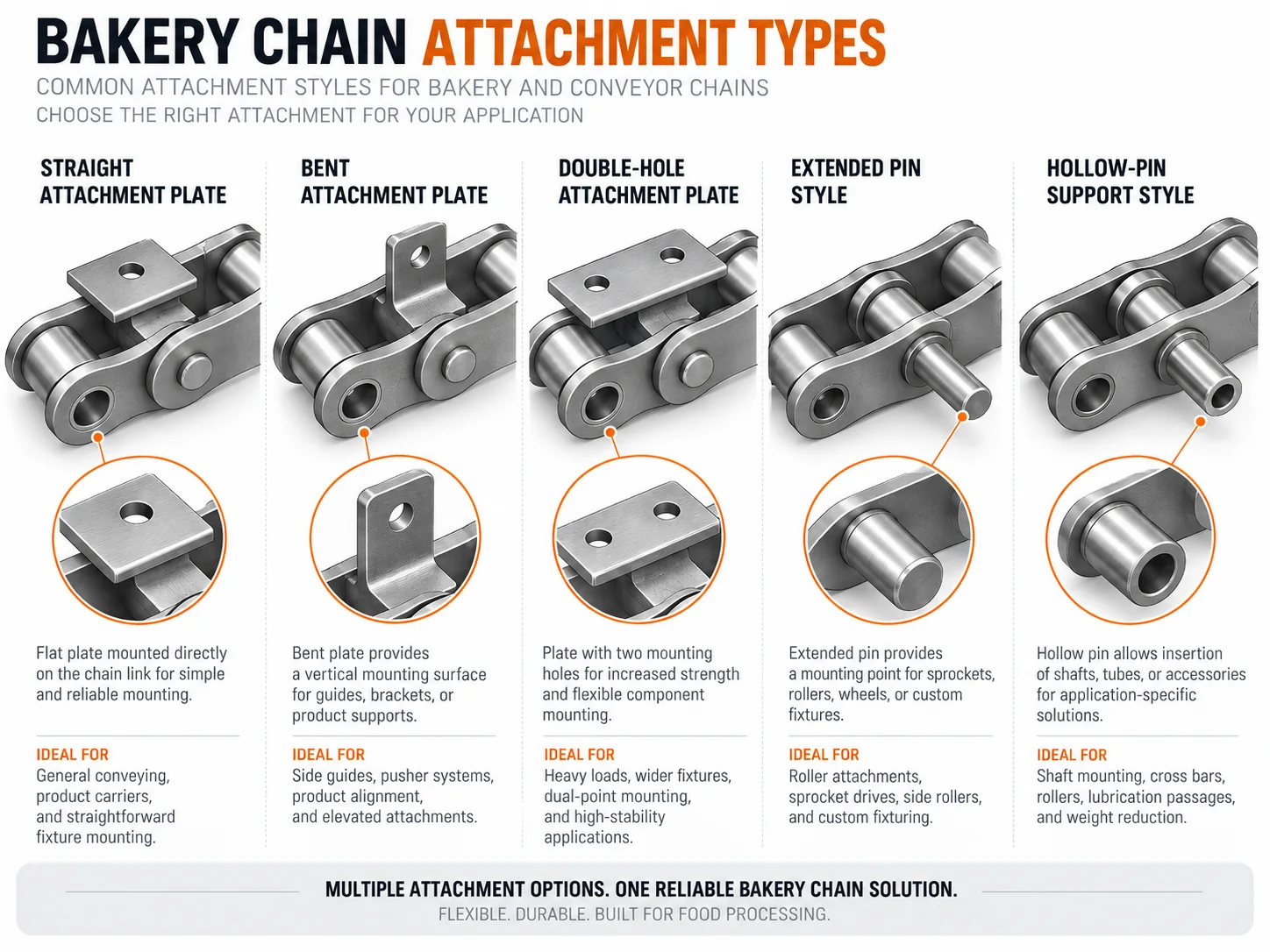
Ukurlah beberapa karakteristik sebelum melepas rantai. Jarak antar gigi menentukan hubungan roda gigi dasar, tetapi lebar bagian dalam, diameter rol atau bushing, diameter pin, tinggi pelat, lebar keseluruhan, dan dimensi pemasangan membedakan konfigurasi yang dapat memiliki jarak antar gigi nominal yang sama.
Untuk rantai yang sudah aus, ukur jarak antar mata rantai secara kumulatif di beberapa tautan. Foto rantai dari samping dan ujungnya, dan sertakan sproket jika memungkinkan.

The same chain geometry can behave differently in a humid proofer, a hot oven, an ambient cooling section or a washdown area. For selecting chain materials for hot and humid equipment, document the exact machine zone, whether the chain carries product directly or moves pans/fixtures, and whether the joint sees heat, moisture, cleaning chemicals or abrasive residue.
Data proses membantu menentukan karakteristik mana yang tetap karena sifatnya yang dapat dipertukarkan dan karakteristik mana—seperti material, jarak bebas, atau metode pembuatan sambungan—yang perlu ditinjau ulang untuk aplikasi tersebut.
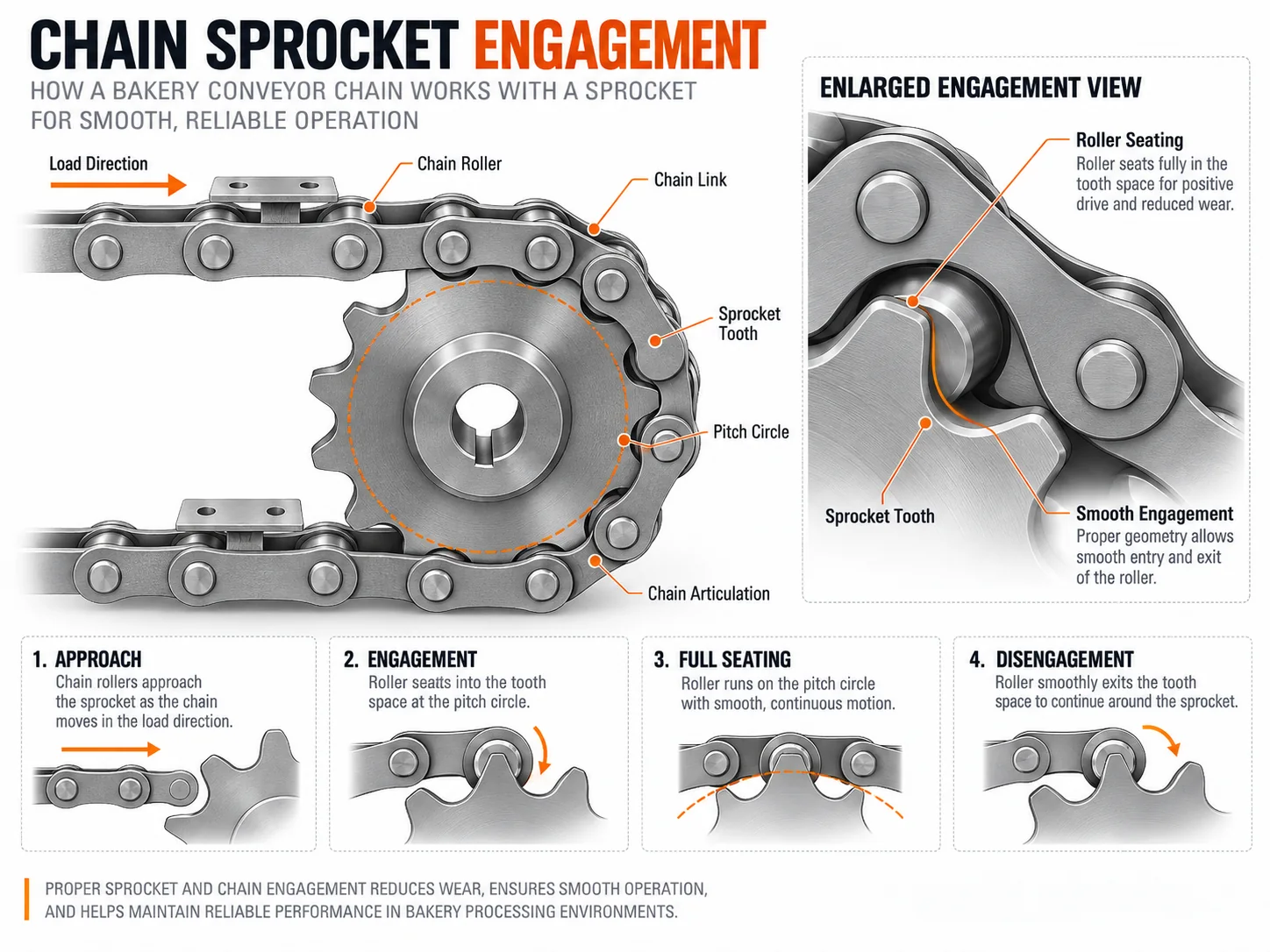
Rantai tidak beroperasi secara independen. Rol atau bantalan harus masuk dan keluar dari ruang gigi sproket dengan lancar, sementara jalur pemandu menopang untaian tanpa memaksanya ke samping. Gigi yang bengkok, ketidaksejajaran poros, sproket eksentrik, atau pemandu yang terlalu kencang dapat menyebabkan rantai baru cepat aus.
Periksa seluruh jalur melalui satu sirkuit penuh. Jika kerusakan berulang di lokasi mesin yang sama, selidiki dukungan, transfer, atau pengangkut lokal sebelum berasumsi bahwa rantai itu sendiri rusak.
Jarak antar gigi, lebar, rol/bantalan, pin, pelat, lebar keseluruhan, dan pola pemasangan.
Suhu, kelembapan, pencucian, kecepatan, beban, jam produksi, dan waktu mulai.
Sproket, pemandu, pusat rantai, pengencangan, penyelarasan, dan jarak bebas pembawa.
Setujui geometri, material, dan konfigurasi akhir yang bergantung pada aplikasi yang dipesan sebelum pemasangan.
Tanyakan apa yang berubah sebelum masalah muncul: tingkat produksi, berat produk atau wadah, siklus pembersihan, pelumas, suhu, interval perawatan, atau penggantian sprocket. Informasi tren lebih berharga daripada satu foto karena menunjukkan apakah keausan seragam atau terkonsentrasi.
Selama pemeriksaan rutin, perhatikan sambungan yang kaku, keausan rol, pergeseran pin, sambungan yang retak atau bengkok, kontak samping yang tidak normal, dan penarikan yang tidak merata. Pastikan pelindung dan prosedur keselamatan tetap terpasang sesuai dengan persyaratan pemilik mesin.
Sertakan dimensi terukur, nama mesin/proses, foto, gambar jika tersedia, jumlah atau panjang rantai yang dibutuhkan, interval pemasangan, jarak pusat rantai, informasi sproket, suhu, kondisi pencucian, beban, dan jendela waktu pengiriman yang ditargetkan. Tinjau panduan memilih jaringan toko roti dan Gambaran umum keluarga produk untuk langkah pengambilan keputusan selanjutnya.
A useful diagnosis starts with evidence that can be repeated by a second person. balancing corrosion exposure with thermal stability and wear at articulated joints. Record temperature range, humidity/condensation, cleaning chemistry, load, speed and lubrication limitations. When the chain is worn, note which readings may be influenced by joint clearance or deformation, and prefer multi-pitch or multi-point measurements over one isolated dimension.
The chain does not operate by itself. In proofers connected to ovens and mixed-temperature bakery equipment, inspect the sprockets, guides, return path, take-up and carrier interface at the same time. The symptom to watch is corrosion at cool zones combined with tight joints or lubricant degradation near hotter zones. A local problem that repeats at one machine position often points to alignment, clearance or mating-hardware issues rather than a uniform chain problem.
The practical decision is to map temperature and moisture by machine zone instead of applying one environment label to the whole line. That prevents a common error: changing chain tension, material or size before the root constraint has been identified. Use the chain drawing and the machine envelope together, because a configuration that looks correct in isolation can still interfere with a guard, transfer plate, sensor bracket or carrier.
Jelaskan siklus operasinya, bukan hanya satu kata sifat seperti "panas," "basah," atau "kelas makanan." Sebutkan suhu normal dan puncak jika relevan, paparan kelembapan atau pembersihan, kecepatan, perilaku mulai/berhenti, dan batasan pelumasan. Detail-detail ini menentukan apakah jarak bebas, material, atau praktik perawatan perlu diubah sementara geometri dasarnya tetap sama.
| Memeriksa | Mengapa ini penting | Apa yang perlu dikirim atau diverifikasi |
|---|---|---|
| Identifikasi | Confirm temperature range, humidity/condensation, cleaning chemistry, load, speed and lubrication limitations. Use a measurement sequence that can be repeated after removal so the installed and bench readings can be compared. | Sketsa berdimensi, foto dengan mempertimbangkan skala, dan gambar atau nomor bagian lama apa pun. |
| Posisi rute | Map where the chain runs through proofers connected to ovens and mixed-temperature bakery equipment. Mark the exact location of corrosion at cool zones combined with tight joints or lubricant degradation near hotter zones instead of reporting the condition only as a whole-line problem. | Foto konteks yang menunjukkan bagian konveyor, posisi penggerak/ekor, dan jalur kembali. |
| Bagian yang saling berpasangan | Periksa profil gigi, dudukan rol, keselarasan poros/sprocket, kontak pemandu, dan cadangan pengencangan. Bagian-bagian ini dapat menciptakan pola keausan yang menyerupai masalah pemilihan rantai. | Jumlah gigi sproket dan foto, tata letak pemandu, dan posisi pengambilan saat ini. |
| Jalur pemuatan | Identify how product carriers, pans, rods or fixtures transfer load into the chain. For this topic, the key focus is balancing corrosion exposure with thermal stability and wear at articulated joints. | Gambar pembawa, interval pemasangan, jarak pusat rantai, dan massa/gaya yang ditopang jika diketahui. |
| Lingkungan | Catat suhu, kelembapan, pencucian, kontaminasi, dan batasan pelumasan berdasarkan zona mesin. Pisahkan paparan terus menerus dari paparan singkat atau kegiatan pembersihan. | Ringkasan kondisi pengoperasian dan praktik perawatan/pelumasan. |
| Melepaskan | The final engineering action is to map temperature and moisture by machine zone instead of applying one environment label to the whole line. The approved drawing should distinguish fixed interchange dimensions from selectable options. | zone temperatures, humidity, material expectations, geometry and maintenance constraints. |
A uniform change along the whole strand suggests a different mechanism from damage concentrated at one sprocket, guide or transfer. For Selecting Chain Materials for Hot and Humid Equipment, compare left/right sides and loaded/return paths. The distribution of wear can reveal whether the driver is joint wear, side loading, contamination, thermal change or a carrier that is forcing the chain out of its natural path.
Increasing tension can temporarily change noise or tracking without correcting the underlying cause. If the observed issue is corrosion at cool zones combined with tight joints or lubricant degradation near hotter zones, first confirm alignment, take-up geometry and articulation. Excessive tension can add bearing load and make a marginal guide or attachment problem worse.
Peralatan toko roti dapat berpindah antara kondisi produksi, pembersihan, dan penghentian. Rantai mungkin bergerak normal saat dingin dan menjadi kencang saat panas, atau berjalan bebas selama produksi tetapi mengalami korosi setelah penghentian basah berulang kali. Catat kondisi di mana gejala tersebut terjadi sehingga tindakan perbaikan yang dipilih sesuai dengan siklus kerja yang sebenarnya.
For an unknown chain, one close-up is not enough. Pair a complete machine-zone image with side and end views of several pitches, a sprocket-engagement photo and a clear attachment/carrier view. Place a scale only where it does not hide the feature being measured. This photo set makes balancing corrosion exposure with thermal stability and wear at articulated joints easier to evaluate remotely.
Record temperature range, humidity/condensation, cleaning chemistry, load, speed and lubrication limitations, chain centers, sprocket tooth count and the carrier interface before changing components.
Describe what happens in proofers connected to ovens and mixed-temperature bakery equipment, including temperature or moisture changes, speed, load and cleaning/lubrication constraints.
Document where corrosion at cool zones combined with tight joints or lubricant degradation near hotter zones appears. Compare drive, tail, loaded run, return run and transfer points rather than averaging the entire conveyor.
Include zone temperatures, humidity, material expectations, geometry and maintenance constraints. State the required quantity or chain length and any documentation needed with the order.
Review pitch, widths, pin/roller geometry, attachments and material notes on one controlled drawing revision. For Selecting Chain Materials for Hot and Humid Equipment, the release decision should explicitly address balancing corrosion exposure with thermal stability and wear at articulated joints.
Setelah pemasangan, amati setidaknya satu putaran penuh, periksa posisi masuk/keluar sproket dan jarak bebas pembawa, dan periksa kembali pengencangan sesuai dengan prosedur pabrikan mesin. Rantai baru tidak boleh digunakan untuk mengganti komponen yang aus atau tidak sejajar.
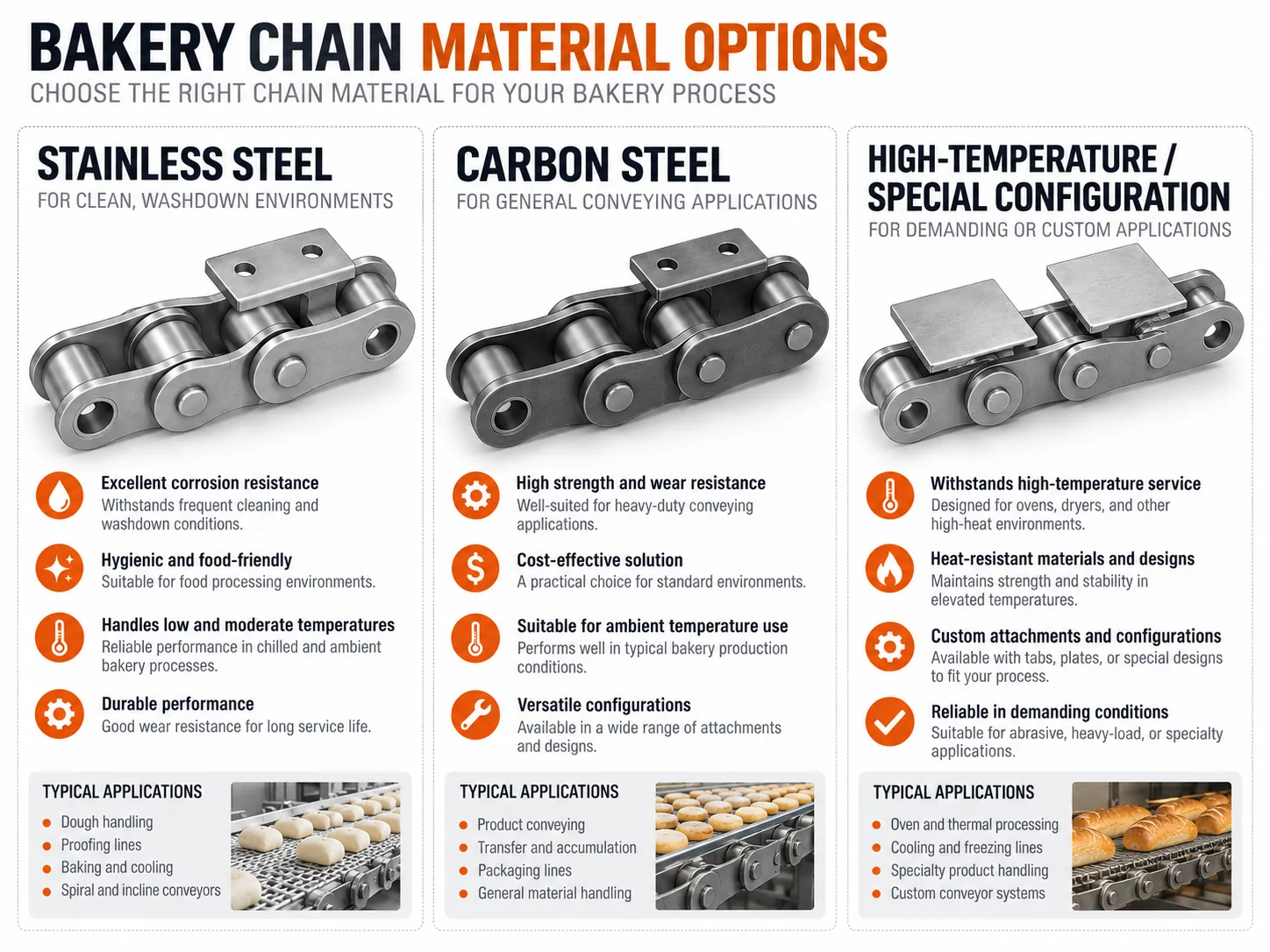
The main reason to keep this process structured is that balancing corrosion exposure with thermal stability and wear at articulated joints interacts with more than one component. A change that improves one symptom can shift load into another part of the mechanism. For example, correcting guide alignment may reduce side wear but also expose a take-up setting that was previously compensating for the misalignment. Record changes one at a time so the result can be interpreted.
For planned maintenance, compare the present condition with a baseline whenever one exists. If there is no baseline, create one during the next shutdown: photograph the sprockets and guide surfaces, record take-up position, measure a defined number of pitches, and note the chain’s location in proofers connected to ovens and mixed-temperature bakery equipment. Repeating the same observations later is more informative than relying on general statements such as “the chain has stretched.”
Jika tersedia gambar yang sudah ada, pastikan perangkat keras yang terpasang masih sesuai dengan gambar tersebut. Peralatan toko roti sering dimodifikasi selama masa pakainya: pengangkut dapat diperbaiki, rel pemandu dipindahkan, roda gigi diganti, dan interval pemasangan diubah. Gambar tersebut tetap berguna, tetapi verifikasi lapangan mencegah dokumen historis diperlakukan sebagai bukti konfigurasi saat ini.
Procurement and engineering should use the same evidence package. The RFQ should not separate commercial quantity from technical context: zone temperatures, humidity, material expectations, geometry and maintenance constraints. This makes it possible to judge whether a standard series, a modified attachment or a custom replacement is the appropriate route without creating unnecessary back-and-forth.
Finally, treat the website as a preparation tool rather than the controlling product drawing. Measurements and diagrams narrow the family and help organize the RFQ; the released drawing defines the ordered configuration. That distinction is especially important where corrosion at cool zones combined with tight joints or lubricant degradation near hotter zones could have more than one mechanical cause.
Use Selecting Chain Materials for Hot and Humid Equipment as a machine-level question, not just a chain inspection. Compare the loaded and return runs, drive and tail ends, and any transfer or carrier transition in proofers connected to ovens and mixed-temperature bakery equipment. Document whether corrosion at cool zones combined with tight joints or lubricant degradation near hotter zones is distributed along the strand or repeats at one location. That pattern helps separate progressive joint wear from alignment, guide, sprocket or carrier problems that a new chain alone will not correct.
The working record should include temperature range, humidity/condensation, cleaning chemistry, load, speed and lubrication limitations. Mark which values are fixed by the existing machine and which values can be changed to improve service. The central engineering focus is balancing corrosion exposure with thermal stability and wear at articulated joints. When a legacy part number conflicts with field measurements, hold the RFQ until the installed interface and the controlled drawing can be reconciled.
A useful enquiry combines commercial quantity with the technical package: zone temperatures, humidity, material expectations, geometry and maintenance constraints. Also state whether the request is a direct replacement, a planned modification or a new machine design. The release objective is to map temperature and moisture by machine zone instead of applying one environment label to the whole line. This reduces quote revisions and prevents a visually similar chain from being treated as interchangeable before geometry and duty have been checked.
Gunakan referensi lama jika tersedia, tetapi verifikasi geometri dan beban terpasang. Modifikasi mesin, penggantian sebelumnya, atau keausan dapat membuat nomor suku cadang saja tidak lengkap.
Gunakan pengukuran multi-pitch di sejumlah tautan yang praktis dan catat metodenya. Bandingkan dengan pitch nominal dan batas perawatan mesin, alih-alih hanya mengandalkan pengukuran satu tautan yang berdekatan.
Setiap kali terjadi keausan gigi, tersangkut, masalah kesejajaran, atau keausan rantai dini yang berulang. Rantai dan sproket bekerja sebagai sistem yang saling terkait.