جیومیٹری ریکارڈ کریں۔
پچ، چوڑائی، رولر/بش، پن، پلیٹ، مجموعی چوڑائی اور منسلک پیٹرن.
بیکری چین ٹیکنیکل گائیڈ
Selecting Chain Materials for Hot and Humid Equipment is best answered by combining measured chain geometry, machine duty and the operating environment. This guide shows what to inspect, record and discuss before a replacement or new-chain decision.
Selecting Chain Materials for Hot and Humid Equipment should be evaluated from the actual conveyor. Start with chain pitch, transverse geometry, sprocket condition and any carrier attachment, then add temperature, moisture, washdown, load, speed and take-up information. The objective is not to identify a chain by appearance; it is to produce an RFQ that preserves the machine interface and makes application-dependent choices explicit.
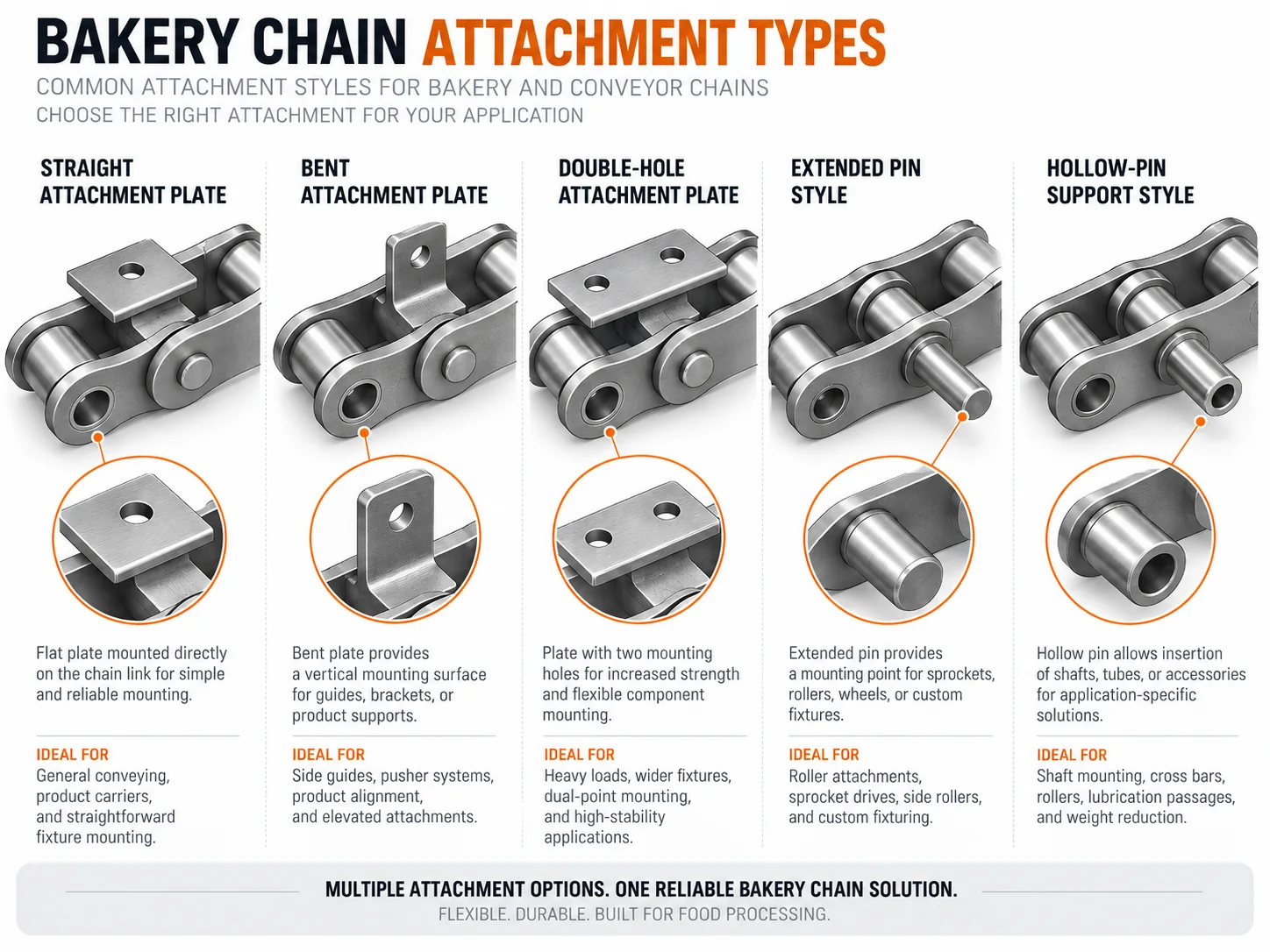
زنجیر کو ہٹانے سے پہلے کئی خصوصیات کی پیمائش کریں۔ پچ بنیادی گیئرنگ تعلق کو تلاش کرتی ہے، لیکن اندر کی چوڑائی، رولر یا بش کا قطر، پن کا قطر، پلیٹ کی اونچائی، مجموعی چوڑائی اور منسلکہ طول و عرض کنفیگریشنز کو الگ کرتے ہیں جو ایک ہی برائے نام پچ کو شیئر کر سکتے ہیں۔
گھسے ہوئے اسٹرینڈ کے لیے، متعدد لنکس میں مجموعی پچ کی پیمائش کریں۔ زنجیر کی سائیڈ اور سرے سے تصویر کھینچیں، اور اسپراکیٹ کو شامل کریں جہاں عملی ہو۔

The same chain geometry can behave differently in a humid proofer, a hot oven, an ambient cooling section or a washdown area. For selecting chain materials for hot and humid equipment, document the exact machine zone, whether the chain carries product directly or moves pans/fixtures, and whether the joint sees heat, moisture, cleaning chemicals or abrasive residue.
پراسیس ڈیٹا اس بات کا تعین کرنے میں مدد کرتا ہے کہ کون سی خصوصیات بدلنے کی صلاحیت کے ذریعے طے کی جاتی ہیں اور کن خصوصیات جیسے کہ مواد، کلیئرنس یا منسلکہ مینوفیکچرنگ کا طریقہ درخواست کے لیے جائزہ لیا جانا چاہیے۔
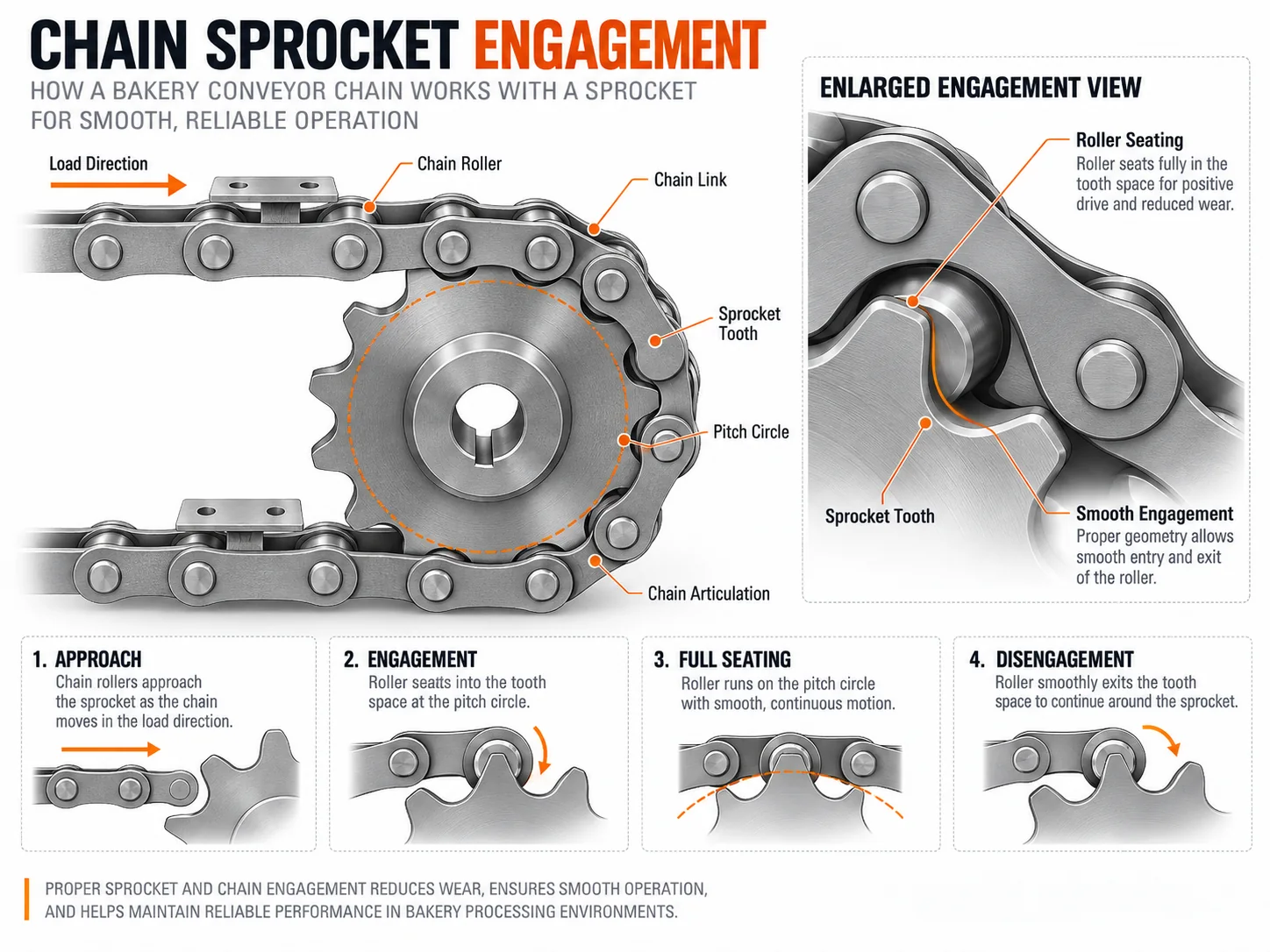
ایک سلسلہ آزادانہ طور پر کام نہیں کرتا ہے۔ رولرس یا جھاڑیوں کو سپروکیٹ کے دانتوں کی جگہوں میں آسانی سے داخل ہونا اور چھوڑنا چاہیے، جب کہ گائیڈ ٹریکس اسٹرینڈ کو بغیر کسی مجبور کے سپورٹ کرتے ہیں۔ کانٹے دار دانت، شافٹ کی غلط ترتیب، سنکی اسپروکیٹس یا سخت گائیڈ ایک نئی زنجیر کو تیزی سے پہنا سکتا ہے۔
ایک مکمل سرکٹ کے ذریعے مکمل راستے کا معائنہ کریں۔ اگر نقصان ایک ہی مشین کے مقام پر دہرایا جاتا ہے، تو یہ ماننے سے پہلے کہ زنجیر خود خراب ہے، مقامی سپورٹ، ٹرانسفر یا کیریئر کی چھان بین کریں۔
پچ، چوڑائی، رولر/بش، پن، پلیٹ، مجموعی چوڑائی اور منسلک پیٹرن.
درجہ حرارت، نمی، واش ڈاؤن، رفتار، بوجھ، پیداوار کے اوقات اور آغاز۔
سپروکیٹس، گائیڈز، چین سینٹرز، ٹیک اپ، الائنمنٹ اور کیریئر کلیئرنس۔
تنصیب سے پہلے حتمی ترتیب شدہ جیومیٹری، مواد اور ایپلیکیشن پر منحصر ترتیب کو منظور کریں۔
پوچھیں کہ مسئلہ ظاہر ہونے سے پہلے کیا بدلا ہے: پیداوار کی شرح، پروڈکٹ یا پین کا وزن، صفائی کا چکر، چکنا کرنے والا، درجہ حرارت، دیکھ بھال کا وقفہ یا بدلے ہوئے اسپراکٹس۔ رجحان کی معلومات ایک تصویر سے زیادہ قیمتی ہے کیونکہ یہ ظاہر کرتی ہے کہ لباس یکساں ہے یا مرتکز۔
معمول کے معائنے کے دوران، سخت جوڑوں، رولر پہننے، پن کی حرکت، پھٹے ہوئے یا جھکے ہوئے اٹیچمنٹ، غیر معمولی طرف سے رابطہ اور ناہموار ٹیک اپ کو دیکھیں۔ مشین کے مالک کی ضروریات کے مطابق گارڈز اور حفاظتی طریقہ کار کو اپنی جگہ پر رکھیں۔
ناپے ہوئے طول و عرض، مشین/پروسیس کا نام، تصاویر، اگر دستیاب ہو تو ڈرائنگ، مقدار یا مطلوبہ زنجیر کی لمبائی، اٹیچمنٹ وقفہ، چین سینٹر اسپیسنگ، سپروکیٹ کی معلومات، درجہ حرارت، دھونے کی حالت، لوڈ اور ٹارگٹ ڈیلیوری ونڈو شامل کریں۔ کا جائزہ لیں۔ بیکری چین سلیکشن گائیڈ اور پروڈکٹ فیملی کا جائزہ اگلے فیصلے کے لیے۔
A useful diagnosis starts with evidence that can be repeated by a second person. balancing corrosion exposure with thermal stability and wear at articulated joints. Record temperature range, humidity/condensation, cleaning chemistry, load, speed and lubrication limitations. When the chain is worn, note which readings may be influenced by joint clearance or deformation, and prefer multi-pitch or multi-point measurements over one isolated dimension.
The chain does not operate by itself. In proofers connected to ovens and mixed-temperature bakery equipment, inspect the sprockets, guides, return path, take-up and carrier interface at the same time. The symptom to watch is corrosion at cool zones combined with tight joints or lubricant degradation near hotter zones. A local problem that repeats at one machine position often points to alignment, clearance or mating-hardware issues rather than a uniform chain problem.
The practical decision is to map temperature and moisture by machine zone instead of applying one environment label to the whole line. That prevents a common error: changing chain tension, material or size before the root constraint has been identified. Use the chain drawing and the machine envelope together, because a configuration that looks correct in isolation can still interfere with a guard, transfer plate, sensor bracket or carrier.
کسی ایک صفت کے بجائے آپریٹنگ سائیکل کی وضاحت کریں جیسے "گرم،" "گیلا" یا "فوڈ گریڈ۔" نارمل اور چوٹی کا درجہ حرارت بتائیں جہاں متعلقہ، نمی یا صفائی کی نمائش، رفتار، شروع/روکنے کے رویے اور چکنا کرنے کی حدود۔ یہ تفصیلات اس بات کا فیصلہ کرتی ہیں کہ آیا بنیادی جیومیٹری برقرار رہنے کے دوران کلیئرنس، مواد یا دیکھ بھال کی مشق کو تبدیل کرنے کی ضرورت ہے۔
| چیک کریں۔ | یہ کیوں اہمیت رکھتا ہے۔ | کیا بھیجیں یا تصدیق کریں۔ |
|---|---|---|
| شناخت | Confirm temperature range, humidity/condensation, cleaning chemistry, load, speed and lubrication limitations. Use a measurement sequence that can be repeated after removal so the installed and bench readings can be compared. | طول و عرض کا خاکہ، پیمانے سے آگاہی والی تصاویر اور کوئی بھی میراثی ڈرائنگ یا حصہ نمبر۔ |
| راستے کی پوزیشن | Map where the chain runs through proofers connected to ovens and mixed-temperature bakery equipment. Mark the exact location of corrosion at cool zones combined with tight joints or lubricant degradation near hotter zones instead of reporting the condition only as a whole-line problem. | سیاق و سباق کی تصویر کنویئر سیکشن، ڈرائیو/ٹیل پوزیشنز اور واپسی کا راستہ دکھا رہی ہے۔ |
| ملاوٹ کے حصے | ٹوتھ پروفائل، رولر سیٹنگ، شافٹ/اسپراکیٹ الائنمنٹ، گائیڈ رابطہ اور ٹیک اپ ریزرو کا معائنہ کریں۔ یہ حصے پہننے کے نمونے بنا سکتے ہیں جو چین کے انتخاب کے مسئلے کی نقل کرتے ہیں۔ | سپروکیٹ دانتوں کی گنتی اور تصاویر، گائیڈ لے آؤٹ اور موجودہ ٹیک اپ پوزیشن۔ |
| بوجھ کا راستہ | Identify how product carriers, pans, rods or fixtures transfer load into the chain. For this topic, the key focus is balancing corrosion exposure with thermal stability and wear at articulated joints. | کیریئر ڈرائنگ، اٹیچمنٹ وقفہ، چین سینٹر اسپیسنگ اور معاون ماس/فورس جہاں جانا جاتا ہے۔ |
| ماحولیات | مشین زون کے ذریعہ درجہ حرارت، نمی، واش ڈاؤن، آلودگی اور چکنا کرنے کی پابندیاں ریکارڈ کریں۔ مختصر چوٹیوں یا صفائی کے واقعات سے مسلسل نمائش کو الگ کریں۔ | آپریٹنگ کنڈیشن کا خلاصہ اور دیکھ بھال/ چکنا کرنے کی مشق۔ |
| رہائی | The final engineering action is to map temperature and moisture by machine zone instead of applying one environment label to the whole line. The approved drawing should distinguish fixed interchange dimensions from selectable options. | zone temperatures, humidity, material expectations, geometry and maintenance constraints. |
A uniform change along the whole strand suggests a different mechanism from damage concentrated at one sprocket, guide or transfer. For Selecting Chain Materials for Hot and Humid Equipment, compare left/right sides and loaded/return paths. The distribution of wear can reveal whether the driver is joint wear, side loading, contamination, thermal change or a carrier that is forcing the chain out of its natural path.
Increasing tension can temporarily change noise or tracking without correcting the underlying cause. If the observed issue is corrosion at cool zones combined with tight joints or lubricant degradation near hotter zones, first confirm alignment, take-up geometry and articulation. Excessive tension can add bearing load and make a marginal guide or attachment problem worse.
بیکری کا سامان پیداوار، صفائی اور شٹ ڈاؤن ریاستوں کے درمیان منتقل ہو سکتا ہے۔ ایک زنجیر عام طور پر ٹھنڈی ہونے پر واضح ہو سکتی ہے اور گرم ہونے پر تنگ ہو سکتی ہے، یا پیداوار کے دوران آزادانہ طور پر چل سکتی ہے لیکن بار بار گیلے بند ہونے کے بعد سڑ جاتی ہے۔ اس حالت کو ریکارڈ کریں جس میں علامت واقع ہوتی ہے تاکہ منتخب کردہ اصلاحی عمل اصل ڈیوٹی سائیکل کو ایڈریس کرے۔
For an unknown chain, one close-up is not enough. Pair a complete machine-zone image with side and end views of several pitches, a sprocket-engagement photo and a clear attachment/carrier view. Place a scale only where it does not hide the feature being measured. This photo set makes balancing corrosion exposure with thermal stability and wear at articulated joints easier to evaluate remotely.
Record temperature range, humidity/condensation, cleaning chemistry, load, speed and lubrication limitations, chain centers, sprocket tooth count and the carrier interface before changing components.
Describe what happens in proofers connected to ovens and mixed-temperature bakery equipment, including temperature or moisture changes, speed, load and cleaning/lubrication constraints.
Document where corrosion at cool zones combined with tight joints or lubricant degradation near hotter zones appears. Compare drive, tail, loaded run, return run and transfer points rather than averaging the entire conveyor.
Include zone temperatures, humidity, material expectations, geometry and maintenance constraints. State the required quantity or chain length and any documentation needed with the order.
Review pitch, widths, pin/roller geometry, attachments and material notes on one controlled drawing revision. For Selecting Chain Materials for Hot and Humid Equipment, the release decision should explicitly address balancing corrosion exposure with thermal stability and wear at articulated joints.
تنصیب کے بعد، کم از کم ایک مکمل سرکٹ کا مشاہدہ کریں، سپروکیٹ کے اندراج/خارج اور کیریئر کلیئرنس کو چیک کریں، اور مشین بنانے والے کے طریقہ کار کے مطابق ٹیک اپ کو دوبارہ چیک کریں۔ نئے زنجیر کو پہنا ہوا یا غلط طریقے سے منسلک ہارڈ ویئر کی تلافی کے لیے استعمال نہیں کیا جانا چاہیے۔
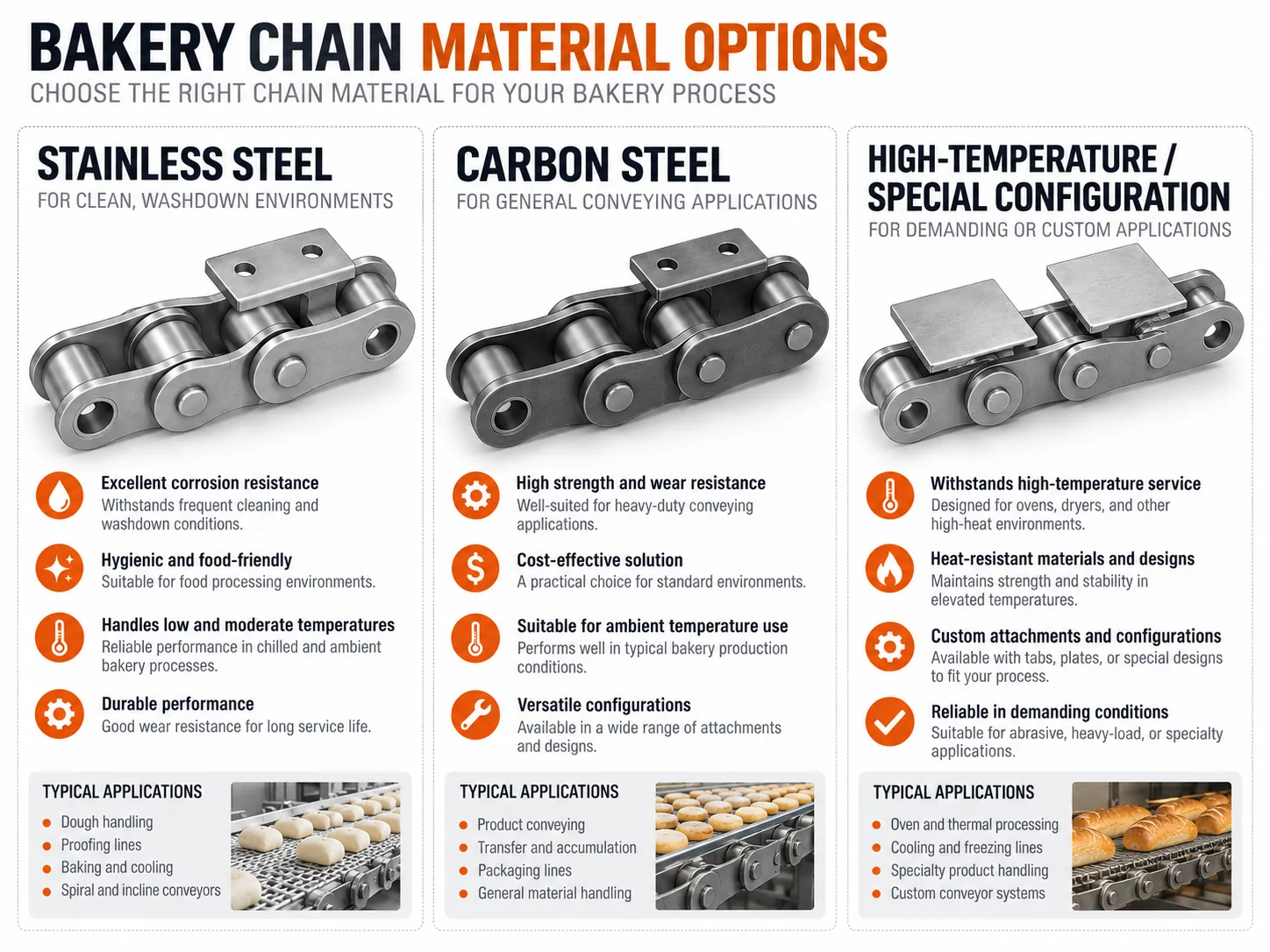
The main reason to keep this process structured is that balancing corrosion exposure with thermal stability and wear at articulated joints interacts with more than one component. A change that improves one symptom can shift load into another part of the mechanism. For example, correcting guide alignment may reduce side wear but also expose a take-up setting that was previously compensating for the misalignment. Record changes one at a time so the result can be interpreted.
For planned maintenance, compare the present condition with a baseline whenever one exists. If there is no baseline, create one during the next shutdown: photograph the sprockets and guide surfaces, record take-up position, measure a defined number of pitches, and note the chain’s location in proofers connected to ovens and mixed-temperature bakery equipment. Repeating the same observations later is more informative than relying on general statements such as “the chain has stretched.”
جب کوئی موجودہ ڈرائنگ دستیاب ہو تو تصدیق کریں کہ انسٹال کردہ ہارڈویئر اب بھی اس سے میل کھاتا ہے۔ بیکری کے سازوسامان میں اکثر اس کی سروس لائف میں ترمیم کی جاتی ہے: کیریئرز کی مرمت کی جا سکتی ہے، گائیڈ ریلوں کو منتقل کیا جا سکتا ہے، اسپراکٹس کو تبدیل کیا جاتا ہے، اور منسلکہ وقفوں کو تبدیل کیا جاتا ہے۔ ڈرائنگ کارآمد رہتی ہے، لیکن فیلڈ کی تصدیق کسی تاریخی دستاویز کو موجودہ کنفیگریشن کے ثبوت کے طور پر مانے جانے سے روکتی ہے۔
Procurement and engineering should use the same evidence package. The RFQ should not separate commercial quantity from technical context: zone temperatures, humidity, material expectations, geometry and maintenance constraints. This makes it possible to judge whether a standard series, a modified attachment or a custom replacement is the appropriate route without creating unnecessary back-and-forth.
Finally, treat the website as a preparation tool rather than the controlling product drawing. Measurements and diagrams narrow the family and help organize the RFQ; the released drawing defines the ordered configuration. That distinction is especially important where corrosion at cool zones combined with tight joints or lubricant degradation near hotter zones could have more than one mechanical cause.
Use Selecting Chain Materials for Hot and Humid Equipment as a machine-level question, not just a chain inspection. Compare the loaded and return runs, drive and tail ends, and any transfer or carrier transition in proofers connected to ovens and mixed-temperature bakery equipment. Document whether corrosion at cool zones combined with tight joints or lubricant degradation near hotter zones is distributed along the strand or repeats at one location. That pattern helps separate progressive joint wear from alignment, guide, sprocket or carrier problems that a new chain alone will not correct.
The working record should include temperature range, humidity/condensation, cleaning chemistry, load, speed and lubrication limitations. Mark which values are fixed by the existing machine and which values can be changed to improve service. The central engineering focus is balancing corrosion exposure with thermal stability and wear at articulated joints. When a legacy part number conflicts with field measurements, hold the RFQ until the installed interface and the controlled drawing can be reconciled.
A useful enquiry combines commercial quantity with the technical package: zone temperatures, humidity, material expectations, geometry and maintenance constraints. Also state whether the request is a direct replacement, a planned modification or a new machine design. The release objective is to map temperature and moisture by machine zone instead of applying one environment label to the whole line. This reduces quote revisions and prevents a visually similar chain from being treated as interchangeable before geometry and duty have been checked.
اگر دستیاب ہو تو پرانا حوالہ استعمال کریں، لیکن نصب جیومیٹری اور ڈیوٹی کی تصدیق کریں۔ مشین میں ترمیم، پچھلے متبادل یا پہننے سے حصہ نمبر اکیلے نامکمل ہو سکتا ہے۔
لنکس کی عملی تعداد میں ملٹی پچ پیمائش کا استعمال کریں اور طریقہ ریکارڈ کریں۔ ایک ملحقہ-لنک پیمائش پر انحصار کرنے کے بجائے برائے نام پچ اور مشین کی دیکھ بھال کی حد سے اس کا موازنہ کریں۔
جب بھی دانتوں کے پہننے، ہکنگ، سیدھ میں ہونے کے خدشات یا بار بار قبل از وقت زنجیر کے لباس موجود ہوتے ہیں۔ زنجیر اور سپروکیٹ میشنگ سسٹم کے طور پر کام کرتے ہیں۔