Deskripsi Produk
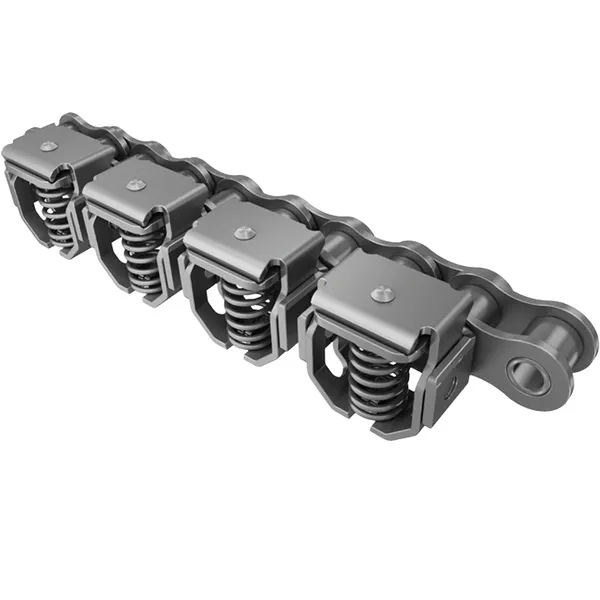
| The main application is for conveying various food products and containers. The 820 is a plastic version of the related. The plastic chains however have a reinforcing middle rib underneath. The link thickness is 4.0 mm (0.16 in.) for the 820-series. The links overlap, so there is no space between the links. Plate mat.:POM/PP; Pin mat.:stainless steel Max.speed: 80m/min lubrication; 50m/min dry Max.length:12m; Color:white/brown; Packing unit:10ft(80links) |
| APPLICATIONS: |
| China CHINAMFG Machinery Co.,Ltd is a special supplier of conveyor system components,including plastic and stainless steel flat top chains, Modular belts, other spare parts, such as UHMWPE wearstrips, side guards, chains guide, bipods, tripods, brackets, clampls.ect. With our years of experence, quality products, excellent services we work with world wide clients from America, Europe, Africa, many counrties of Asia. We keep very good business relation with them, and get trusted from them. Our products application: Packaging and conveying industry Beverage bottling and handling industry Food and meat processing industry Chemical industry Pharmaceuticals industry Automobile industry Electrical and electronics industry Textile industry Light engineering industry |
| Bahan: | Plastic |
|---|---|
| Struktur: | Top Chain |
| Perlakuan Permukaan: | Low Friction |
| Ukuran Rantai: | Pitch 38.1mm |
| Warna: | Brown/White/Others |
| Materials: | POM/PP/PE |
| Contoh: |
US$ 6/Meter
1 Meter (Pesanan Minimum) | |
|---|
| Kustomisasi: |
Tersedia
| Permintaan Khusus |
|---|

Bagaimana cara menghitung gaya tarik rantai pada sistem rantai konveyor?
Gaya tarik rantai, juga dikenal sebagai tegangan rantai, adalah parameter penting yang perlu ditentukan dalam sistem rantai konveyor. Gaya ini mewakili gaya yang dibutuhkan untuk menggerakkan beban yang diangkut sepanjang konveyor. Perhitungan gaya tarik rantai melibatkan beberapa faktor:
1. Berat Muatan: Tentukan berat muatan yang diangkut. Ini termasuk berat produk, bahan kemasan, dan peralatan atau komponen tambahan apa pun yang dibawa oleh konveyor.
2. Koefisien Gesekan: Identifikasi koefisien gesekan antara beban dan komponen konveyor. Ini termasuk gesekan antara produk dan rantai konveyor, serta gesekan antara produk dan alas atau pemandu konveyor. Koefisien ini biasanya disediakan oleh produsen atau dapat diperoleh melalui pengujian.
3. Sudut Kemiringan atau Penurunan: Perhatikan sudut di mana konveyor beroperasi. Jika konveyor memiliki kemiringan atau penurunan, sudut tersebut akan memengaruhi gaya yang dibutuhkan untuk memindahkan beban.
4. Percepatan dan Perlambatan: Perhitungkan persyaratan percepatan atau perlambatan pada sistem konveyor. Jika konveyor perlu mulai atau berhenti secara tiba-tiba atau jika ada perubahan kecepatan, faktor-faktor ini akan memengaruhi gaya tarik rantai.
Setelah faktor-faktor ini ditentukan, gaya tarik rantai dapat dihitung menggunakan rumus berikut:
Gaya Tarik Rantai = (Berat Beban + Gaya Gesekan) × (1 + Faktor Kemiringan atau Penurunan) × (1 + Faktor Percepatan atau Perlambatan)
Penting untuk dicatat bahwa keakuratan perhitungan bergantung pada keakuratan nilai input. Oleh karena itu, disarankan untuk berkonsultasi dengan produsen konveyor atau profesional teknik untuk memastikan perhitungan yang tepat dan ukuran rantai konveyor yang sesuai.
How do you calculate the power requirements for a conveyor chain?
Calculating the power requirements for a conveyor chain involves considering various factors. Here’s a step-by-step process:
1. Determine the total weight to be transported: Measure or estimate the total weight of the material or product that will be carried by the conveyor chain. This includes the weight of the product itself, any packaging, and additional loads.
2. Determine the speed of the conveyor: Determine the desired speed at which the conveyor chain will operate. This is typically measured in feet per minute (FPM) or meters per second (m/s).
3. Calculate the required capacity: Multiply the total weight by the desired speed to determine the required capacity of the conveyor system. This will give you the weight per unit of time (e.g., pounds per minute or kilograms per hour).
4. Consider the conveyor’s design factors: Take into account various design factors such as the type and pitch of the conveyor chain, the coefficient of friction between the chain and the conveyor components, and any incline or decline angles of the conveyor system. These factors affect the power requirements.
5. Determine the required power: Use the following formula to calculate the power requirements:
Power (in horsepower) = (Capacity × Friction Factor) ÷ (33,000 × Efficiency)
Where:
– Capacity is the weight per unit of time (from step 3)
– Friction Factor is the ratio of chain tension to chain weight, taking into account the design factors
– 33,000 is a conversion factor to convert the units to horsepower
– Efficiency is the overall efficiency of the conveyor system, typically expressed as a decimal value (e.g., 0.95 for 95% efficiency)
6. Select a suitable motor: Based on the calculated power requirements, select a motor that can provide the necessary power to drive the conveyor chain. Consider factors such as motor type, motor efficiency, and overload capacity.
It’s important to note that the power requirements may vary depending on specific conveyor system designs and operating conditions. Consulting with a qualified engineer or conveyor manufacturer is recommended to ensure accurate calculations and proper motor selection.
Bagaimana cara menghitung panjang rantai konveyor yang dibutuhkan?
Menghitung panjang rantai konveyor yang dibutuhkan melibatkan pertimbangan beberapa faktor yang terkait dengan sistem konveyor dan aplikasi spesifiknya. Berikut panduan langkah demi langkahnya:
- Tentukan Panjang Konveyor: Ukur panjang total jalur konveyor, termasuk bagian horizontal, miring, atau vertikal.
- Perhitungan Jarak Antar Sproket: Identifikasi lokasi roda gigi atau unit penggerak di sepanjang jalur konveyor. Ukur jarak antara setiap pasang roda gigi yang berdekatan.
- Hitung Jumlah Tautan: Bagilah panjang konveyor total dengan jarak antar mata rantai untuk menentukan jumlah mata rantai yang dibutuhkan. Jarak antar mata rantai adalah jarak antara pusat dua pin yang berurutan pada rantai.
- Pertimbangkan Penyesuaian Ketegangan: Pertimbangkan persyaratan penyesuaian tegangan berdasarkan aplikasi spesifik. Ini mungkin termasuk toleransi untuk perangkat penegangan atau variasi tegangan karena fluktuasi beban.
- Sertakan Koneksi Ujung: Pertimbangkan panjang sambungan ujung, seperti sambungan utama atau pin penghubung, yang digunakan untuk menyambung ujung-ujung rantai. Sertakan dimensi sambungan tersebut dalam perhitungan panjang rantai total.
- Tambahkan Faktor Keamanan: Sertakan faktor keamanan yang sesuai untuk memastikan panjang rantai yang memadai agar pengencangan yang tepat dan untuk mengakomodasi potensi peregangan atau keausan seiring waktu.
Penting untuk dicatat bahwa perhitungan panjang rantai yang dibutuhkan adalah perkiraan berdasarkan berbagai faktor dan mungkin memerlukan penyesuaian selama proses pemasangan dan pengencangan. Konsultasi dengan panduan pabrikan konveyor atau bekerja sama dengan insinyur berpengalaman dapat memberikan perhitungan yang lebih tepat berdasarkan sistem konveyor dan persyaratan aplikasi tertentu.


editor by CX 2023-11-29