Опис продукту
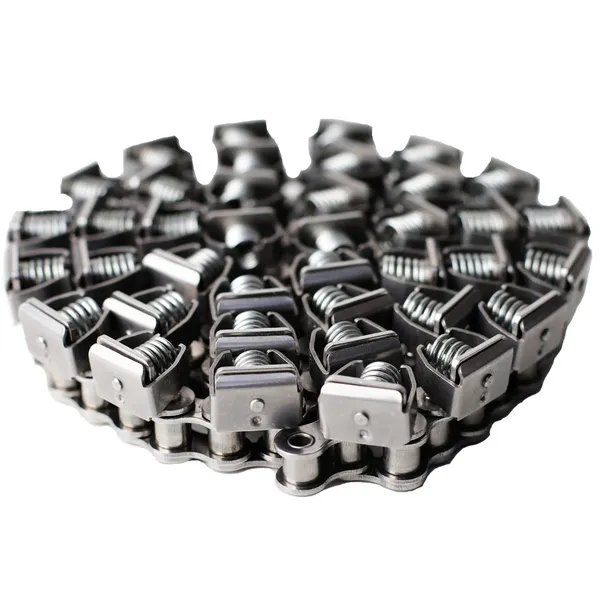
| The main application is for conveying various food products and containers. The 820 is a plastic version of the related. The plastic chains however have a reinforcing middle rib underneath. The link thickness is 4.0 mm (0.16 in.) for the 820-series. The links overlap, so there is no space between the links. Plate mat.:POM/PP; Pin mat.:stainless steel Max.speed: 80m/min lubrication; 50m/min dry Max.length:12m; Color:white/brown; Packing unit:10ft(80links) |
| APPLICATIONS: |
| China CHINAMFG Machinery Co.,Ltd is a special supplier of conveyor system components,including plastic and stainless steel flat top chains, Modular belts, other spare parts, such as UHMWPE wearstrips, side guards, chains guide, bipods, tripods, brackets, clampls.ect. With our years of experence, quality products, excellent services we work with world wide clients from America, Europe, Africa, many counrties of Asia. We keep very good business relation with them, and get trusted from them. Застосування нашої продукції: Пакувальна та конвеєрна промисловість Промисловість розливу та обробки напоїв Харчова та м'ясопереробна промисловість Хімічна промисловість Фармацевтична промисловість Автомобільна промисловість Електротехнічна та електронна промисловість Текстильна промисловість Легка машинобудівна промисловість |
| Матеріал: | Plastic |
|---|---|
| Структура: | Top Chain |
| Обробка поверхні: | Low Friction |
| Розмір ланцюга: | Pitch 38.1mm |
| Колір: | Brown/White/Others |
| Materials: | POM/PP/PE |
| Зразки: |
US$ 6/Meter
1 метр (мінімальне замовлення) | |
|---|
| Налаштування: |
Доступно
| Індивідуальний запит |
|---|
How do you calculate the chain pull force in a conveyor chain system?
The chain pull force, also known as the chain tension, is an important parameter to determine in a conveyor chain system. It represents the force required to move the conveyed load along the conveyor. The calculation of chain pull force involves several factors:
1. Weight of the Load: Determine the weight of the load being conveyed. This includes the weight of the product, packaging materials, and any additional equipment or components carried by the conveyor.
2. Friction Coefficients: Identify the friction coefficients between the load and the conveyor components. This includes the friction between the product and the conveyor chain, as well as the friction between the product and the conveyor bed or guides. These coefficients are typically provided by the manufacturer or can be obtained through testing.
3. Incline or Decline Angle: Consider the angle at which the conveyor operates. If the conveyor has an incline or decline, the angle will affect the force required to move the load.
4. Acceleration and Deceleration: Account for any acceleration or deceleration requirements in the conveyor system. If the conveyor needs to start or stop abruptly or if there are changes in speed, these factors will impact the chain pull force.
Once these factors are determined, the chain pull force can be calculated using the following formula:
Chain Pull Force = (Weight of Load + Friction Force) × (1 + Incline or Decline Factor) × (1 + Acceleration or Deceleration Factor)
It’s important to note that the accuracy of the calculation depends on the accuracy of the input values. Therefore, it’s recommended to consult the conveyor manufacturer or an engineering professional to ensure precise calculations and proper sizing of the conveyor chain.
How do you calculate the power requirements for a conveyor chain?
Calculating the power requirements for a conveyor chain involves considering various factors. Here’s a step-by-step process:
1. Determine the total weight to be transported: Measure or estimate the total weight of the material or product that will be carried by the conveyor chain. This includes the weight of the product itself, any packaging, and additional loads.
2. Determine the speed of the conveyor: Determine the desired speed at which the conveyor chain will operate. This is typically measured in feet per minute (FPM) or meters per second (m/s).
3. Calculate the required capacity: Multiply the total weight by the desired speed to determine the required capacity of the conveyor system. This will give you the weight per unit of time (e.g., pounds per minute or kilograms per hour).
4. Consider the conveyor’s design factors: Take into account various design factors such as the type and pitch of the conveyor chain, the coefficient of friction between the chain and the conveyor components, and any incline or decline angles of the conveyor system. These factors affect the power requirements.
5. Determine the required power: Use the following formula to calculate the power requirements:
Power (in horsepower) = (Capacity × Friction Factor) ÷ (33,000 × Efficiency)
Where:
– Capacity is the weight per unit of time (from step 3)
– Friction Factor is the ratio of chain tension to chain weight, taking into account the design factors
– 33,000 is a conversion factor to convert the units to horsepower
– Efficiency is the overall efficiency of the conveyor system, typically expressed as a decimal value (e.g., 0.95 for 95% efficiency)
6. Select a suitable motor: Based on the calculated power requirements, select a motor that can provide the necessary power to drive the conveyor chain. Consider factors such as motor type, motor efficiency, and overload capacity.
It’s important to note that the power requirements may vary depending on specific conveyor system designs and operating conditions. Consulting with a qualified engineer or conveyor manufacturer is recommended to ensure accurate calculations and proper motor selection.
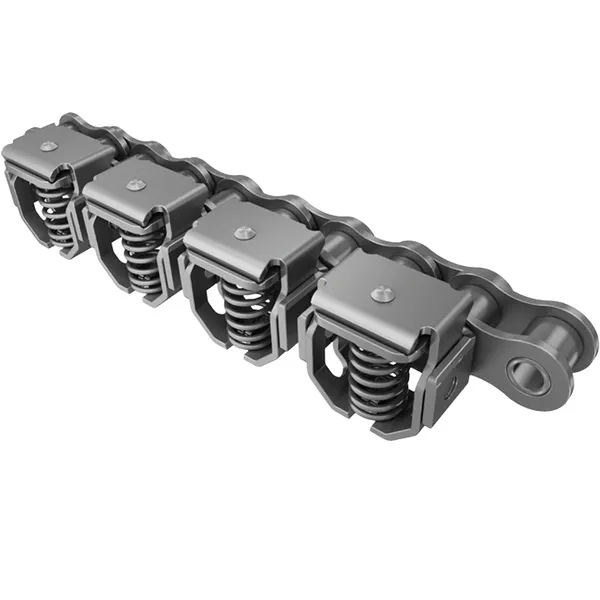
Як розрахувати необхідну довжину конвеєрного ланцюга?
Розрахунок необхідної довжини конвеєрного ланцюга передбачає врахування кількох факторів, пов'язаних з конвеєрною системою та конкретним застосуванням. Ось покрокова інструкція:
- Визначте довжину конвеєра: Виміряйте загальну довжину конвеєрного шляху, включаючи будь-які горизонтальні, похилі або вертикальні ділянки.
- Обліковий запис для центрів зірочок: Визначте розташування зірочок або приводних вузлів вздовж конвеєрного шляху. Виміряйте відстань між кожною парою сусідніх зірочок.
- Обчисліть кількість посилань: Щоб визначити необхідну кількість ланок, поділіть загальну довжину конвеєра на крок ланцюга. Крок – це відстань між центрами двох послідовних штифтів ланцюга.
- Розгляньте регулювання натягу: Враховуйте будь-які вимоги до регулювання натягу залежно від конкретного застосування. Це може включати допуски для натяжних пристроїв або коливання натягу через коливання навантаження.
- Включити кінцеві з'єднання: Враховуйте довжину кінцевих з'єднань, таких як головні ланки або з'єднувальні штифти, які використовуються для з'єднання кінців ланцюга. Врахуйте їхні розміри під час розрахунку загальної довжини ланцюга.
- Додайте фактори безпеки: Врахуйте відповідні коефіцієнти безпеки, щоб забезпечити достатню довжину ланцюга для належного натягу та врахувати будь-яке потенційне розтягнення або знос з часом.
Важливо зазначити, що розрахунок необхідної довжини ланцюга є оцінкою, що базується на різних факторах, і може вимагати коригування під час процесу встановлення та натягування. Звернення до інструкцій виробника конвеєра або співпраця з досвідченим інженером може забезпечити точніші розрахунки на основі конкретної конвеєрної системи та вимог застосування.


editor by CX 2023-11-29