रिकॉर्ड ज्यामिति
पिच, चौड़ाई, रोलर/बुश, पिन, प्लेट, कुल चौड़ाई और अटैचमेंट पैटर्न।
बेकरी चेन तकनीकी गाइड
Hollow Pin Chain Cross-Rod Design Basics is best answered by combining measured chain geometry, machine duty and the operating environment. This guide shows what to inspect, record and discuss before a replacement or new-chain decision.
Hollow Pin Chain Cross-Rod Design Basics should be evaluated from the actual conveyor. Start with chain pitch, transverse geometry, sprocket condition and any carrier attachment, then add temperature, moisture, washdown, load, speed and take-up information. The objective is not to identify a chain by appearance; it is to produce an RFQ that preserves the machine interface and makes application-dependent choices explicit.
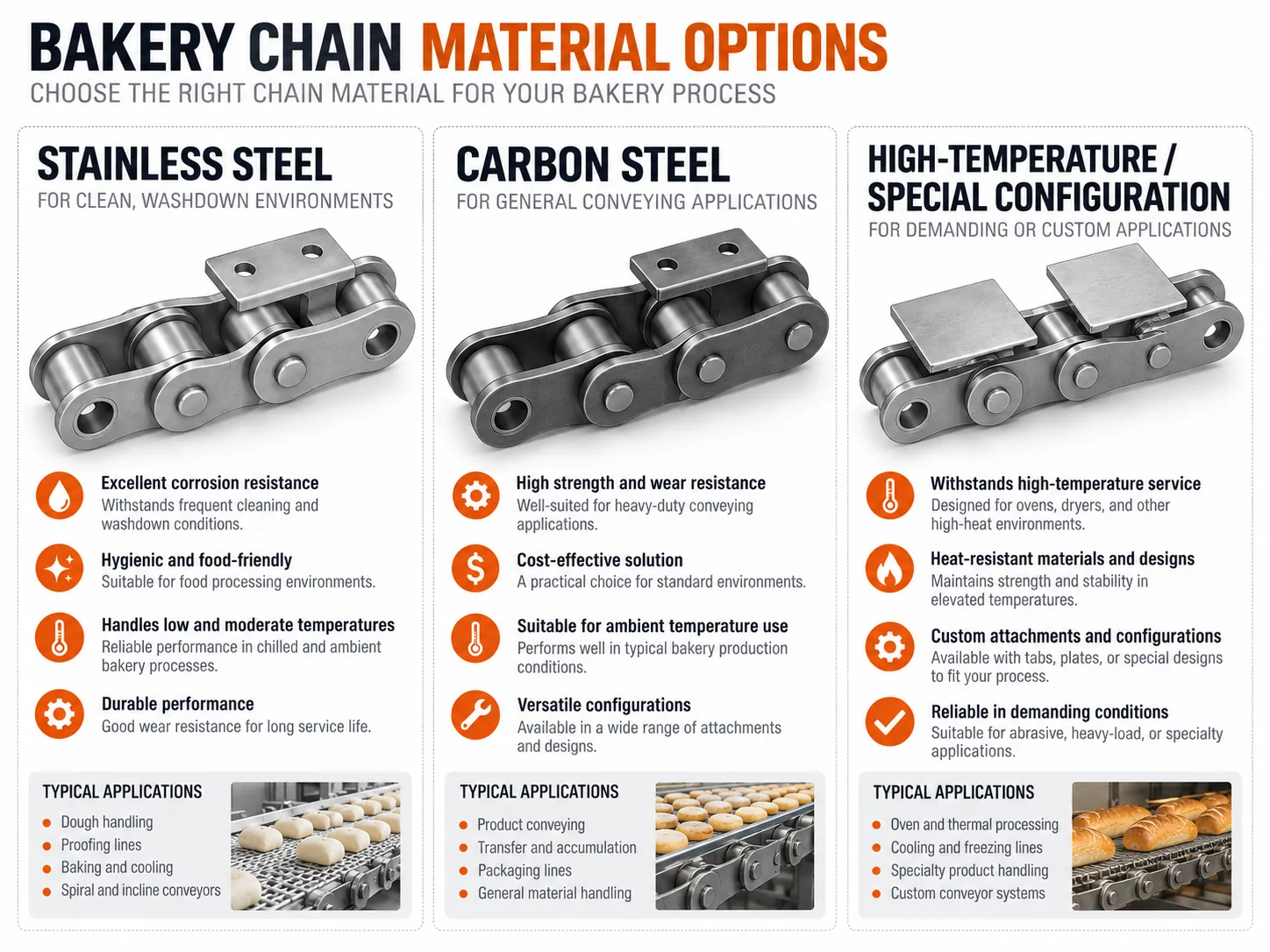
चेन हटाने से पहले कई विशेषताओं को मापें। पिच से गियरिंग का मूल संबंध निर्धारित होता है, लेकिन आंतरिक चौड़ाई, रोलर या बुश का व्यास, पिन का व्यास, प्लेट की ऊंचाई, कुल चौड़ाई और अटैचमेंट के आयाम उन कॉन्फ़िगरेशन को अलग करते हैं जो समान नाममात्र पिच साझा कर सकते हैं।
घिसी हुई चेन के लिए, कई कड़ियों में कुल पिच मापें। चेन की साइड और सिरे से तस्वीर लें, और जहां संभव हो, स्प्रोकेट को भी शामिल करें।

The same chain geometry can behave differently in a humid proofer, a hot oven, an ambient cooling section or a washdown area. For hollow pin chain cross-rod design basics, document the exact machine zone, whether the chain carries product directly or moves pans/fixtures, and whether the joint sees heat, moisture, cleaning chemicals or abrasive residue.
प्रक्रिया संबंधी डेटा यह निर्धारित करने में मदद करता है कि कौन सी विशेषताएं विनिमेयता द्वारा तय की जाती हैं और कौन सी विशेषताएं - जैसे कि सामग्री, क्लीयरेंस या अटैचमेंट निर्माण विधि - को अनुप्रयोग के लिए समीक्षा की जानी चाहिए।
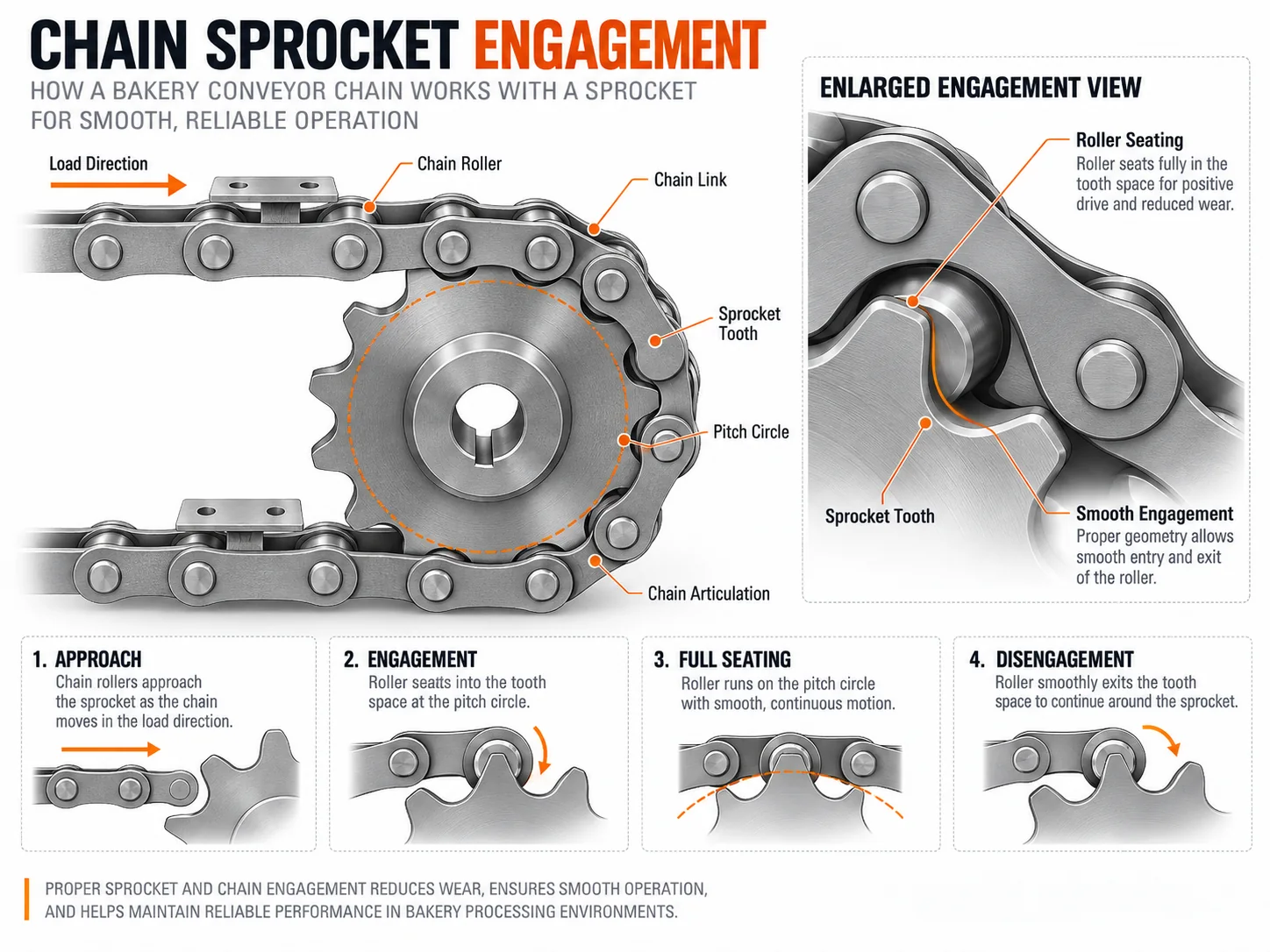
चेन स्वतंत्र रूप से काम नहीं करती। रोलर्स या बुश को स्प्रोकेट के दांतों के बीच की खाली जगह में सुचारू रूप से प्रवेश करना और बाहर निकलना चाहिए, जबकि गाइड ट्रैक चेन को अगल-बगल धकेले बिना सहारा देते हैं। टेढ़े-मेढ़े दांत, शाफ्ट का गलत संरेखण, सनकी स्प्रोकेट या तंग गाइड के कारण नई चेन जल्दी घिस सकती है।
एक पूर्ण सर्किट के माध्यम से संपूर्ण पथ का निरीक्षण करें। यदि क्षति उसी मशीन स्थान पर दोहराई जाती है, तो श्रृंखला में खराबी मान लेने से पहले स्थानीय सपोर्ट, ट्रांसफर या कैरियर की जांच करें।
पिच, चौड़ाई, रोलर/बुश, पिन, प्लेट, कुल चौड़ाई और अटैचमेंट पैटर्न।
तापमान, नमी, धुलाई, गति, भार, उत्पादन घंटे और प्रारंभ तिथियां।
स्पॉकेट, गाइड, चेन सेंटर, टेक-अप, अलाइनमेंट और कैरियर क्लीयरेंस।
स्थापना से पहले अंतिम निर्धारित ज्यामिति, सामग्री और अनुप्रयोग-आधारित विन्यास को अनुमोदित करें।
समस्या उत्पन्न होने से पहले क्या-क्या परिवर्तन हुए, यह पूछें: उत्पादन दर, उत्पाद या पैन का वजन, सफाई चक्र, स्नेहक, तापमान, रखरखाव अंतराल या बदले गए स्प्रोकेट। रुझान संबंधी जानकारी एक तस्वीर से कहीं अधिक मूल्यवान होती है क्योंकि इससे पता चलता है कि घिसाव एकसमान है या किसी विशेष क्षेत्र में केंद्रित है।
नियमित निरीक्षण के दौरान, जोड़ों में जकड़न, रोलर का घिसाव, पिन की गति, टूटे या मुड़े हुए अटैचमेंट, असामान्य पार्श्व संपर्क और असमान टेक-अप की जाँच करें। मशीन मालिक की आवश्यकताओं के अनुसार सुरक्षा गार्ड और सुरक्षा प्रक्रियाओं का पालन करें।
मापे गए आयाम, मशीन/प्रक्रिया का नाम, फ़ोटो, यदि उपलब्ध हो तो ड्राइंग, मात्रा या आवश्यक चेन की लंबाई, अटैचमेंट अंतराल, चेन-सेंटर स्पेसिंग, स्प्रोकेट की जानकारी, तापमान, वॉशडाउन की स्थिति, लोड और लक्षित डिलीवरी विंडो शामिल करें। समीक्षा करें। बेकरी चेन चयन गाइड और यह उत्पाद-परिवार का अवलोकन अगले निर्णय चरण के लिए।
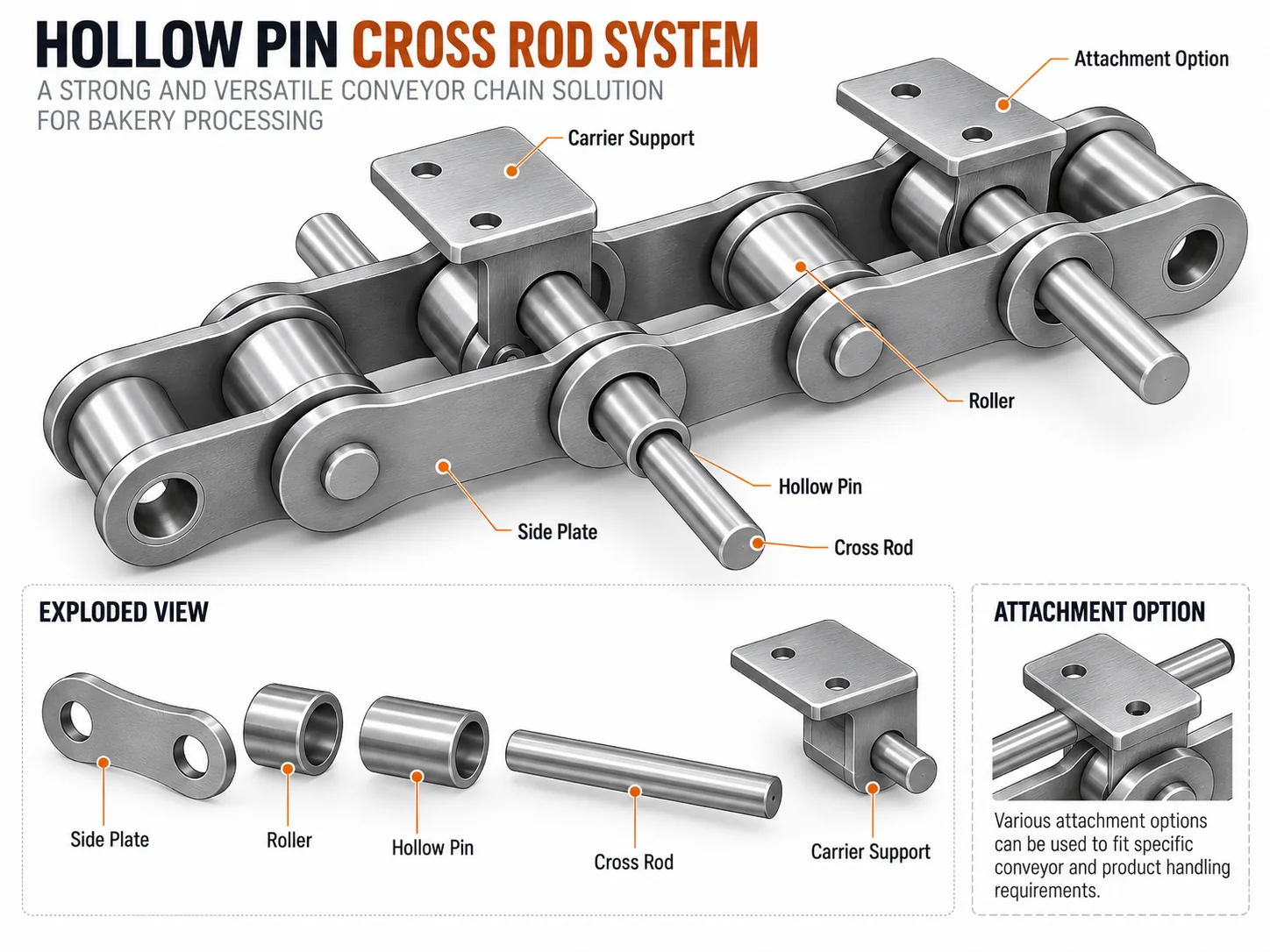
A useful diagnosis starts with evidence that can be repeated by a second person. designing the cross-rod connection so it transfers load without locking the chain joint. Record pin bore, rod diameter, clearance, retention, strand spacing and rod bending span. When the chain is worn, note which readings may be influenced by joint clearance or deformation, and prefer multi-pitch or multi-point measurements over one isolated dimension.
The chain does not operate by itself. In parallel-strand proofing and tray carriers, inspect the sprockets, guides, return path, take-up and carrier interface at the same time. The symptom to watch is rod fretting, binding, uneven strand load or difficult disassembly. A local problem that repeats at one machine position often points to alignment, clearance or mating-hardware issues rather than a uniform chain problem.
The practical decision is to control rod fit and retention while leaving the chain free to articulate across the full route. That prevents a common error: changing chain tension, material or size before the root constraint has been identified. Use the chain drawing and the machine envelope together, because a configuration that looks correct in isolation can still interfere with a guard, transfer plate, sensor bracket or carrier.
“गर्म,” “गीला” या “फूड ग्रेड” जैसे किसी एक विशेषण का प्रयोग करने के बजाय संचालन चक्र का वर्णन करें। जहां आवश्यक हो, सामान्य और अधिकतम तापमान, नमी या सफाई की संभावना, गति, शुरू/बंद होने का तरीका और स्नेहन संबंधी सीमाएं बताएं। ये विवरण तय करते हैं कि बुनियादी ज्यामिति को स्थिर रखते हुए क्लीयरेंस, सामग्री या रखरखाव प्रक्रिया में बदलाव की आवश्यकता है या नहीं।
| जाँच करना | यह क्यों मायने रखती है | क्या भेजना है या सत्यापित करना है |
|---|---|---|
| पहचान | Confirm pin bore, rod diameter, clearance, retention, strand spacing and rod bending span. Use a measurement sequence that can be repeated after removal so the installed and bench readings can be compared. | आयामों वाला रेखाचित्र, पैमाने के अनुसार ली गई तस्वीरें और कोई भी पुराना चित्र या भाग संख्या। |
| मार्ग की स्थिति | Map where the chain runs through parallel-strand proofing and tray carriers. Mark the exact location of rod fretting, binding, uneven strand load or difficult disassembly instead of reporting the condition only as a whole-line problem. | संदर्भ चित्र में कन्वेयर अनुभाग, ड्राइव/टेल की स्थिति और वापसी पथ दिखाया गया है। |
| मिलान भागों | दांतों की प्रोफाइल, रोलर सीटिंग, शाफ्ट/स्प्रोकेट अलाइनमेंट, गाइड कॉन्टैक्ट और टेक-अप रिजर्व की जांच करें। ये हिस्से घिसाव के ऐसे पैटर्न बना सकते हैं जो चेन-सिलेक्शन की समस्या की तरह दिखते हैं। | स्पॉकेट के दांतों की संख्या और तस्वीरें, गाइड लेआउट और वर्तमान टेक-अप स्थिति। |
| लोड पथ | Identify how product carriers, pans, rods or fixtures transfer load into the chain. For this topic, the key focus is designing the cross-rod connection so it transfers load without locking the chain joint. | जहां ज्ञात हो, वहां कैरियर ड्राइंग, अटैचमेंट अंतराल, चेन-सेंटर स्पेसिंग और समर्थित द्रव्यमान/बल। |
| पर्यावरण | मशीन क्षेत्र के अनुसार तापमान, आर्द्रता, धुलाई, संदूषण और स्नेहन संबंधी प्रतिबंधों को रिकॉर्ड करें। निरंतर संपर्क को अल्पकालिक चरम स्थितियों या सफाई कार्यों से अलग करें। | परिचालन स्थितियों का सारांश और रखरखाव/स्नेहन प्रक्रिया। |
| मुक्त करना | The final engineering action is to control rod fit and retention while leaving the chain free to articulate across the full route. The approved drawing should distinguish fixed interchange dimensions from selectable options. | rod and pin dimensions, carrier load, strand centers, retention concept and environment. |
A uniform change along the whole strand suggests a different mechanism from damage concentrated at one sprocket, guide or transfer. For Hollow Pin Chain Cross-Rod Design Basics, compare left/right sides and loaded/return paths. The distribution of wear can reveal whether the driver is joint wear, side loading, contamination, thermal change or a carrier that is forcing the chain out of its natural path.
Increasing tension can temporarily change noise or tracking without correcting the underlying cause. If the observed issue is rod fretting, binding, uneven strand load or difficult disassembly, first confirm alignment, take-up geometry and articulation. Excessive tension can add bearing load and make a marginal guide or attachment problem worse.
बेकरी उपकरण उत्पादन, सफाई और शटडाउन अवस्थाओं के बीच आ-जा सकते हैं। एक चेन ठंडी होने पर सामान्य रूप से चल सकती है और गर्म होने पर जाम हो सकती है, या उत्पादन के दौरान सुचारू रूप से चल सकती है लेकिन बार-बार गीले होने के कारण शटडाउन होने पर उसमें जंग लग सकती है। लक्षण उत्पन्न होने की अवस्था को रिकॉर्ड करें ताकि चयनित सुधारात्मक कार्रवाई वास्तविक कार्य चक्र के अनुरूप हो।
For an unknown chain, one close-up is not enough. Pair a complete machine-zone image with side and end views of several pitches, a sprocket-engagement photo and a clear attachment/carrier view. Place a scale only where it does not hide the feature being measured. This photo set makes designing the cross-rod connection so it transfers load without locking the chain joint easier to evaluate remotely.
Record pin bore, rod diameter, clearance, retention, strand spacing and rod bending span, chain centers, sprocket tooth count and the carrier interface before changing components.
Describe what happens in parallel-strand proofing and tray carriers, including temperature or moisture changes, speed, load and cleaning/lubrication constraints.
Document where rod fretting, binding, uneven strand load or difficult disassembly appears. Compare drive, tail, loaded run, return run and transfer points rather than averaging the entire conveyor.
Include rod and pin dimensions, carrier load, strand centers, retention concept and environment. State the required quantity or chain length and any documentation needed with the order.
Review pitch, widths, pin/roller geometry, attachments and material notes on one controlled drawing revision. For Hollow Pin Chain Cross-Rod Design Basics, the release decision should explicitly address designing the cross-rod connection so it transfers load without locking the chain joint.
स्थापना के बाद, कम से कम एक पूर्ण चक्कर का निरीक्षण करें, स्प्रोकेट के प्रवेश/निकास और कैरियर क्लीयरेंस की जाँच करें, और मशीन निर्माता की प्रक्रिया के अनुसार टेक-अप की पुनः जाँच करें। घिसे हुए या गलत संरेखित हार्डवेयर की भरपाई के लिए नई चेन का उपयोग नहीं किया जाना चाहिए।
The main reason to keep this process structured is that designing the cross-rod connection so it transfers load without locking the chain joint interacts with more than one component. A change that improves one symptom can shift load into another part of the mechanism. For example, correcting guide alignment may reduce side wear but also expose a take-up setting that was previously compensating for the misalignment. Record changes one at a time so the result can be interpreted.
For planned maintenance, compare the present condition with a baseline whenever one exists. If there is no baseline, create one during the next shutdown: photograph the sprockets and guide surfaces, record take-up position, measure a defined number of pitches, and note the chain’s location in parallel-strand proofing and tray carriers. Repeating the same observations later is more informative than relying on general statements such as “the chain has stretched.”
यदि कोई मौजूदा ड्राइंग उपलब्ध है, तो यह सुनिश्चित करें कि स्थापित हार्डवेयर अभी भी उससे मेल खाता हो। बेकरी उपकरण अक्सर अपने सेवाकाल के दौरान संशोधित होते रहते हैं: वाहकों की मरम्मत की जा सकती है, गाइड रेल को स्थानांतरित किया जा सकता है, स्प्रोकेट बदले जा सकते हैं और अटैचमेंट अंतराल में परिवर्तन किया जा सकता है। ड्राइंग उपयोगी बनी रहती है, लेकिन फील्ड सत्यापन से यह सुनिश्चित होता है कि किसी ऐतिहासिक दस्तावेज़ को वर्तमान कॉन्फ़िगरेशन के प्रमाण के रूप में न माना जाए।
Procurement and engineering should use the same evidence package. The RFQ should not separate commercial quantity from technical context: rod and pin dimensions, carrier load, strand centers, retention concept and environment. This makes it possible to judge whether a standard series, a modified attachment or a custom replacement is the appropriate route without creating unnecessary back-and-forth.
Finally, treat the website as a preparation tool rather than the controlling product drawing. Measurements and diagrams narrow the family and help organize the RFQ; the released drawing defines the ordered configuration. That distinction is especially important where rod fretting, binding, uneven strand load or difficult disassembly could have more than one mechanical cause.
Use Hollow Pin Chain Cross-Rod Design Basics as a machine-level question, not just a chain inspection. Compare the loaded and return runs, drive and tail ends, and any transfer or carrier transition in parallel-strand proofing and tray carriers. Document whether rod fretting, binding, uneven strand load or difficult disassembly is distributed along the strand or repeats at one location. That pattern helps separate progressive joint wear from alignment, guide, sprocket or carrier problems that a new chain alone will not correct.
The working record should include pin bore, rod diameter, clearance, retention, strand spacing and rod bending span. Mark which values are fixed by the existing machine and which values can be changed to improve service. The central engineering focus is designing the cross-rod connection so it transfers load without locking the chain joint. When a legacy part number conflicts with field measurements, hold the RFQ until the installed interface and the controlled drawing can be reconciled.
A useful enquiry combines commercial quantity with the technical package: rod and pin dimensions, carrier load, strand centers, retention concept and environment. Also state whether the request is a direct replacement, a planned modification or a new machine design. The release objective is to control rod fit and retention while leaving the chain free to articulate across the full route. This reduces quote revisions and prevents a visually similar chain from being treated as interchangeable before geometry and duty have been checked.
यदि उपलब्ध हो तो पुराने संदर्भ का उपयोग करें, लेकिन स्थापित ज्यामिति और कार्य क्षमता को सत्यापित करें। मशीन में किए गए संशोधन, पहले किए गए प्रतिस्थापन या घिसाव के कारण केवल पार्ट नंबर से काम नहीं चलेगा।
व्यवहारिक संख्या में लिंकों पर मल्टी-पिच माप का उपयोग करें और विधि को रिकॉर्ड करें। एक आसन्न-लिंक माप पर निर्भर रहने के बजाय, इसकी तुलना नाममात्र पिच और मशीन रखरखाव सीमाओं से करें।
जब भी दांतों में घिसावट, हुकिंग, एलाइनमेंट संबंधी समस्याएं या बार-बार समय से पहले चेन का घिसना जैसी समस्याएं मौजूद हों, तो चेन और स्प्रोकेट एक दूसरे के साथ मिलकर काम करते हैं।