هندسه رکورد
گام، عرض، غلتک/بوش، پین، صفحه، عرض کلی و الگوی اتصال.
راهنمای فنی زنجیره نانوایی
How to Select Attachments for Bakery Pans is best answered by combining measured chain geometry, machine duty and the operating environment. This guide shows what to inspect, record and discuss before a replacement or new-chain decision.
How to Select Attachments for Bakery Pans should be evaluated from the actual conveyor. Start with chain pitch, transverse geometry, sprocket condition and any carrier attachment, then add temperature, moisture, washdown, load, speed and take-up information. The objective is not to identify a chain by appearance; it is to produce an RFQ that preserves the machine interface and makes application-dependent choices explicit.
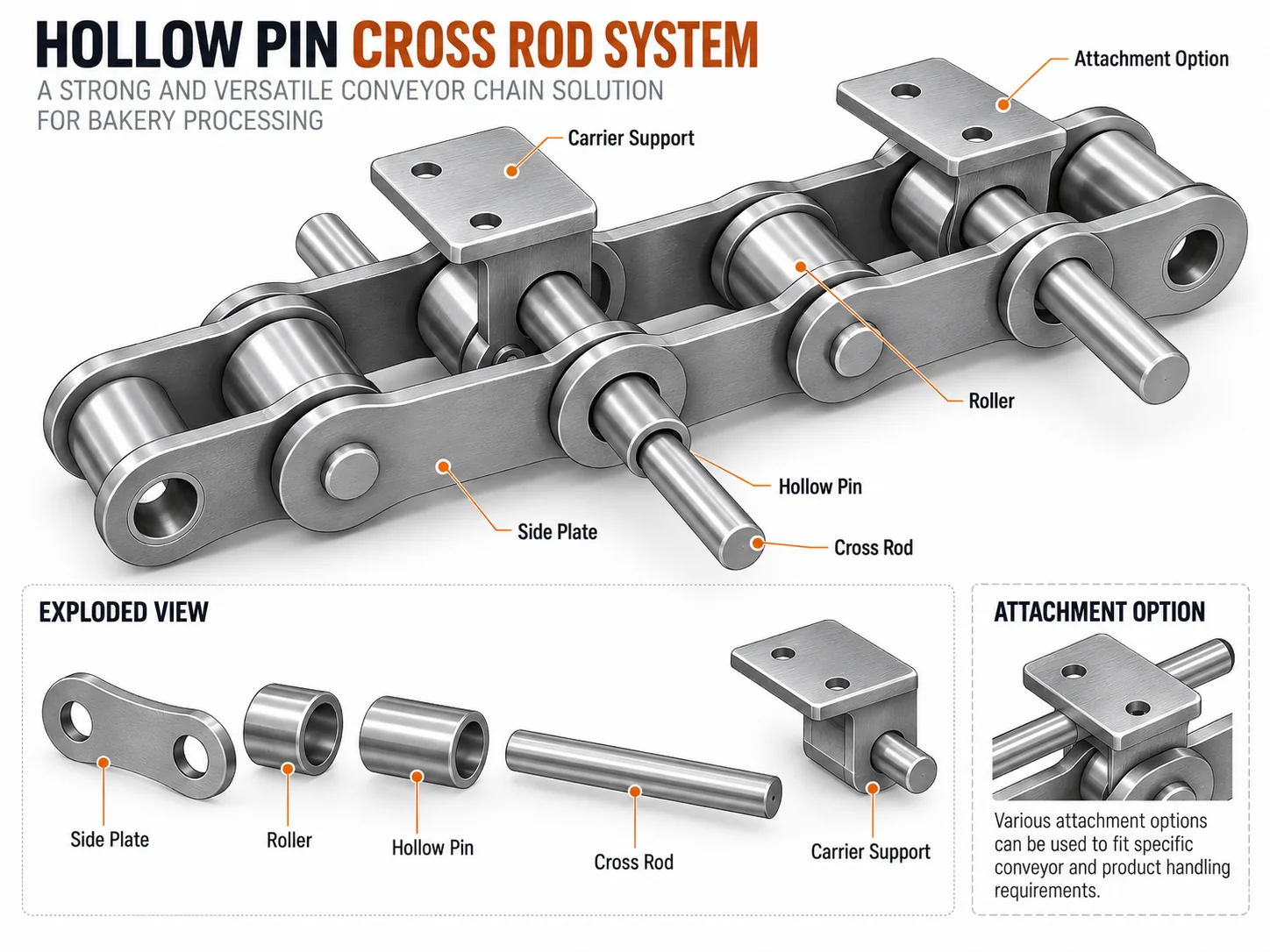
قبل از برداشتن زنجیر، چندین ویژگی را اندازهگیری کنید. گام، رابطه اساسی چرخدندهها را مشخص میکند، اما عرض داخلی، قطر غلتک یا بوش، قطر پین، ارتفاع صفحه، عرض کلی و ابعاد اتصال، پیکربندیهایی را که میتوانند گام اسمی یکسانی داشته باشند، متمایز میکنند.
برای یک رشته فرسوده، گام تجمعی را در چندین حلقه اندازهگیری کنید. از زنجیر از کنار و انتها عکس بگیرید و در صورت امکان، چرخدنده را نیز در عکس بگنجانید.
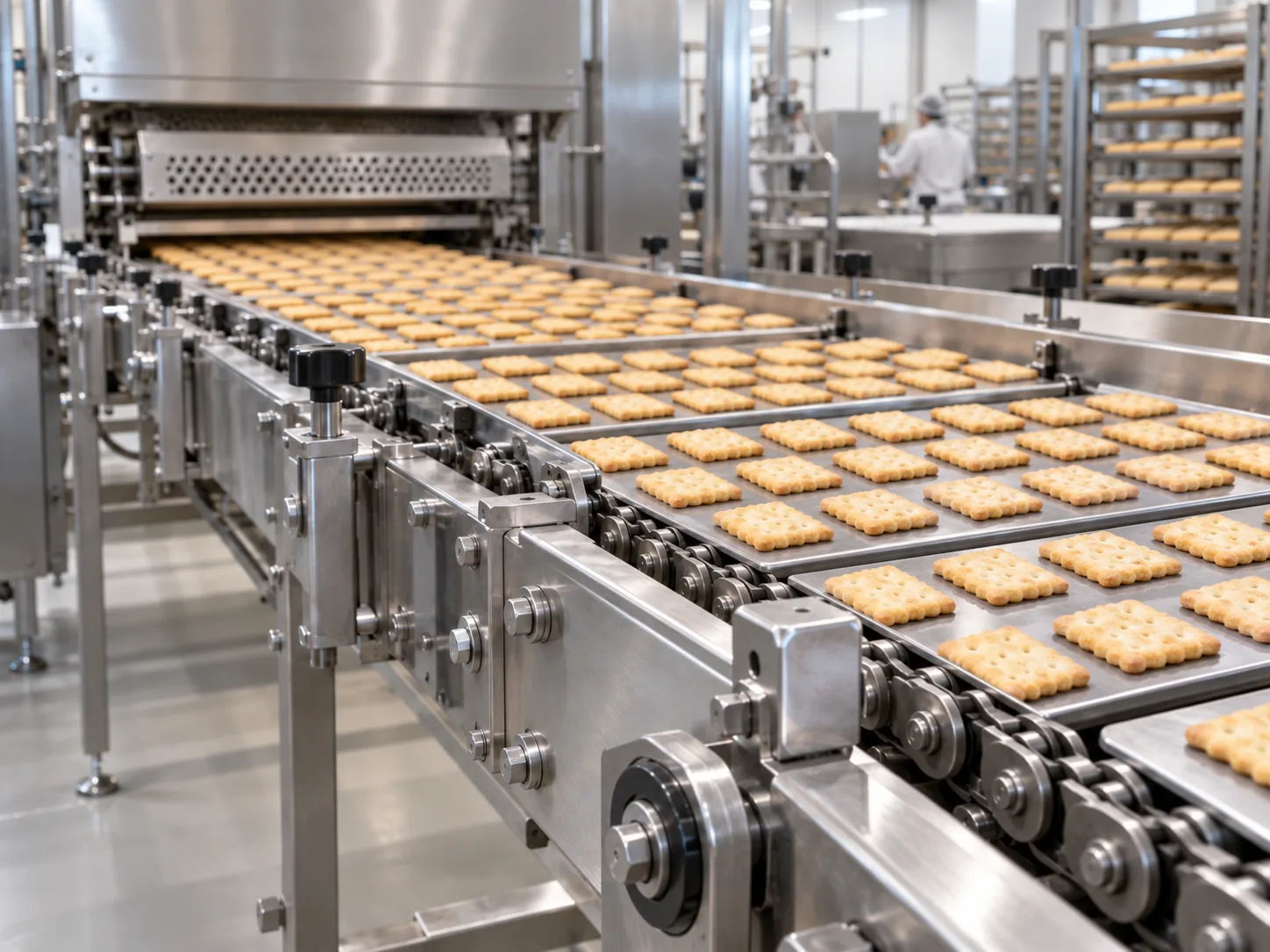
The same chain geometry can behave differently in a humid proofer, a hot oven, an ambient cooling section or a washdown area. For how to select attachments for bakery pans, document the exact machine zone, whether the chain carries product directly or moves pans/fixtures, and whether the joint sees heat, moisture, cleaning chemicals or abrasive residue.
دادههای فرآیند به تعیین اینکه کدام ویژگیها با قابلیت تعویض ثابت هستند و کدام ویژگیها - مانند جنس، فاصله یا روش ساخت قطعات - باید برای کاربرد مورد نظر بررسی شوند، کمک میکند.
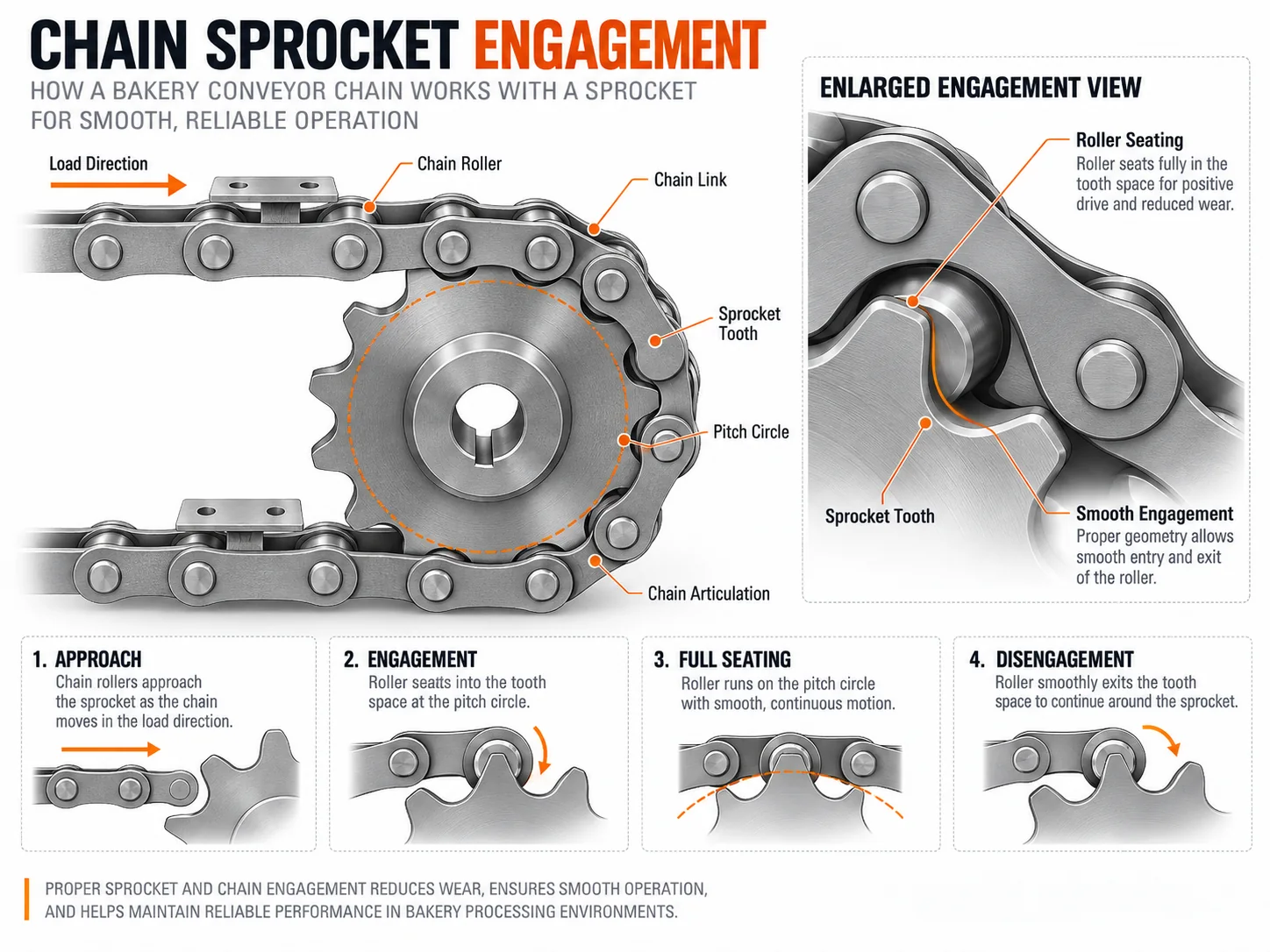
یک زنجیر به طور مستقل عمل نمیکند. غلتکها یا بوشها باید به نرمی وارد و خارج از فضای دندانههای چرخدنده شوند، در حالی که ریلهای راهنما بدون اینکه به طرفین فشار بیاورند، از رشته زنجیر پشتیبانی میکنند. دندانههای قلابدار، عدم همترازی شفت، چرخدندههای خارج از مرکز یا یک راهنمای سفت میتوانند باعث شوند که یک زنجیر نو به سرعت ساییده شود.
کل مسیر را در یک مدار کامل بررسی کنید. اگر آسیب در همان محل دستگاه تکرار شد، قبل از اینکه فرض کنید خود زنجیر معیوب است، پشتیبانی، انتقال یا حملکننده محلی را بررسی کنید.
گام، عرض، غلتک/بوش، پین، صفحه، عرض کلی و الگوی اتصال.
دما، رطوبت، شستشو، سرعت، بار، ساعات تولید و شروع تولید.
چرخدندهها، راهنماها، مراکز زنجیر، فاصله بین چرخدندهها، تراز و فاصله بین حاملها.
قبل از نصب، هندسه، مواد و پیکربندی وابسته به کاربرد نهایی سفارش داده شده را تأیید کنید.
بپرسید قبل از بروز مشکل چه چیزی تغییر کرده است: میزان تولید، وزن محصول یا ماهیتابه، چرخه تمیز کردن، روان کننده، دما، فاصله زمانی تعمیر و نگهداری یا چرخ دنده های تعویض شده. اطلاعات روند از یک عکس واحد ارزشمندتر است زیرا نشان می دهد که آیا سایش یکنواخت است یا متمرکز.
در طول بازرسی معمول، به دنبال اتصالات سفت، سایش غلتک، حرکت پین، اتصالات ترک خورده یا خم شده، تماس جانبی غیرطبیعی و برداشت ناهموار باشید. حفاظها و رویههای ایمنی را طبق الزامات صاحب دستگاه در جای خود نگه دارید.
ابعاد اندازهگیری شده، نام دستگاه/فرآیند، عکسها، نقشه در صورت وجود، مقدار یا طول زنجیر مورد نیاز، فاصله اتصال، فاصله مرکز زنجیر، اطلاعات چرخدنده، دما، شرایط شستشو، بار و بازه تحویل مورد نظر را ذکر کنید. موارد زیر را بررسی کنید. راهنمای انتخاب نانوایی زنجیرهای و مرور کلی خانواده محصول برای مرحله بعدی تصمیم گیری
A useful diagnosis starts with evidence that can be repeated by a second person. matching pan support geometry to the chain while allowing assembly, cleaning and thermal movement. Record hole pattern, support height, offset, pan pitch, chain centers and attachment interval. When the chain is worn, note which readings may be influenced by joint clearance or deformation, and prefer multi-pitch or multi-point measurements over one isolated dimension.
The chain does not operate by itself. In pan conveyors through proofing, baking or return handling, inspect the sprockets, guides, return path, take-up and carrier interface at the same time. The symptom to watch is pan skew, binding, difficult cleaning or contact with guides. A local problem that repeats at one machine position often points to alignment, clearance or mating-hardware issues rather than a uniform chain problem.
The practical decision is to start from the pan support/load path and work back to the attachment rather than choosing from appearance. That prevents a common error: changing chain tension, material or size before the root constraint has been identified. Use the chain drawing and the machine envelope together, because a configuration that looks correct in isolation can still interfere with a guard, transfer plate, sensor bracket or carrier.
به جای یک صفت واحد مانند «گرم»، «مرطوب» یا «درجه غذایی»، چرخه عملیاتی را شرح دهید. در صورت لزوم، دمای نرمال و حداکثر، رطوبت یا میزان قرار گرفتن در معرض تمیزکاری، سرعت، رفتار شروع/توقف و محدودیتهای روانکاری را بیان کنید. این جزئیات مشخص میکنند که آیا فاصلهها، مواد یا روش نگهداری باید تغییر کنند در حالی که هندسه اولیه ثابت میماند.
| بررسی | چرا مهم است؟ | چه چیزی را ارسال یا تأیید کنیم |
|---|---|---|
| شناسایی | Confirm hole pattern, support height, offset, pan pitch, chain centers and attachment interval. Use a measurement sequence that can be repeated after removal so the installed and bench readings can be compared. | طرح اولیه با ابعاد مشخص، عکسهای مقیاسبندیشده و هرگونه نقشه یا شماره قطعه قدیمی. |
| موقعیت مسیر | Map where the chain runs through pan conveyors through proofing, baking or return handling. Mark the exact location of pan skew, binding, difficult cleaning or contact with guides instead of reporting the condition only as a whole-line problem. | عکس زمینه، بخش نقاله، موقعیتهای محرک/دم و مسیر برگشت را نشان میدهد. |
| قطعات جفت گیری | پروفیل دندانه، محل قرارگیری غلتک، تراز شفت/چرخدنده، تماس راهنما و ذخیرهی برداشت را بررسی کنید. این قطعات میتوانند الگوهای سایشی ایجاد کنند که از مشکل انتخاب زنجیر تقلید میکنند. | تعداد دندانههای چرخدنده و عکسها، طرح راهنما و موقعیت فعلی قرارگیری چرخدنده. |
| مسیر بار | Identify how product carriers, pans, rods or fixtures transfer load into the chain. For this topic, the key focus is matching pan support geometry to the chain while allowing assembly, cleaning and thermal movement. | نقشه حامل، فاصله اتصال، فاصله مرکز زنجیرها و جرم/نیروی پشتیبانی شده در صورت مشخص بودن. |
| محیط زیست | محدودیتهای دما، رطوبت، شستشو، آلودگی و روانکاری را بر اساس منطقه دستگاه ثبت کنید. مواجهه مداوم را از پیکهای کوتاه یا رویدادهای تمیزکاری جدا کنید. | خلاصه شرایط عملیاتی و نحوه نگهداری/روغنکاری. |
| انتشار | The final engineering action is to start from the pan support/load path and work back to the attachment rather than choosing from appearance. The approved drawing should distinguish fixed interchange dimensions from selectable options. | pan drawing, attachment sketch, chain centers, load, temperature and cleaning method. |
A uniform change along the whole strand suggests a different mechanism from damage concentrated at one sprocket, guide or transfer. For How to Select Attachments for Bakery Pans, compare left/right sides and loaded/return paths. The distribution of wear can reveal whether the driver is joint wear, side loading, contamination, thermal change or a carrier that is forcing the chain out of its natural path.
Increasing tension can temporarily change noise or tracking without correcting the underlying cause. If the observed issue is pan skew, binding, difficult cleaning or contact with guides, first confirm alignment, take-up geometry and articulation. Excessive tension can add bearing load and make a marginal guide or attachment problem worse.
تجهیزات نانوایی میتوانند بین حالتهای تولید، تمیز کردن و خاموش شدن در حرکت باشند. یک زنجیر ممکن است در حالت سرد به طور عادی حرکت کند و در حالت گرم شدن سفت شود، یا در حین تولید آزادانه حرکت کند اما پس از خاموش شدنهای مکرر در حالت مرطوب دچار خوردگی شود. حالتی را که در آن علامت رخ میدهد ثبت کنید تا اقدام اصلاحی انتخاب شده، چرخه کار واقعی را هدف قرار دهد.
For an unknown chain, one close-up is not enough. Pair a complete machine-zone image with side and end views of several pitches, a sprocket-engagement photo and a clear attachment/carrier view. Place a scale only where it does not hide the feature being measured. This photo set makes matching pan support geometry to the chain while allowing assembly, cleaning and thermal movement easier to evaluate remotely.
Record hole pattern, support height, offset, pan pitch, chain centers and attachment interval, chain centers, sprocket tooth count and the carrier interface before changing components.
Describe what happens in pan conveyors through proofing, baking or return handling, including temperature or moisture changes, speed, load and cleaning/lubrication constraints.
Document where pan skew, binding, difficult cleaning or contact with guides appears. Compare drive, tail, loaded run, return run and transfer points rather than averaging the entire conveyor.
Include pan drawing, attachment sketch, chain centers, load, temperature and cleaning method. State the required quantity or chain length and any documentation needed with the order.
Review pitch, widths, pin/roller geometry, attachments and material notes on one controlled drawing revision. For How to Select Attachments for Bakery Pans, the release decision should explicitly address matching pan support geometry to the chain while allowing assembly, cleaning and thermal movement.
پس از نصب، حداقل یک مدار کامل را مشاهده کنید، ورودی/خروجی چرخدنده و لقی حامل را بررسی کنید و طبق دستورالعمل سازنده دستگاه، دوباره جمع شدن را بررسی کنید. زنجیر جدید نباید برای جبران سختافزار فرسوده یا ناهمتراز استفاده شود.
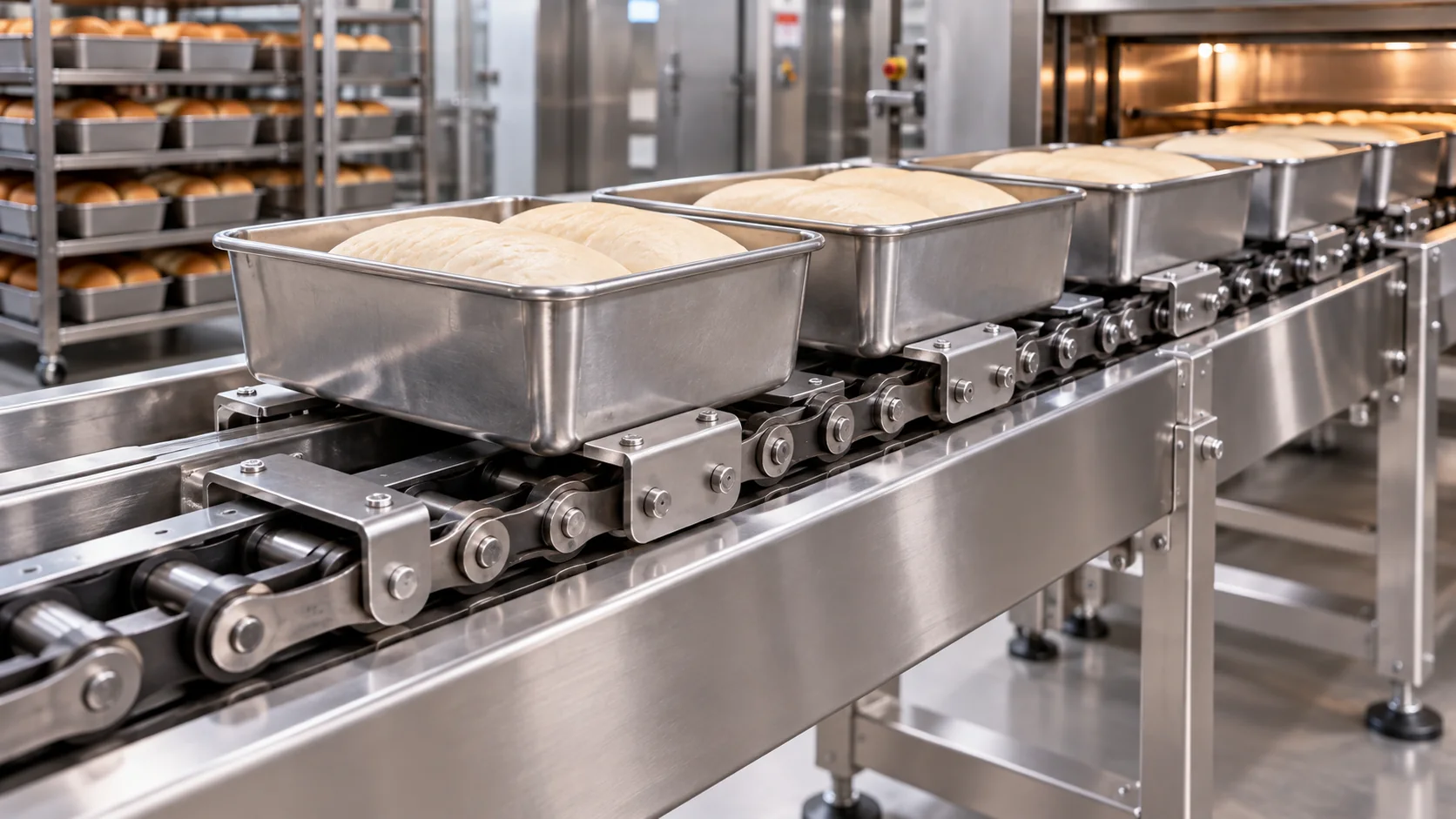
The main reason to keep this process structured is that matching pan support geometry to the chain while allowing assembly, cleaning and thermal movement interacts with more than one component. A change that improves one symptom can shift load into another part of the mechanism. For example, correcting guide alignment may reduce side wear but also expose a take-up setting that was previously compensating for the misalignment. Record changes one at a time so the result can be interpreted.
For planned maintenance, compare the present condition with a baseline whenever one exists. If there is no baseline, create one during the next shutdown: photograph the sprockets and guide surfaces, record take-up position, measure a defined number of pitches, and note the chain’s location in pan conveyors through proofing, baking or return handling. Repeating the same observations later is more informative than relying on general statements such as “the chain has stretched.”
وقتی نقشه موجود در دسترس است، بررسی کنید که سختافزار نصبشده هنوز با آن مطابقت دارد. تجهیزات نانوایی اغلب در طول عمر مفید خود اصلاح میشوند: میتوان حاملها را تعمیر کرد، ریلهای راهنما را جابجا کرد، چرخدندهها را تعویض کرد و فواصل اتصال را تغییر داد. نقشه همچنان مفید است، اما تأیید میدانی مانع از آن میشود که یک سند تاریخی به عنوان مدرکی از پیکربندی فعلی در نظر گرفته شود.
Procurement and engineering should use the same evidence package. The RFQ should not separate commercial quantity from technical context: pan drawing, attachment sketch, chain centers, load, temperature and cleaning method. This makes it possible to judge whether a standard series, a modified attachment or a custom replacement is the appropriate route without creating unnecessary back-and-forth.
Finally, treat the website as a preparation tool rather than the controlling product drawing. Measurements and diagrams narrow the family and help organize the RFQ; the released drawing defines the ordered configuration. That distinction is especially important where pan skew, binding, difficult cleaning or contact with guides could have more than one mechanical cause.
Use How to Select Attachments for Bakery Pans as a machine-level question, not just a chain inspection. Compare the loaded and return runs, drive and tail ends, and any transfer or carrier transition in pan conveyors through proofing, baking or return handling. Document whether pan skew, binding, difficult cleaning or contact with guides is distributed along the strand or repeats at one location. That pattern helps separate progressive joint wear from alignment, guide, sprocket or carrier problems that a new chain alone will not correct.
The working record should include hole pattern, support height, offset, pan pitch, chain centers and attachment interval. Mark which values are fixed by the existing machine and which values can be changed to improve service. The central engineering focus is matching pan support geometry to the chain while allowing assembly, cleaning and thermal movement. When a legacy part number conflicts with field measurements, hold the RFQ until the installed interface and the controlled drawing can be reconciled.
A useful enquiry combines commercial quantity with the technical package: pan drawing, attachment sketch, chain centers, load, temperature and cleaning method. Also state whether the request is a direct replacement, a planned modification or a new machine design. The release objective is to start from the pan support/load path and work back to the attachment rather than choosing from appearance. This reduces quote revisions and prevents a visually similar chain from being treated as interchangeable before geometry and duty have been checked.
در صورت وجود، از مرجع قدیمی استفاده کنید، اما هندسه و وظیفه نصب شده را تأیید کنید. اصلاحات ماشین، تعویضهای قبلی یا سایش میتواند شماره قطعه را به تنهایی ناقص کند.
از یک اندازهگیری چند گام برای تعداد عملی لینکها استفاده کنید و روش را ثبت کنید. به جای تکیه بر یک اندازهگیری لینک مجاور، آن را با گام اسمی و محدودیتهای نگهداری ماشین مقایسه کنید.
هر زمان که ساییدگی دندانه، قلاب شدن، مشکلات همترازی یا ساییدگی زودرس و مکرر زنجیر وجود داشته باشد، زنجیر و چرخدنده به عنوان یک سیستم درگیر عمل میکنند.