Product Description
Product Description
The chain of agricultural machinery industry is applied to rice, wheat, corn, cotton and other agricultural machinery, providing driving and conveying functions, and realizing mechanized flower operation in the whole process of agricultural production from arable land to harvest. It is mainly applied to rice machinery, corn machinery, cotton machinery, etc
Product Attribute
|
Usage |
Agricultural roller chain |
|
Material |
chain plate: 45Mn,bush: Q195, roller: 10#,pin: 40Cr |
|
Surface Treatment |
netural/sand-blasted/shot-peening |
| application area | Rice machinery, harvester and other agricultural machinery |
| product type | S Type Steel Agricultural Chain with Attachments C Type Steel Agricultural Chain with Attachments A Type Steel Agricultural Chain with Attachments CA Type Steel Agricultural Chain with Attachments |
| certificate | ISO,SGS,ANSI,DIN |
| Port |
Any sea port or airport in china |
| Payment |
L/C, T/T, D/P, Western Union |
| Package |
Chain, Plastic Bag, Color Box, Wooden Case. or OEM |
| S Type | S32,S32V,S42,S45,S51,S52,
55V,55VF1,S55,S55R,S55RH,S62,S77,S88 |
| C Type | CA550,CA550V,CA555,CA557,CA620,CA2060H,CA2063H,CA550F4,CA550F5
38.4R,38.4V,55VD,S62F3,CA960 |
| A Type | A550,A555,A557,A620 |
| CA Type | CA627,CA550D,CA557D,CA620D |
| We also carry out OEM according to your requirements |
|
Detailed Photos
Product Parameters
Our Advantages
Company Advantages:
Own Import & Export License, The TV trade mark registered successfully in many countries, Sales network spread all over China, Products export to 65 countries in 5 continents.
Membership:
1. The member of China General Machine Components Industry Association.
2. The member of China Chain Transmission Association.
3. The member of China Chain Standardization Association.
4. The member of China Agricultural Association Machinery Manufacturers.
With our excellent trained staffs and workers, advanced and efficient equipments, completely sales network, strict QA systems. You are confidence that our premium qualified chain can meet all customers’ specification and strictest quality standards.
Please do not hesitate to contact us for more information on how TransVision products can meet your industries demands at highly competitive pricing.
Quality First, Clients Uppermost.
Product Categories
| WHY CHOOSE US |
Comprehensive Product Portfolio We produce and supply a wide range of power transmission
products including drive chains, leaf chains, conveyor chains, agricultural chains, sprockets, and
couplings. This one-store-for-all shopping experience will significantly reduce your searching costs while
guarantee youfind what you want at 1 click.
Value Choice Products Our products are the best combination of quality and price, and you get what
you want within your budgets
Seasoned Sales Associates and Engineers We have 15 seasoned sales associates and 5 engineers;
on our team at your disposal any time when you need a helping hand. They are well trained with industry
know-now and will always respond to your requests within 24 hours.
100% Customer Retention Rate Our regular customers from overseas come back not just for our
premium quality products, but for the superior services that we’ve provided over the years.
| FAQ |
| Q1: What’s your average lead time? A: It varies. Our regular end-to-end lead time is 1-2 months.. We also provide express shipments for rush orders. For details,please consult our sales associate. Q2: Is your price better than your competitors given the same quality? Q4: Can we inspect the goods before shipment? Q5: What kind of payment method is acceptable for your mill? Q6: What if I have any other questions? |
|
Shipping Cost:
Estimated freight per unit. |
To be negotiated |
|---|
| Material: | Alloy/Carbon Steel |
|---|---|
| Structure: | Roller Chain |
| Surface Treatment: | Oxygenation |
| Customization: |
Available
| Customized Request |
|---|
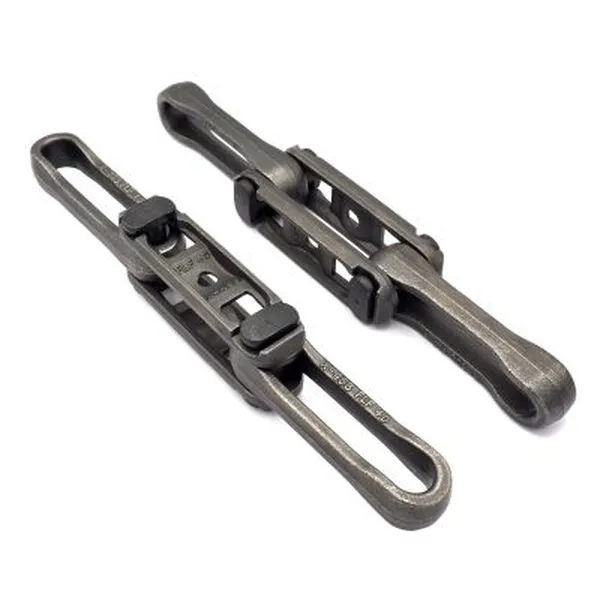
What are the advantages of using a slat conveyor chain?
A slat conveyor chain offers several advantages in material handling and conveying applications. Here are some key benefits:
1. Heavy-Duty Capacity:
– Slat conveyor chains are designed to handle heavy loads and can withstand rigorous industrial environments.
– They are commonly used in applications that require transporting large, bulky, or irregularly shaped items, such as automotive parts, pallets, or containers.
2. Flexibility:
– Slat chains can be customized and configured to suit specific conveying requirements. They are available in various widths, lengths, and chain configurations to accommodate different product sizes and shapes.
– The modular design of slat chains allows for easy modification or expansion of the conveyor system as production needs change.
3. Versatility:
– Slat chains can be used in both horizontal and inclined conveying applications. They are capable of moving products up or down slopes, making them suitable for production lines with varying elevations.
– These chains can be integrated with curves, turns, merges, and diverters to create complex conveying systems that optimize space utilization and product flow.
4. Durability and Longevity:
– Slat chains are typically made from robust materials such as steel or plastic, providing excellent durability and resistance to wear and tear.
– They can withstand demanding operating conditions, including high temperatures, corrosive environments, or exposure to chemicals.
5. Low Maintenance:
– Slat conveyor chains require minimal maintenance compared to other types of conveyor systems. They have fewer moving parts and typically operate with reduced friction.
– With proper lubrication and periodic inspection, slat chains can maintain their performance and reliability over an extended service life.
6. Easy Cleaning:
– The open design of slat chains allows for easy cleaning and debris removal. They are suitable for applications that require frequent sanitation or hygiene maintenance, such as in food processing or pharmaceutical industries.
Overall, using a slat conveyor chain offers the advantages of high load capacity, flexibility in design, versatility in conveying applications, durability, low maintenance requirements, and ease of cleaning. These features make slat chains an effective solution for various industries requiring efficient and reliable material handling.
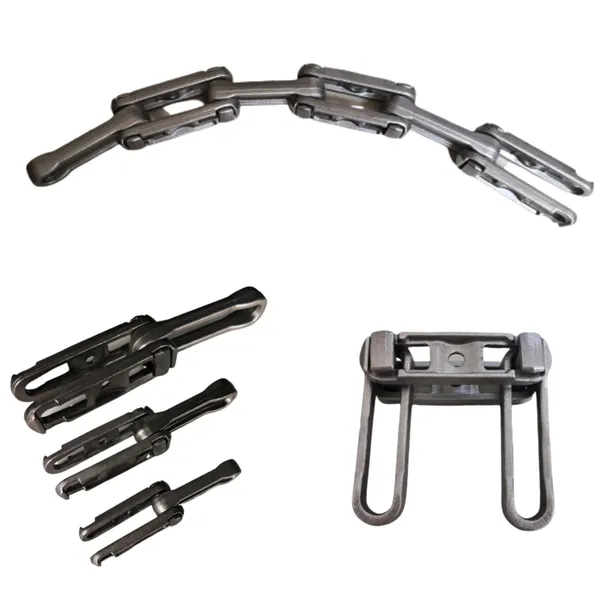
How does lubrication affect the performance of a conveyor chain?
Lubrication plays a crucial role in the performance and longevity of a conveyor chain. Proper lubrication helps to reduce friction, wear, and heat generation, ensuring smooth operation and minimizing the risk of premature failure. Here’s how lubrication affects the performance of a conveyor chain:
1. Friction Reduction: Lubrication forms a thin film between the chain components, reducing friction between metal surfaces. This reduces the energy required for operation, minimizes heat generation, and prevents excessive wear and tear.
2. Wear Prevention: Lubrication forms a protective layer on the chain components, preventing direct metal-to-metal contact. This helps to reduce wear and extend the service life of the chain.
3. Corrosion Protection: Lubricants often contain anti-corrosion additives that protect the chain from rust and oxidation. This is particularly important in environments with high humidity or exposure to corrosive substances.
4. Noise Reduction: Proper lubrication reduces the noise generated during chain operation by minimizing friction and metal-to-metal contact. This can contribute to a quieter and more comfortable working environment.
5. Temperature Control: Lubrication helps to dissipate heat generated during chain operation, preventing excessive temperature rise. This is crucial in high-speed or heavy-duty applications where heat can lead to accelerated wear and reduced chain performance.
6. Maintenance and Service Life: Regular lubrication and proper lubricant selection are essential for maintaining the chain’s performance and extending its service life. Adequate lubrication reduces the need for frequent maintenance, minimizes downtime, and lowers overall operating costs.
It’s important to follow the manufacturer’s recommendations for lubrication frequency and use the appropriate lubricant for the conveyor chain. Regular inspections and maintenance checks should also be conducted to ensure proper lubrication levels and address any issues promptly. Proper lubrication practices will enhance the performance, reliability, and durability of the conveyor chain system.
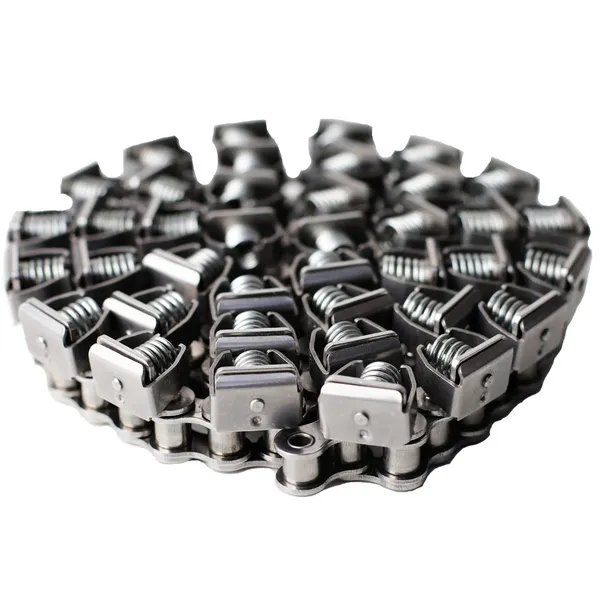
What is the load capacity of a conveyor chain?
The load capacity of a conveyor chain depends on various factors, including the chain design, material, size, and the operating conditions. It is crucial to consider the specific application requirements when determining the load capacity of a conveyor chain. Here are some key factors to consider:
- Chain Design: Different types of conveyor chains have varying load capacities. The chain design includes factors such as the type of links, their configuration, and the presence of attachments or rollers.
- Material: The material used to manufacture the conveyor chain significantly affects its load capacity. Common materials include steel, stainless steel, and plastic. Steel chains are generally more robust and have higher load-bearing capabilities.
- Chain Size: The size of the conveyor chain, including the pitch and width, plays a role in determining its load capacity. Larger chains with wider links tend to have higher load capacities.
- Operating Conditions: Factors such as the speed of the conveyor, the type and weight of the transported materials, and the environmental conditions (temperature, humidity, etc.) can impact the load capacity of the chain.
- Manufacturer Specifications: It is essential to consult the manufacturer’s specifications and guidelines for the specific conveyor chain being used. Manufacturers typically provide load capacity charts or tables based on their chain designs.
The load capacity of a conveyor chain is typically specified in terms of its maximum allowable working load or breaking strength. These values are determined through rigorous testing and engineering calculations. To ensure safe and efficient operation, it is important to select a conveyor chain that has a load capacity suitable for the intended application. Exceeding the recommended load capacity can lead to premature wear, chain failure, and potential safety hazards.


editor by CX 2023-10-07