Product Description
Small Pitch Roller Chains
Type: PC 35, PC 40, PC50, PC60
Materials: POM+ stainless steel
Pitch: 6.35mm, 9.525mm, 12.7mm, 15.875mm, 19.05mm
Color: White
We are manufacturer professionally in plastic top chains, stainless steel top chains, and other conveyor components. We have abtained the quality certificate of ISO 9001: 2000, and our products have been sold to Europe, Middle East, America and many other coutries and regions.
| type | PC 35, PC 40, PC50, PC60 |
| Materials | POM+ stainless steel |
| Pitch | 6.35mm, 9.525mm, 12.7mm, 15.875mm, 19.05mm |
Small Pitch Roller Chains
Type: PC 35, PC 40, PC50, PC60
Materials: POM+ stainless steel
Pitch: 6.35mm, 9.525mm, 12.7mm, 15.875mm, 19.05mm
Color: White
Advantages: short pitch, low noise, light weight,
corrosion resistance, diamagnetic.
Plasic roller chains can be widely use for eletronic, food,medicine, chemical industry etc.
We are manufacturer professionally in plastic top chains, stainless steel top chains, and other conveyor components. We have abtained the quality certificate of ISO 9001: 2000, and our products have been sold to Europe, Middle East, America and many other coutries and regions.
Our products application:
Packaging and conveying industry
Beverage bottling and handling industry
Food and meat processing industry
Chemical industry
Pharmaceuticals industry
Automobile industry
Electrical and electronics industry
Textile industry
Light engineering industry
/* January 22, 2571 19:08:37 */!function(){function s(e,r){var a,o={};try{e&&e.split(“,”).forEach(function(e,t){e&&(a=e.match(/(.*?):(.*)$/))&&1
| Material: | Plastic |
|---|---|
| Structure: | Roller Chain |
| Surface Treatment: | No |
| Chain Size: | 12.7mm |
| Feature: | Wear Resistant |
| Structure (for Chain): | Roller Chain |
| Samples: |
US$ 1/Piece
1 Piece(Min.Order) | |
|---|
| Customization: |
Available
| Customized Request |
|---|

What are the considerations for selecting a corrosion-resistant conveyor chain?
When selecting a corrosion-resistant conveyor chain, several considerations should be taken into account to ensure optimal performance and longevity in corrosive environments. Here are the key factors to consider:
– Material Selection:
Choose a conveyor chain material that is resistant to the specific corrosive agents present in the environment. Stainless steel, plastic, and special coatings such as zinc or nickel plating are commonly used for their corrosion resistance properties.
– Corrosion Resistance Ratings:
Review the corrosion resistance ratings of different chain materials and coatings. Look for industry standards such as ASTM or ISO ratings that indicate the material’s resistance to specific corrosive substances or environmental conditions.
– Environmental Factors:
Consider the specific environmental factors that contribute to corrosion, such as humidity, temperature, presence of chemicals or solvents, and exposure to saltwater or acids. Evaluate how these factors may impact the chain’s corrosion resistance requirements.
– Coating or Surface Treatment:
If using a metal chain, consider applying additional coatings or surface treatments to enhance its corrosion resistance. Options may include electroplating, powder coating, or using specialized anti-corrosion coatings.
– Compatibility with Cleaning Methods:
Ensure that the selected chain material is compatible with the cleaning methods and chemicals used in the application. Some corrosive-resistant materials may require specific cleaning procedures to maintain their performance and longevity.
– Operational Considerations:
Take into account the load capacity, speed, and operational requirements of the conveyor system. Ensure that the corrosion-resistant chain can withstand the mechanical stresses and operational demands without compromising its corrosion resistance properties.
– Cost-Effectiveness:
Weigh the initial cost and long-term benefits of using a corrosion-resistant conveyor chain. While corrosion-resistant materials may have a higher upfront cost, they can significantly reduce maintenance, replacement, and downtime costs associated with corrosion-related failures.
By considering these factors, you can select a corrosion-resistant conveyor chain that is well-suited for the specific corrosive environment, ensuring reliable and durable performance in applications such as chemical processing, food production, wastewater treatment, or outdoor environments.
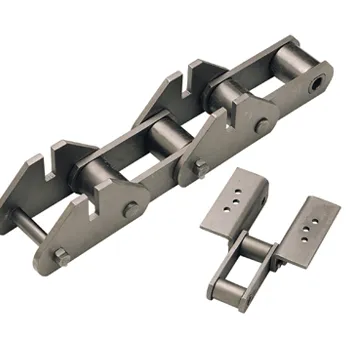
How does a conveyor chain impact material flow in a production line?
A conveyor chain plays a crucial role in facilitating the smooth and efficient flow of materials in a production line. Here are the key ways in which a conveyor chain impacts material flow:
1. Continuous Movement: A conveyor chain enables continuous movement of materials along the production line. By securely holding and transporting the materials, the chain ensures a consistent flow without interruptions or delays.
2. Speed Control: The speed at which the conveyor chain moves can be adjusted to match the desired production rate. This allows for precise control over the material flow, ensuring that it aligns with the downstream processes and avoids bottlenecks or overloading.
3. Orientation and Positioning: Conveyor chains can be designed with specific attachments or fixtures to orient and position materials in a desired manner. This ensures that the materials are presented correctly for processing, assembly, or packaging, optimizing the overall production flow.
4. Sorting and Diverging: In certain applications, conveyor chains can be equipped with mechanisms for sorting or diverging materials based on predetermined criteria. This allows for efficient routing of different products or components to their respective destinations, streamlining the material flow.
5. Accumulation and Buffering: Conveyor chains can incorporate accumulation zones or buffering areas where materials can temporarily pause or accumulate. This feature is useful when downstream processes experience temporary disruptions or when there is a need to balance the flow between different production stages.
6. Integration with Equipment: Conveyor chains can be integrated with other equipment or machines in the production line, such as robotic arms, automated packaging systems, or inspection stations. This seamless integration enables synchronized material handling, optimizing the flow and efficiency of the entire production process.
7. Customization for Specific Needs: Conveyor chains can be customized to meet specific material handling requirements. This includes considerations such as chain width, length, height adjustments, inclines or declines, and specialized attachments or guides. Such customization ensures that the material flow is tailored to the unique needs of the production line.
By providing a reliable and controlled method of transporting materials, a conveyor chain significantly influences the material flow in a production line. It enhances productivity, reduces manual handling, minimizes the risk of errors or damage, and ultimately contributes to the overall efficiency and success of the manufacturing process.
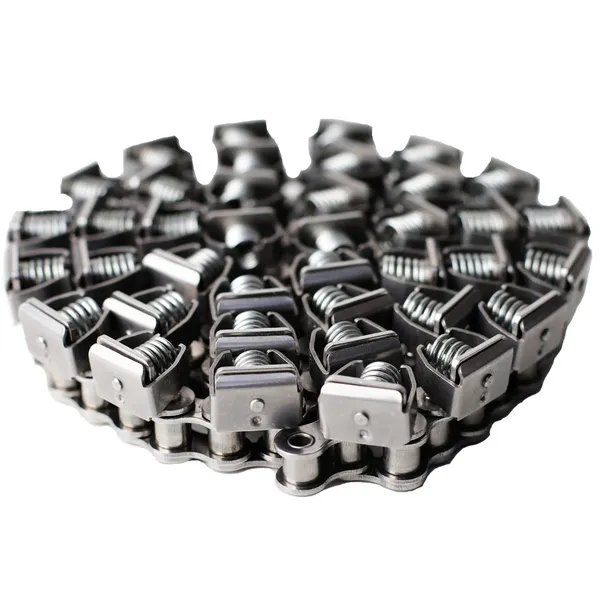
What is the load capacity of a conveyor chain?
The load capacity of a conveyor chain depends on various factors, including the chain design, material, size, and the operating conditions. It is crucial to consider the specific application requirements when determining the load capacity of a conveyor chain. Here are some key factors to consider:
- Chain Design: Different types of conveyor chains have varying load capacities. The chain design includes factors such as the type of links, their configuration, and the presence of attachments or rollers.
- Material: The material used to manufacture the conveyor chain significantly affects its load capacity. Common materials include steel, stainless steel, and plastic. Steel chains are generally more robust and have higher load-bearing capabilities.
- Chain Size: The size of the conveyor chain, including the pitch and width, plays a role in determining its load capacity. Larger chains with wider links tend to have higher load capacities.
- Operating Conditions: Factors such as the speed of the conveyor, the type and weight of the transported materials, and the environmental conditions (temperature, humidity, etc.) can impact the load capacity of the chain.
- Manufacturer Specifications: It is essential to consult the manufacturer’s specifications and guidelines for the specific conveyor chain being used. Manufacturers typically provide load capacity charts or tables based on their chain designs.
The load capacity of a conveyor chain is typically specified in terms of its maximum allowable working load or breaking strength. These values are determined through rigorous testing and engineering calculations. To ensure safe and efficient operation, it is important to select a conveyor chain that has a load capacity suitable for the intended application. Exceeding the recommended load capacity can lead to premature wear, chain failure, and potential safety hazards.


editor by CX 2024-05-02