Ghi lại hình học
Bước ren, chiều rộng, con lăn/bạc lót, chốt, tấm, chiều rộng tổng thể và kiểu lắp đặt.
Hướng dẫn kỹ thuật chuỗi cửa hàng bánh
Proofer Chain Replacement Checklist is best answered by combining measured chain geometry, machine duty and the operating environment. This guide shows what to inspect, record and discuss before a replacement or new-chain decision.
Proofer Chain Replacement Checklist should be evaluated from the actual conveyor. Start with chain pitch, transverse geometry, sprocket condition and any carrier attachment, then add temperature, moisture, washdown, load, speed and take-up information. The objective is not to identify a chain by appearance; it is to produce an RFQ that preserves the machine interface and makes application-dependent choices explicit.
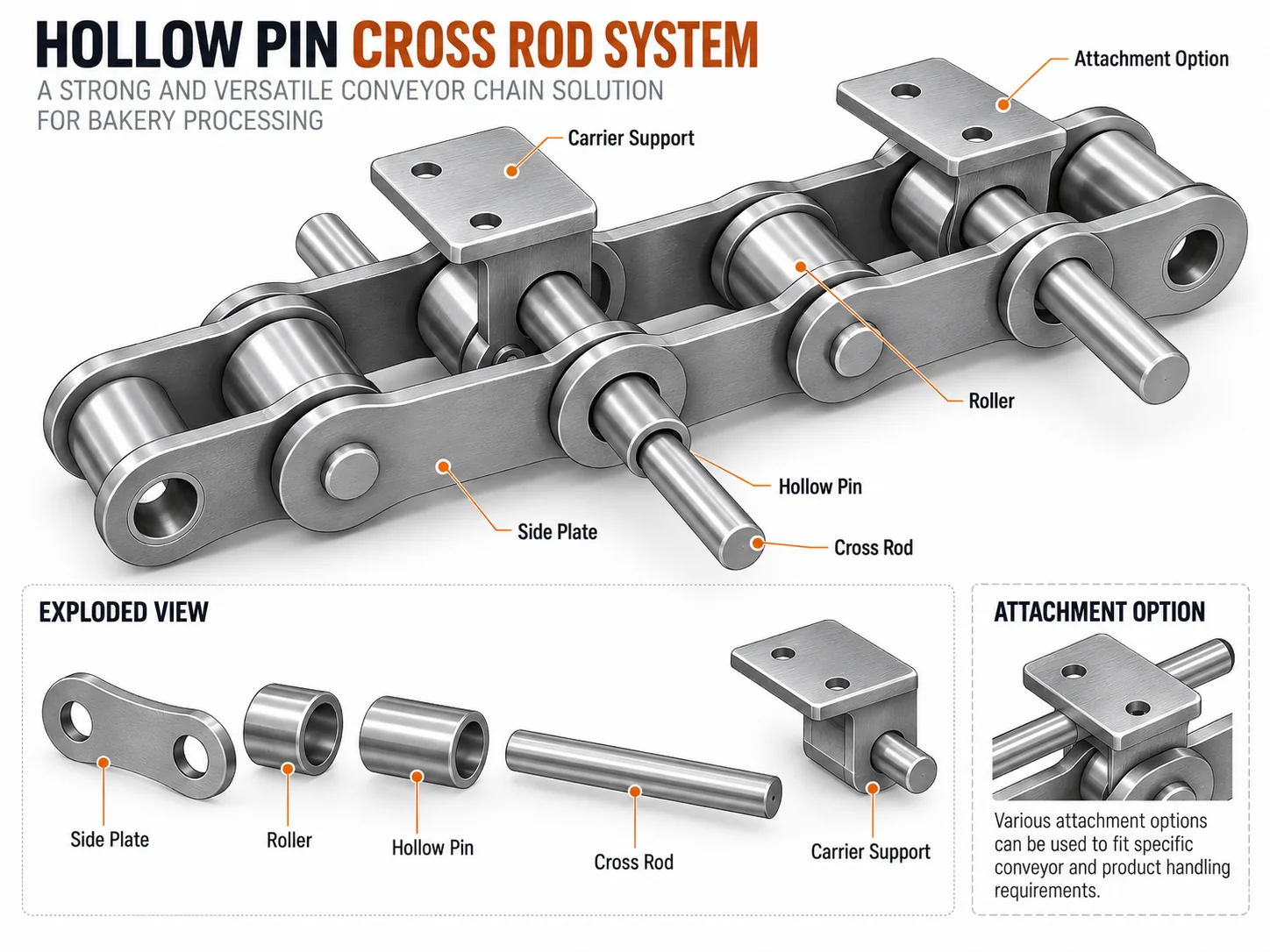
Cần đo một số đặc điểm trước khi tháo xích. Bước xích xác định mối quan hệ truyền động cơ bản, nhưng chiều rộng bên trong, đường kính con lăn hoặc bạc lót, đường kính chốt, chiều cao tấm, chiều rộng tổng thể và kích thước bộ phận gắn kết là những yếu tố phân biệt các cấu hình có thể có cùng bước xích danh nghĩa.
Đối với một sợi xích bị mòn, hãy đo độ lệch tâm tích lũy trên nhiều mắt xích. Chụp ảnh xích từ bên cạnh và đầu xích, và chụp cả đĩa xích nếu có thể.
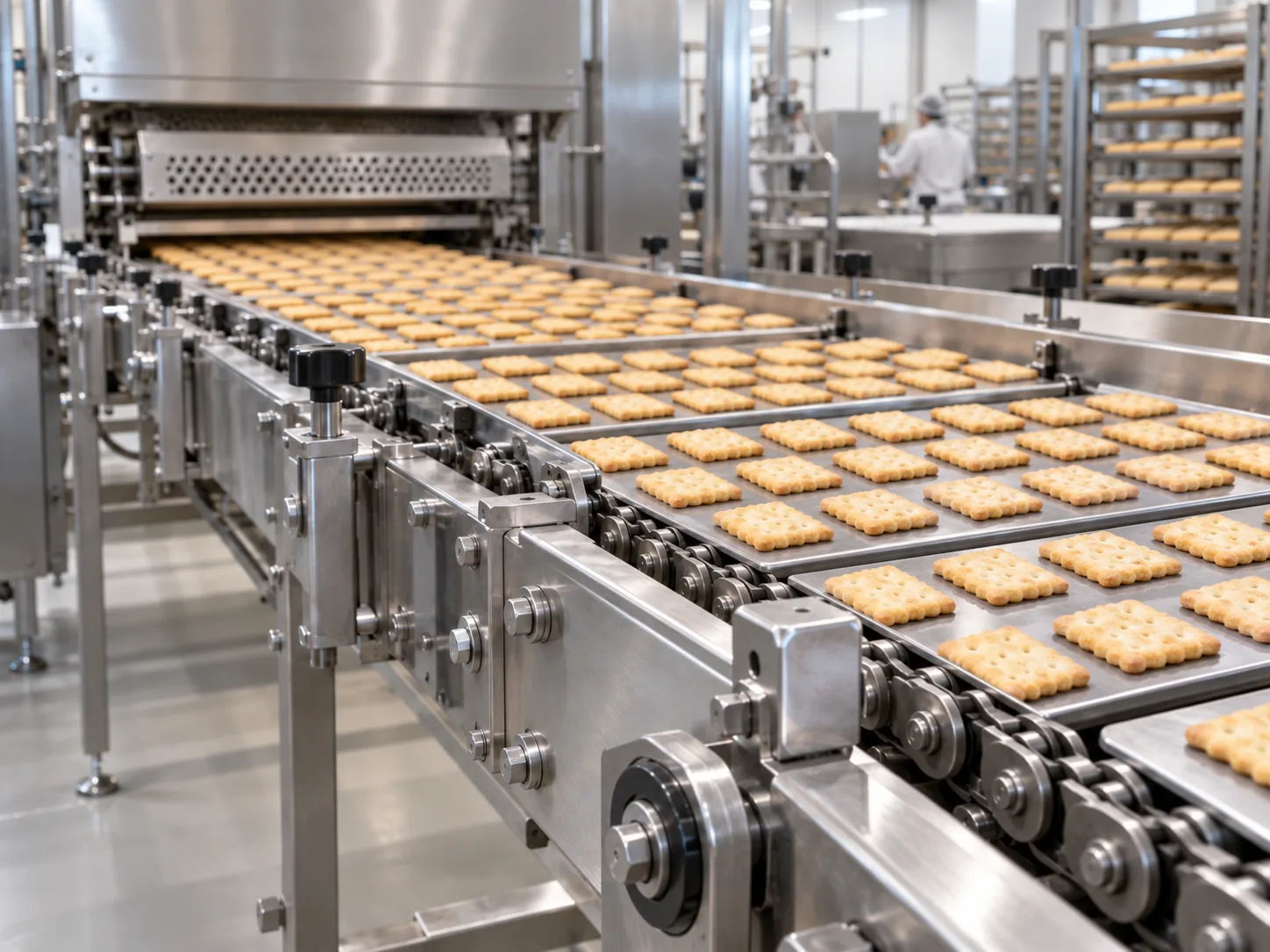
The same chain geometry can behave differently in a humid proofer, a hot oven, an ambient cooling section or a washdown area. For proofer chain replacement checklist, document the exact machine zone, whether the chain carries product directly or moves pans/fixtures, and whether the joint sees heat, moisture, cleaning chemicals or abrasive residue.
Dữ liệu quy trình giúp xác định những đặc tính nào được cố định bởi khả năng thay thế lẫn nhau và những đặc tính nào—chẳng hạn như vật liệu, khe hở hoặc phương pháp sản xuất phụ kiện—cần được xem xét lại cho từng ứng dụng cụ thể.
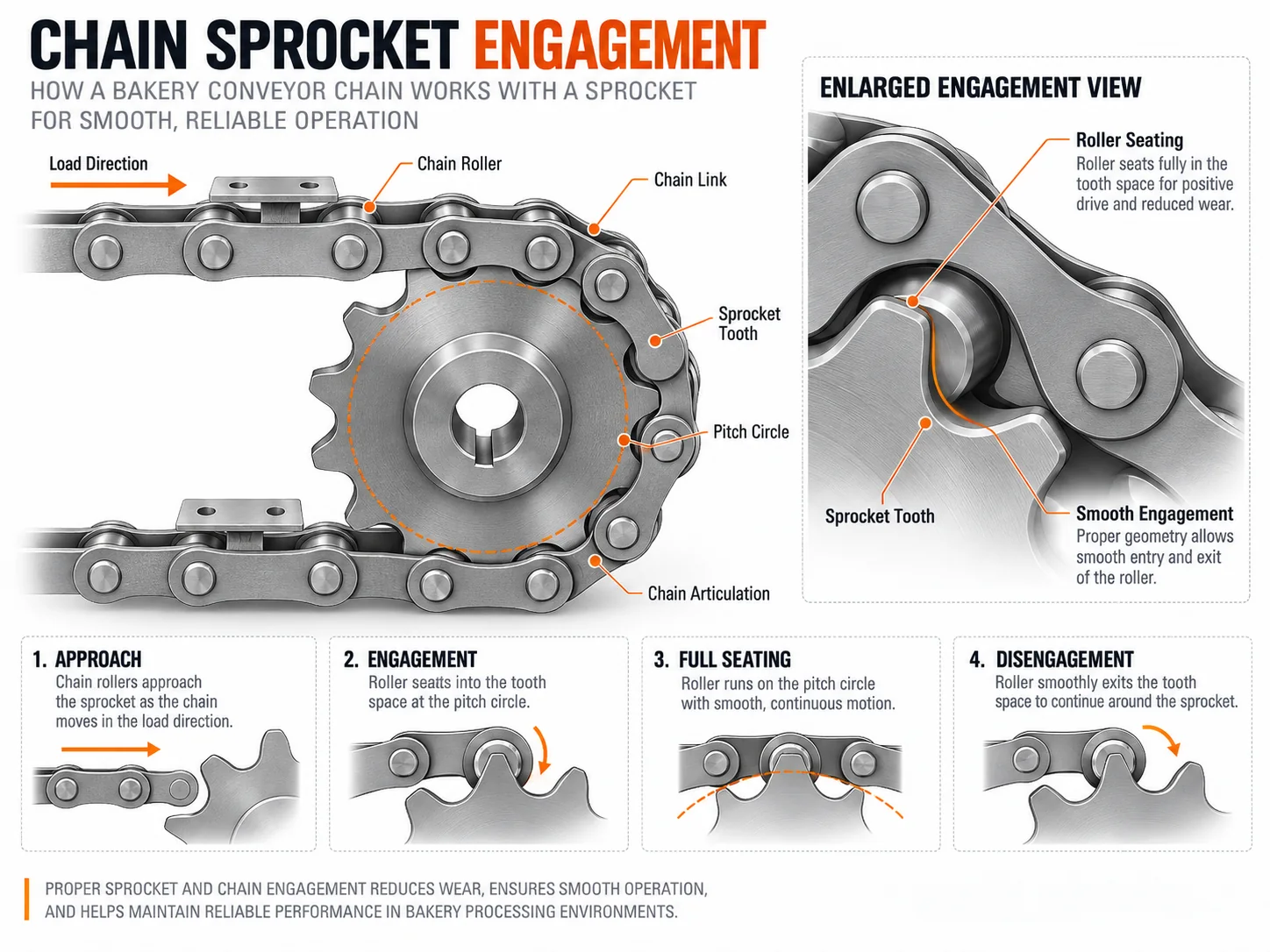
Xích không hoạt động độc lập. Các con lăn hoặc bạc lót phải vào và ra khỏi khe răng nhông một cách trơn tru, trong khi các rãnh dẫn hướng phải đỡ sợi xích mà không làm nó bị lệch sang một bên. Răng bị cong, trục bị lệch, nhông lệch tâm hoặc rãnh dẫn hướng quá chật có thể khiến xích mới bị mòn nhanh chóng.
Kiểm tra toàn bộ đường dẫn qua một vòng mạch hoàn chỉnh. Nếu hư hỏng lặp lại ở cùng một vị trí máy, hãy điều tra hệ thống hỗ trợ, truyền tải hoặc giá đỡ tại chỗ trước khi cho rằng chính xích bị lỗi.
Bước ren, chiều rộng, con lăn/bạc lót, chốt, tấm, chiều rộng tổng thể và kiểu lắp đặt.
Nhiệt độ, độ ẩm, vệ sinh, tốc độ, tải trọng, giờ sản xuất và thời gian bắt đầu.
Các chi tiết như nhông xích, dẫn hướng, tâm xích, bộ căng xích, độ thẳng hàng và khe hở giữa các con lăn.
Phê duyệt hình dạng, vật liệu và cấu hình ứng dụng cuối cùng theo yêu cầu trước khi lắp đặt.
Hãy hỏi xem điều gì đã thay đổi trước khi vấn đề xuất hiện: tốc độ sản xuất, trọng lượng sản phẩm hoặc chảo, chu kỳ làm sạch, chất bôi trơn, nhiệt độ, khoảng thời gian bảo dưỡng hoặc việc thay thế bánh răng. Thông tin về xu hướng có giá trị hơn một bức ảnh đơn lẻ vì nó cho thấy sự mài mòn là đồng đều hay tập trung.
Trong quá trình kiểm tra định kỳ, hãy kiểm tra các khớp bị kẹt, độ mòn của con lăn, sự dịch chuyển của chốt, các bộ phận bị nứt hoặc cong vênh, sự tiếp xúc bất thường ở hai bên và độ căng không đều. Duy trì các bộ phận bảo vệ và quy trình an toàn theo yêu cầu của chủ sở hữu máy.
Bao gồm các kích thước đã đo, tên máy/quy trình, ảnh, bản vẽ (nếu có), số lượng hoặc chiều dài xích yêu cầu, khoảng cách giữa các điểm gắn, khoảng cách tâm xích, thông tin về nhông, nhiệt độ, điều kiện vệ sinh, tải trọng và thời gian giao hàng dự kiến. Xem lại hướng dẫn lựa chọn chuỗi cửa hàng bánh và Tổng quan về dòng sản phẩm để đưa ra quyết định tiếp theo.
A useful diagnosis starts with evidence that can be repeated by a second person. verifying the whole proofer mechanism before authorizing a replacement strand. Record pitch, inside width, roller/bush size, pin size, take-up, sprockets and attachment interval. When the chain is worn, note which readings may be influenced by joint clearance or deformation, and prefer multi-pitch or multi-point measurements over one isolated dimension.
The chain does not operate by itself. In existing proofers scheduled for planned maintenance or retrofit, inspect the sprockets, guides, return path, take-up and carrier interface at the same time. The symptom to watch is a new chain that still tracks poorly because old guides or sprockets were not corrected. A local problem that repeats at one machine position often points to alignment, clearance or mating-hardware issues rather than a uniform chain problem.
The practical decision is to separate must-match geometry from service-condition improvements and confirm both on the final drawing. That prevents a common error: changing chain tension, material or size before the root constraint has been identified. Use the chain drawing and the machine envelope together, because a configuration that looks correct in isolation can still interfere with a guard, transfer plate, sensor bracket or carrier.
Hãy mô tả chu trình hoạt động thay vì chỉ dùng một tính từ duy nhất như “nóng”, “ẩm ướt” hoặc “đạt tiêu chuẩn thực phẩm”. Nêu rõ nhiệt độ bình thường và nhiệt độ đỉnh điểm (nếu có), độ ẩm hoặc điều kiện làm sạch, tốc độ, hành vi khởi động/dừng và giới hạn bôi trơn. Những chi tiết này sẽ quyết định liệu khe hở, vật liệu hoặc quy trình bảo trì có cần thay đổi hay không trong khi hình dạng cơ bản vẫn giữ nguyên.
| Kiểm tra | Tại sao điều đó lại quan trọng | Những gì cần gửi hoặc xác minh |
|---|---|---|
| Nhận dạng | Confirm pitch, inside width, roller/bush size, pin size, take-up, sprockets and attachment interval. Use a measurement sequence that can be repeated after removal so the installed and bench readings can be compared. | Bản vẽ kích thước, ảnh chụp theo tỷ lệ và bất kỳ bản vẽ hoặc số hiệu bộ phận cũ nào. |
| Vị trí tuyến đường | Map where the chain runs through existing proofers scheduled for planned maintenance or retrofit. Mark the exact location of a new chain that still tracks poorly because old guides or sprockets were not corrected instead of reporting the condition only as a whole-line problem. | Ảnh minh họa cho thấy mặt cắt băng tải, vị trí đầu dẫn/đầu cuối và đường dẫn trở lại. |
| Các bộ phận ghép nối | Kiểm tra hình dạng răng, độ khít của con lăn, sự thẳng hàng của trục/bánh răng, sự tiếp xúc của dẫn hướng và lượng dự trữ căng xích. Những bộ phận này có thể tạo ra các kiểu mài mòn giống như vấn đề chọn lọc xích. | Số răng nhông và hình ảnh, bố trí dẫn hướng và vị trí căng xích hiện tại. |
| Đường dẫn tải | Identify how product carriers, pans, rods or fixtures transfer load into the chain. For this topic, the key focus is verifying the whole proofer mechanism before authorizing a replacement strand. | Bản vẽ giá đỡ, khoảng cách giữa các điểm gắn, khoảng cách giữa tâm xích và khối lượng/lực chịu tải (nếu biết). |
| Môi trường | Ghi lại nhiệt độ, độ ẩm, quy trình rửa sạch, mức độ nhiễm bẩn và các hạn chế về bôi trơn theo từng khu vực máy móc. Tách biệt thời gian tiếp xúc liên tục với các đợt tiếp xúc ngắn hoặc các sự kiện làm sạch. | Tóm tắt điều kiện vận hành và quy trình bảo dưỡng/bôi trơn. |
| Giải phóng | The final engineering action is to separate must-match geometry from service-condition improvements and confirm both on the final drawing. The approved drawing should distinguish fixed interchange dimensions from selectable options. | chain photos, dimensions, sprocket tooth count, take-up range, carrier drawing and required quantity. |
A uniform change along the whole strand suggests a different mechanism from damage concentrated at one sprocket, guide or transfer. For Proofer Chain Replacement Checklist, compare left/right sides and loaded/return paths. The distribution of wear can reveal whether the driver is joint wear, side loading, contamination, thermal change or a carrier that is forcing the chain out of its natural path.
Increasing tension can temporarily change noise or tracking without correcting the underlying cause. If the observed issue is a new chain that still tracks poorly because old guides or sprockets were not corrected, first confirm alignment, take-up geometry and articulation. Excessive tension can add bearing load and make a marginal guide or attachment problem worse.
Thiết bị làm bánh có thể chuyển đổi giữa các trạng thái sản xuất, vệ sinh và dừng hoạt động. Một sợi xích có thể hoạt động bình thường khi nguội và bị kẹt khi nóng, hoặc chạy trơn tru trong quá trình sản xuất nhưng bị ăn mòn sau nhiều lần dừng hoạt động trong điều kiện ẩm ướt. Hãy ghi lại trạng thái mà triệu chứng xảy ra để biện pháp khắc phục được lựa chọn phù hợp với chu kỳ hoạt động thực tế.
For an unknown chain, one close-up is not enough. Pair a complete machine-zone image with side and end views of several pitches, a sprocket-engagement photo and a clear attachment/carrier view. Place a scale only where it does not hide the feature being measured. This photo set makes verifying the whole proofer mechanism before authorizing a replacement strand easier to evaluate remotely.
Record pitch, inside width, roller/bush size, pin size, take-up, sprockets and attachment interval, chain centers, sprocket tooth count and the carrier interface before changing components.
Describe what happens in existing proofers scheduled for planned maintenance or retrofit, including temperature or moisture changes, speed, load and cleaning/lubrication constraints.
Document where a new chain that still tracks poorly because old guides or sprockets were not corrected appears. Compare drive, tail, loaded run, return run and transfer points rather than averaging the entire conveyor.
Include chain photos, dimensions, sprocket tooth count, take-up range, carrier drawing and required quantity. State the required quantity or chain length and any documentation needed with the order.
Review pitch, widths, pin/roller geometry, attachments and material notes on one controlled drawing revision. For Proofer Chain Replacement Checklist, the release decision should explicitly address verifying the whole proofer mechanism before authorizing a replacement strand.
Sau khi lắp đặt, hãy quan sát ít nhất một vòng chạy hoàn chỉnh, kiểm tra độ ăn khớp của đĩa xích và khe hở của giá đỡ, và kiểm tra lại độ căng xích theo quy trình của nhà sản xuất máy. Không nên sử dụng xích mới để bù đắp cho các bộ phận bị mòn hoặc lệch.

The main reason to keep this process structured is that verifying the whole proofer mechanism before authorizing a replacement strand interacts with more than one component. A change that improves one symptom can shift load into another part of the mechanism. For example, correcting guide alignment may reduce side wear but also expose a take-up setting that was previously compensating for the misalignment. Record changes one at a time so the result can be interpreted.
For planned maintenance, compare the present condition with a baseline whenever one exists. If there is no baseline, create one during the next shutdown: photograph the sprockets and guide surfaces, record take-up position, measure a defined number of pitches, and note the chain’s location in existing proofers scheduled for planned maintenance or retrofit. Repeating the same observations later is more informative than relying on general statements such as “the chain has stretched.”
Khi có bản vẽ hiện có, hãy xác minh rằng phần cứng đã lắp đặt vẫn khớp với bản vẽ đó. Thiết bị làm bánh thường được sửa đổi trong suốt vòng đời sử dụng: các bộ phận chuyển động có thể được sửa chữa, thanh dẫn hướng được di chuyển, bánh răng được thay thế và khoảng cách giữa các bộ phận lắp ráp được thay đổi. Bản vẽ vẫn hữu ích, nhưng việc kiểm tra thực tế giúp tránh việc coi một tài liệu cũ là bằng chứng về cấu hình hiện tại.
Procurement and engineering should use the same evidence package. The RFQ should not separate commercial quantity from technical context: chain photos, dimensions, sprocket tooth count, take-up range, carrier drawing and required quantity. This makes it possible to judge whether a standard series, a modified attachment or a custom replacement is the appropriate route without creating unnecessary back-and-forth.
Finally, treat the website as a preparation tool rather than the controlling product drawing. Measurements and diagrams narrow the family and help organize the RFQ; the released drawing defines the ordered configuration. That distinction is especially important where a new chain that still tracks poorly because old guides or sprockets were not corrected could have more than one mechanical cause.
Use Proofer Chain Replacement Checklist as a machine-level question, not just a chain inspection. Compare the loaded and return runs, drive and tail ends, and any transfer or carrier transition in existing proofers scheduled for planned maintenance or retrofit. Document whether a new chain that still tracks poorly because old guides or sprockets were not corrected is distributed along the strand or repeats at one location. That pattern helps separate progressive joint wear from alignment, guide, sprocket or carrier problems that a new chain alone will not correct.
The working record should include pitch, inside width, roller/bush size, pin size, take-up, sprockets and attachment interval. Mark which values are fixed by the existing machine and which values can be changed to improve service. The central engineering focus is verifying the whole proofer mechanism before authorizing a replacement strand. When a legacy part number conflicts with field measurements, hold the RFQ until the installed interface and the controlled drawing can be reconciled.
A useful enquiry combines commercial quantity with the technical package: chain photos, dimensions, sprocket tooth count, take-up range, carrier drawing and required quantity. Also state whether the request is a direct replacement, a planned modification or a new machine design. The release objective is to separate must-match geometry from service-condition improvements and confirm both on the final drawing. This reduces quote revisions and prevents a visually similar chain from being treated as interchangeable before geometry and duty have been checked.
Nếu có, hãy sử dụng tài liệu tham khảo cũ, nhưng cần xác minh lại hình dạng và chế độ hoạt động đã lắp đặt. Việc sửa đổi máy móc, thay thế các bộ phận trước đó hoặc hao mòn có thể khiến chỉ dựa vào số hiệu phụ tùng là không đầy đủ.
Sử dụng phương pháp đo đa bước trên một số lượng mắt xích thực tế và ghi lại phương pháp đo. So sánh kết quả với bước răng danh nghĩa và giới hạn bảo trì máy thay vì chỉ dựa vào phép đo trên một mắt xích liền kề.
Khi có hiện tượng mòn răng, vướng mắc, lệch trục hoặc mòn xích sớm lặp đi lặp lại, xích và đĩa xích hoạt động như một hệ thống ăn khớp.