เรขาคณิตมาตรฐาน
ใช้เมื่ออุปกรณ์นั้นรองรับลูกกลิ้งหรือโซ่ลำเลียงแบบทั่วไป
แอปพลิเคชันเบเกอรี่
Packaging & Transfer require chain selection that considers the process environment, carrier interface, layout and maintenance access as one system.
Packaging & Transfer sit inside a production flow where product state, temperature and handling sensitivity change from one operation to the next. The conveyor must move the product or carrier without creating an avoidable tracking, contamination or access problem. The chain is therefore selected together with sprockets, guides, supports and take-up.
สำหรับแอปพลิเคชันนี้ ให้เริ่มต้นด้วยการกำหนดรอบการทำงาน: สายพานลำเลียงเริ่มทำงานบ่อยแค่ไหน ทำงานนานเท่าใด มวลที่ลำเลียงต่อช่วงห่าง สภาพแวดล้อมรอบโซ่ และว่าการทำความสะอาดทำให้ข้อต่อสัมผัสกับน้ำหรือสารเคมีหรือไม่
ข้อมูล RFQ ที่มีประโยชน์ ได้แก่ มวลของผลิตภัณฑ์/ตัวลำเลียง ความเร็วของสายพานลำเลียง ระยะห่างระหว่างศูนย์กลางโซ่ ระยะห่างระหว่างจุดยึด อุณหภูมิในการทำงาน วิธีการล้างทำความสะอาด และการจัดเรียงเฟืองที่ติดตั้งไว้ หากมีการลำเลียงถาดหรือภาชนะ ให้ระบุจุดรองรับและทิศทางที่ต้องการด้วย
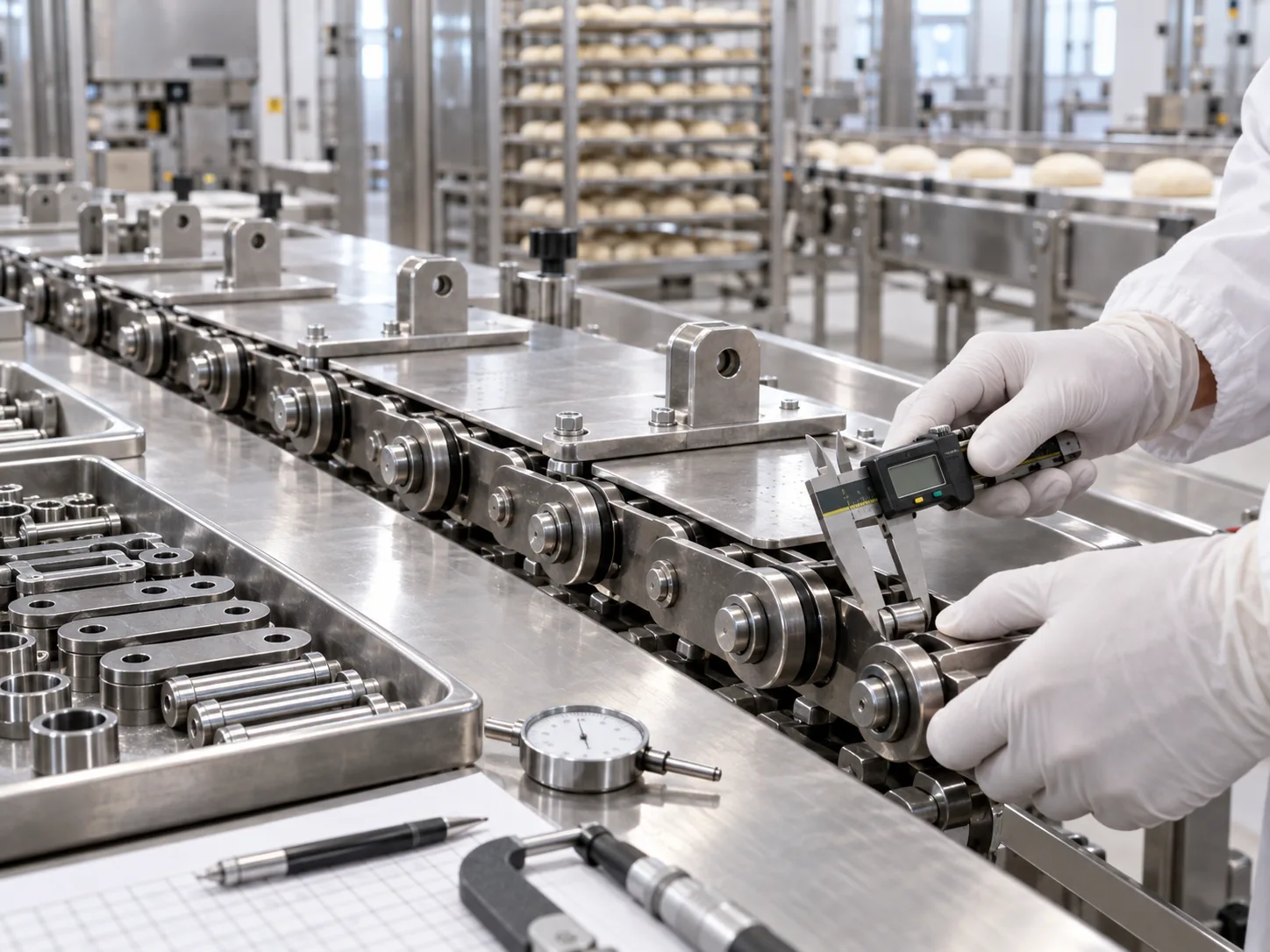
สำหรับการเปลี่ยนชิ้นส่วน ควรวัดความยาวของโซ่ที่ติดตั้งไว้ก่อนถอดออกหากเป็นไปได้ การสึกหรออาจทำให้ระยะห่างของฟันเฟืองเปลี่ยนแปลงไปตลอดความยาวที่วัดได้ ดังนั้นควรบันทึกทั้งระยะห่างของฟันเฟืองที่ระบุไว้ระหว่างหมุดที่อยู่ติดกัน และระยะห่างของฟันเฟืองสะสมตลอดหลายข้อต่อ
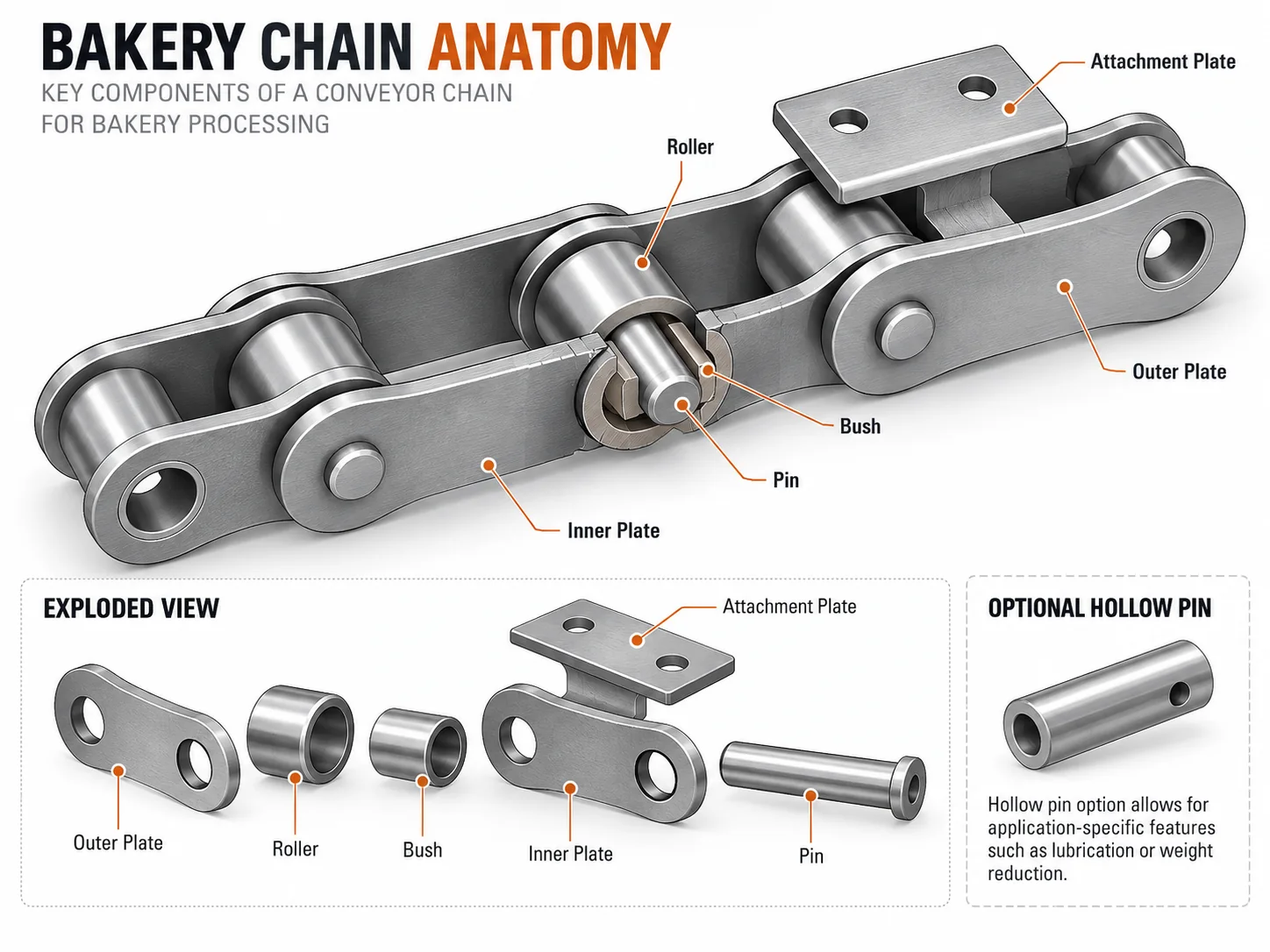
ครอบครัวเริ่มต้นที่เหมาะสมที่สุดสำหรับกระบวนการนี้คือ โซ่สแตนเลสแบบแบน โซ่สแตนเลสสำหรับเบเกอรี่การกำหนดค่าสุดท้ายขึ้นอยู่กับรูปทรงและลักษณะการใช้งานจริง ไม่ใช่แค่ชื่อการใช้งานเท่านั้น
ใช้เมื่ออุปกรณ์นั้นรองรับลูกกลิ้งหรือโซ่ลำเลียงแบบทั่วไป
ตรวจสอบพื้นที่ที่ไวต่อความชื้น การล้างทำความสะอาด และการกัดกร่อน
ใช้เมื่อถาด คานขวาง อุปกรณ์ยึด หรือตัวลำเลียงต้องการอินเทอร์เฟซเฉพาะ
ใช้ในกรณีที่รูปทรง วัสดุ หรือระยะห่างของจุดยึดที่ติดตั้งไม่เป็นไปตามมาตรฐาน
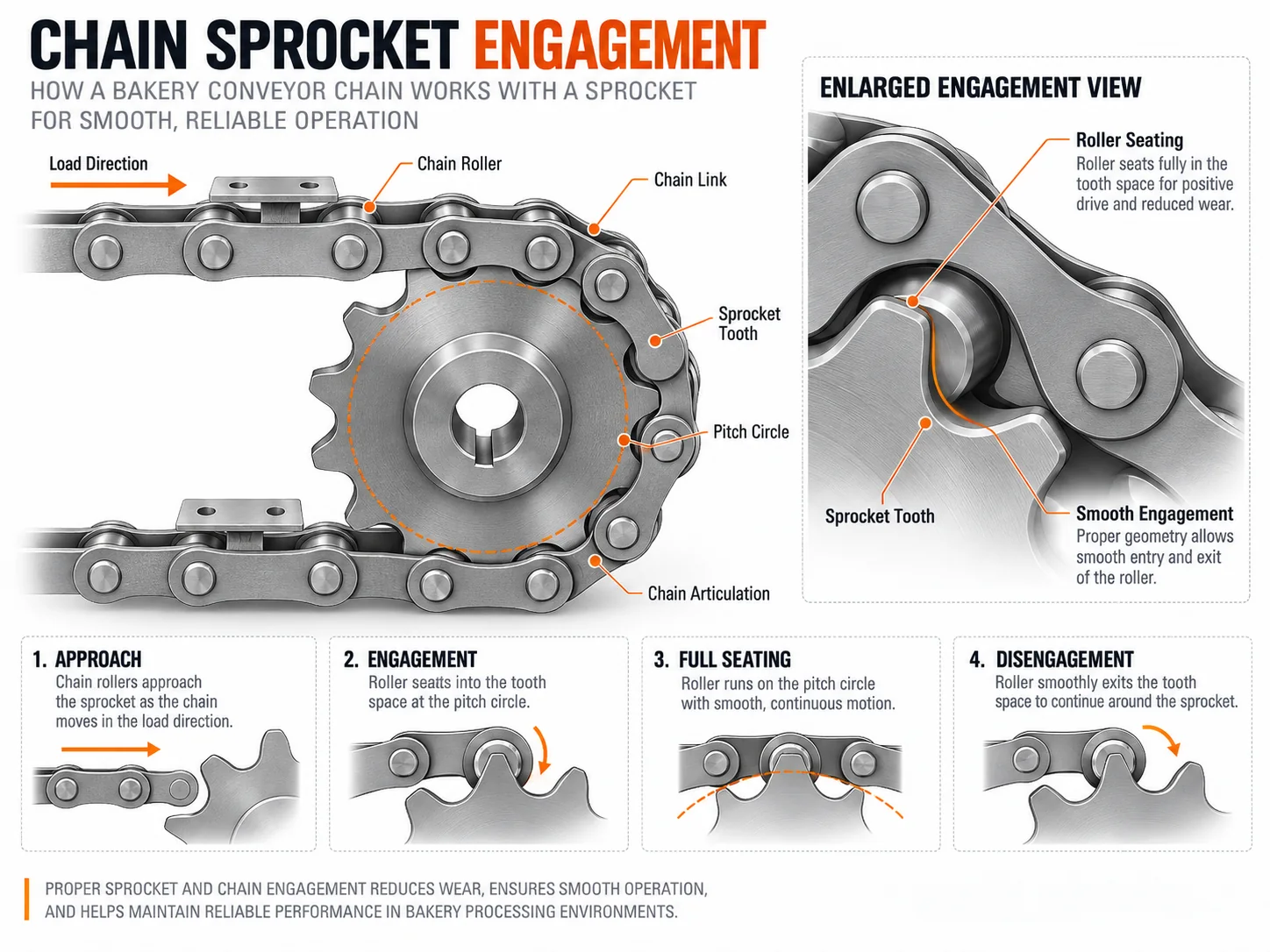
ตรวจสอบให้แน่ใจว่าโซ่ที่เลือกนั้นเข้าที่บนเฟืองอย่างถูกต้อง ไม่ติดกับตัวนำและชิ้นส่วนโครง และมีการเคลื่อนไหวที่เพียงพอในทุกเส้นทางกลับ สำหรับสายพานลำเลียงแบบโซ่ขนาน แท่งตัวนำอาจล็อกเส้นโซ่เข้าด้วยกันในแนวด้านข้าง ดังนั้นระยะห่างระหว่างศูนย์กลางโซ่และการดึงโซ่ที่ประสานกันจึงมีความสำคัญเป็นพิเศษ
อย่าแก้ไขปัญหาการจัดแนวที่ไม่ตรงอย่างรุนแรงด้วยการเพิ่มแรงตึง แรงตึงที่มากเกินไปอาจเพิ่มแรงดันในแบริ่งและเร่งการสึกหรอ ควรแก้ไขการจัดแนวเพลา ตำแหน่งของตัวนำ และสภาพของเฟืองก่อน
ช่วงเวลาการตรวจสอบควรสอดคล้องกับอุณหภูมิ ความชื้น การทำความสะอาด และความถี่ในการเริ่ม/หยุดการทำงาน สังเกตข้อต่อที่ฝืด การสึกหรอของลูกกลิ้งที่ไม่สม่ำเสมอ การเสียดสีของแผ่นด้านข้าง อุปกรณ์ยึดที่หลวมหรือบิดเบี้ยว และการสึกหรอของฟันเฟือง ปัญหาที่เกิดขึ้นซ้ำๆ ในตำแหน่งสายพานลำเลียงเดียวกัน อาจบ่งชี้ถึงการรบกวนของตัวนำ ตัวลำเลียง หรือโครงสร้าง มากกว่าปัญหาที่เกิดขึ้นกับโซ่ทั้งหมด
ก่อนขอเปลี่ยนสายเคเบิลเส้นใหม่ โปรดบันทึกเหตุผลในการเปลี่ยน ข้อมูลดังกล่าวจะช่วยในการพิจารณาว่าควรเปลี่ยนสายเคเบิลแบบเดียวกันหรือไม่ หรือควรตรวจสอบเรื่องพื้นที่ว่าง วัสดุ การยึดติด หรือการเข้าถึงเพื่อการบำรุงรักษาเพิ่มเติมหรือไม่
Treat packaging and transfer conveyors as a distinct duty zone. Record where the chain enters and leaves this zone, whether carriers accumulate, and whether the return path experiences different conditions from the product side.
Document clean downstream handling, accumulation and frequent transfers. Use normal conditions and short-duration peaks separately, because material, joint clearance and lubrication decisions can respond differently to continuous exposure and transient events.
Verify smooth handoff, guide geometry and stable product support. For parallel strands, compare chain centers, attachment intervals and carrier squareness so one strand is not forced to absorb alignment error created elsewhere in the machine.
The first families to review are flat-top, stainless and conveyor chains. That is a screening direction, not an automatic recommendation; final selection still depends on the installed geometry, load path, sprocket set and requested documentation.
| ตรวจสอบ | ทำไมเรื่องนี้ถึงสำคัญ | สิ่งที่ต้องส่งหรือยืนยัน |
|---|---|---|
| เส้นทางเครื่องจักร | เฟืองขับ/เฟืองท้าย, รางนำทาง, เกียร์ส่งกำลัง, ทางเดินกลับ และระบบดึงกลับ | ภาพร่างผังและภาพถ่ายประกอบ |
| เรขาคณิตของโซ่ | ระยะห่างระหว่างเกลียว, ความกว้างด้านใน, ลูกกลิ้ง/บูช, หมุด, แผ่น และความกว้างโดยรวม | การวัดระยะห่างหลายระดับพร้อมภาพด้านท้าย |
| อินเทอร์เฟซผู้ให้บริการ | smooth handoff, guide geometry and stable product support. | แบบร่างของตัวลำเลียง ระยะห่างของจุดยึด และจุดศูนย์กลางของโซ่ |
| หน้าที่และสภาพแวดล้อม | clean downstream handling, accumulation and frequent transfers. | ข้อมูลอุณหภูมิ/ความชื้น/การทำความสะอาด ความเร็ว และน้ำหนักบรรทุกที่รองรับ |
| หลักฐานการบำรุงรักษา | ลักษณะการสึกหรอ วิธีการหล่อลื่น ประวัติการปรับตั้ง และสภาพของเฟือง | ภาพถ่ายระยะใกล้และการสังเกตการณ์ล่าสุด |
โปรดระบุประเภทเครื่องจักร โซนการทำงาน รูปภาพ ภาพวาด (ถ้ามี) ระยะห่างของฟันเฟือง ความกว้างด้านใน เส้นผ่านศูนย์กลางของลูกกลิ้ง/บูช ขนาดพิน ขนาดของอุปกรณ์ยึด ระยะห่างระหว่างศูนย์กลางโซ่ จำนวนฟันเฟือง ความเร็ว น้ำหนักบรรทุก อุณหภูมิ สภาพการล้าง และปริมาณที่ต้องการ คู่มือการเลือกเครือร้านเบเกอรี่ เหมือนกับรายการตรวจสอบ
Walk the complete packaging and transfer conveyors chain route and verify guards, guides, sprocket alignment, take-up reserve and the carrier interface. Confirm smooth handoff, guide geometry and stable product support. A static clearance problem should be corrected before speed or tension is used to mask it.
ควบคุมความเร็วขณะเดินเครื่องและสังเกตทั้งเส้นทางขณะโหลดและเส้นทางขณะกลับ ทำเครื่องหมายตำแหน่งใดๆ ที่ข้อต่อติดขัด ตัวลำเลียงเอียง ลูกกลิ้งเข้าสู่เฟืองไม่สม่ำเสมอ หรือโซ่เสียดสีกับตัวนำ การเกิดอาการซ้ำๆ ในตำแหน่งเดิมนั้นมีประโยชน์อย่างยิ่งในการวินิจฉัยปัญหาที่ส่วนต่อประสานของเครื่องจักร
Recheck after the equipment reaches its normal clean downstream handling, accumulation and frequent transfers. Compare articulation, tracking and take-up position with the cold or idle condition. This is where thermal growth, moisture or cleaning-related changes can become visible.
After the system is stable, record take-up position, selected measurements, sprocket condition and representative photographs. Keep that baseline with the approved drawing for flat-top, stainless and conveyor chains; it gives maintenance and purchasing a reproducible reference for later wear checks or replacement requests.
Identify the packaging and transfer conveyors section, chain path, drive and tail sprockets, take-up arrangement and any transfer points that constrain the chain envelope.
Document smooth handoff, guide geometry and stable product support, including repeated attachment spacing, chain-center distance and the parts that actually transfer load into the chain.
Describe clean downstream handling, accumulation and frequent transfers together with speed, start/stop behavior, cleaning and lubrication limitations. Separate steady production conditions from short peaks or washdown events.
Use flat-top, stainless and conveyor chains as a starting family, then confirm the dimensions and machine interfaces on the quotation drawing before treating a configuration as interchangeable.