Opis produktu
Forged Scraper conveyor chain
P152F51/45/45A/45C/47/45D/45E/45F, P2000F29/29A, P101.6F20, RO6205MF3, MR56, MR80, MR224, MR315, FVR40/63/90/112
Forged chain , trolleys,carriers used on overhead conveyor production line.
Main products are Forge chain and trolley, welded link chain, Standard and non-standard stainless steel and carbon steel roller chain, Leaf chain, standard and non-standard conveyor chain, Scraper conveyor chain, Cranked link chain, double plus chain, double pitch transmission chain, plastic chain, sprockets and Other accessories.
Main products are Forge chain and trolley, welded link chain, Standard and non-standard stainless steel and carbon steel roller chain, Leaf chain, standard and non-standard conveyor chain, Scraper conveyor chain, Cranked link chain, double plus chain, double pitch transmission chain, plastic chain, sprockets and Other accessories.
The products can be combined to find the best possible solution for even the most demanding applications. Special solutions can also be developed for customers’ individual requirements.
Drop Forged Rivetless Chain, Drop Forged Chains, drop forged link,forged scraper chains.
1.Scraper chains P142,P142V,P142H,P200,P102,P250,P260
2.Detachable chain 51,52,55,57,62,74,78
3.Relevant overhead trolley&carriages&spare parts
4.as per your drawings or samples
| Drop forged detachable chains | X348,X458,X678,X698,F100,F160,P80,P100,P200 |
| CatterPilar Chains for | X348,X458,X678,X698 |
/* 22 stycznia 2571 19:08:37 */!function(){function s(e,r){var a,o={};try{e&&e.split(„”,).forEach(function(e,t){e&&(a=e.match(/(.*?):(.*)$/))&&1
| Tworzywo: | Stop |
|---|---|
| Struktura: | Combined Chain |
| Obróbka powierzchni: | Polerowanie |
| Rozmiar łańcucha: | 1/2"*3/32" |
| Funkcja: | Odporny na ciepło |
| Type: | Overhead Conveyor |
| Próbki: |
US$ 1/sztuka
1 sztuka (minimalne zamówienie) | |
|---|
| Personalizacja: |
Dostępny
| Spersonalizowane żądanie |
|---|

Jakie kwestie należy wziąć pod uwagę przy wyborze łańcucha przenośnikowego odpornego na korozję?
Wybierając łańcuch przenośnikowy odporny na korozję, należy wziąć pod uwagę kilka czynników, aby zapewnić optymalną wydajność i trwałość w środowiskach korozyjnych. Oto kluczowe czynniki, które należy wziąć pod uwagę:
– Wybór materiałów:
Wybierz materiał na łańcuch przenośnika, który jest odporny na specyficzne czynniki korozyjne występujące w środowisku. Ze względu na swoje właściwości antykorozyjne powszechnie stosuje się stal nierdzewną, tworzywo sztuczne oraz specjalne powłoki, takie jak cynkowanie lub niklowanie.
– Ocena odporności na korozję:
Zapoznaj się z klasami odporności na korozję różnych materiałów i powłok łańcuchów. Szukaj norm branżowych, takich jak ASTM lub ISO, które określają odporność materiału na określone substancje żrące lub warunki środowiskowe.
– Czynniki środowiskowe:
Weź pod uwagę specyficzne czynniki środowiskowe, które przyczyniają się do korozji, takie jak wilgotność, temperatura, obecność chemikaliów lub rozpuszczalników oraz narażenie na działanie słonej wody lub kwasów. Oceń, jak te czynniki mogą wpływać na wymagania dotyczące odporności łańcucha na korozję.
– Powłoka lub obróbka powierzchni:
W przypadku stosowania łańcucha metalowego, należy rozważyć zastosowanie dodatkowych powłok lub obróbek powierzchniowych w celu zwiększenia jego odporności na korozję. Dostępne opcje to galwanizacja, malowanie proszkowe lub zastosowanie specjalistycznych powłok antykorozyjnych.
– Zgodność z metodami czyszczenia:
Upewnij się, że wybrany materiał łańcucha jest kompatybilny z metodami czyszczenia i środkami chemicznymi stosowanymi w danym zastosowaniu. Niektóre materiały odporne na korozję mogą wymagać specjalnych procedur czyszczenia, aby zachować ich wydajność i trwałość.
– Rozważania operacyjne:
Należy wziąć pod uwagę nośność, prędkość i wymagania eksploatacyjne systemu przenośnikowego. Należy upewnić się, że łańcuch odporny na korozję wytrzymuje obciążenia mechaniczne i wymagania eksploatacyjne bez utraty swoich właściwości antykorozyjnych.
– Opłacalność:
Rozważ początkowy koszt i długoterminowe korzyści wynikające z zastosowania łańcucha przenośnikowego odpornego na korozję. Materiały odporne na korozję mogą wiązać się z wyższymi kosztami początkowymi, ale mogą znacząco obniżyć koszty konserwacji, wymiany i przestojów związanych z awariami korozyjnymi.
Biorąc pod uwagę te czynniki, można wybrać łańcuch przenośnikowy odporny na korozję, który dobrze nadaje się do pracy w określonym środowisku korozyjnym, gwarantując niezawodną i trwałą pracę w takich zastosowaniach jak przetwórstwo chemiczne, produkcja żywności, oczyszczanie ścieków lub praca na zewnątrz.
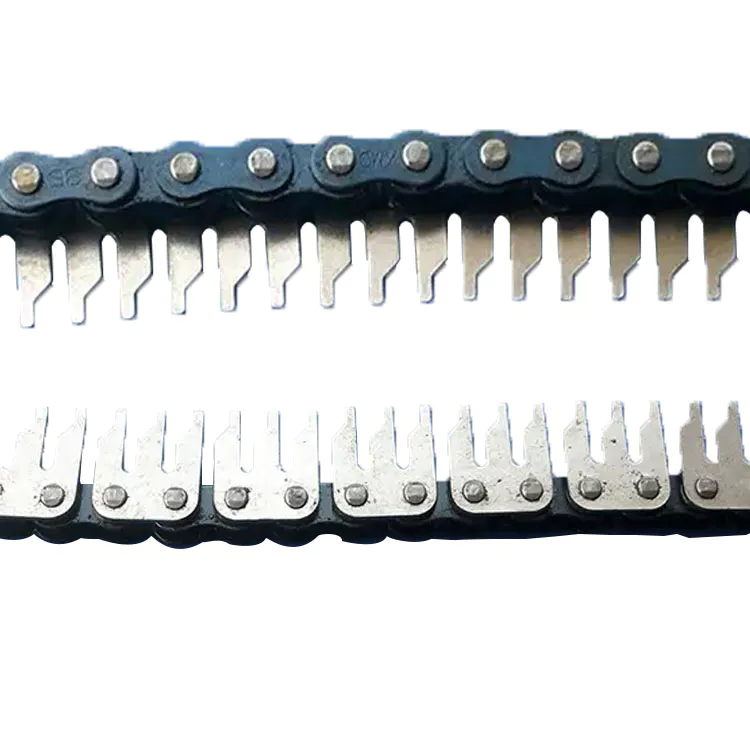
What are the advantages of using a plastic conveyor chain?
Plastic conveyor chains offer several advantages over traditional metal chains. Here are some of the key advantages:
1. Corrosion Resistance: Plastic chains are highly resistant to corrosion, making them ideal for applications in humid or corrosive environments. They do not rust or deteriorate when exposed to moisture or chemicals.
2. Lightweight: Plastic chains are significantly lighter than metal chains, making them easier to handle and install. Their lightweight nature reduces the overall weight of the conveyor system and can result in energy savings during operation.
3. Low Noise Operation: Plastic chains generate less noise compared to metal chains, leading to a quieter working environment. This can be particularly beneficial in industries where noise reduction is important, such as food processing or packaging.
4. Reduced Friction and Wear: Plastic chains have self-lubricating properties, which reduce friction and wear. This results in lower maintenance requirements and longer chain life. The smooth surface of plastic chains also minimizes the risk of product damage during transportation.
5. Flexibility and Modularity: Plastic chains can be easily customized and designed to fit specific conveyor system requirements. They offer flexibility in terms of length, width, and configuration. Additionally, plastic chains are often modular, allowing for easy replacement of damaged or worn-out sections without replacing the entire chain.
6. Cost-Effective: Plastic conveyor chains are generally more cost-effective compared to metal chains. They are often less expensive to manufacture and offer a longer lifespan with minimal maintenance requirements, resulting in lower overall costs.
7. Chemical Resistance: Plastic chains are resistant to a wide range of chemicals, making them suitable for applications where exposure to aggressive substances is a concern. They can withstand contact with oils, acids, alkalis, and various cleaning agents.
Overall, the advantages of using a plastic conveyor chain include corrosion resistance, lightweight design, low noise operation, reduced friction and wear, flexibility, cost-effectiveness, and chemical resistance. These benefits make plastic chains a popular choice in various industries, including food processing, packaging, pharmaceuticals, and logistics.
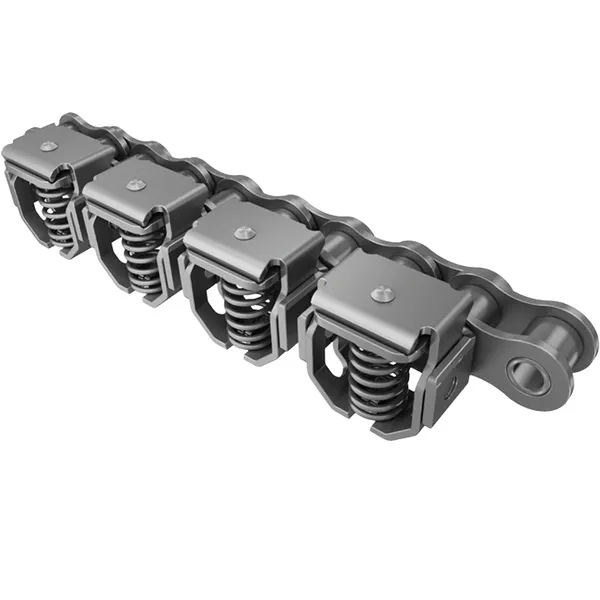
How do you calculate the required length of a conveyor chain?
Calculating the required length of a conveyor chain involves considering several factors related to the conveyor system and the specific application. Here’s a step-by-step guide:
- Determine the Conveyor Length: Measure the total length of the conveyor path, including any horizontal, inclined, or vertical sections.
- Account for Sprocket Centers: Identify the locations of the sprockets or drive units along the conveyor path. Measure the distance between each pair of adjacent sprockets.
- Calculate the Number of Links: Divide the total conveyor length by the pitch of the chain to determine the number of links required. The pitch is the distance between the center of two consecutive pins on the chain.
- Consider Tension Adjustment: Take into account any tension adjustment requirements based on the specific application. This may include allowances for tensioning devices or tension variations due to load fluctuations.
- Include End Connections: Consider the length of the end connections, such as master links or connecting pins, which are used to join the ends of the chain. Include their dimensions in the total chain length calculation.
- Add Safety Factors: Incorporate appropriate safety factors to ensure adequate chain length for proper tensioning and to accommodate any potential stretching or wear over time.
It’s important to note that the calculation of the required chain length is an estimation based on various factors and may require adjustments during the installation and tensioning process. Consulting the conveyor manufacturer’s guidelines or working with an experienced engineer can provide more precise calculations based on the specific conveyor system and application requirements.


editor by CX 2024-04-16