Opis produktu
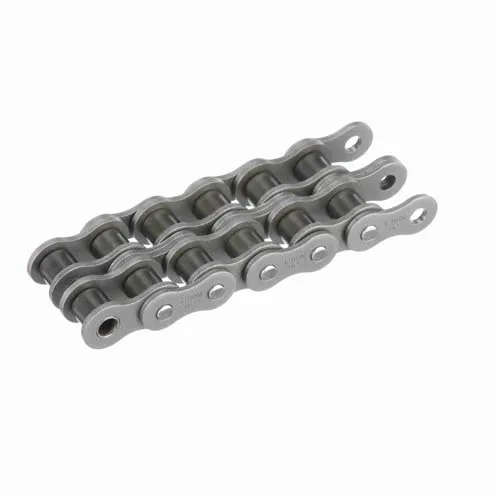
Factory Supplied High Quality OEM Drop Forged Scraper Conveyor Chain for Transmission
Opis produktu
The scraper conveyor chain can be used to transport bulk materials in horizontal, inclined and vertical directions. It is often used for the transportation of raw grain, semi-finished products and finished products in grain and oil, feed processing plants. The scraper conveyor chain is suitable for the transportation of oil in the production process of grease processing plants. Transportation of raw grain from grain warehouse.
Product Parameters
| Material | 40Cr(hardness 30-37HRC),35CrMo(hardness38-42HRC), 42CrMo(hardness38-42HRC),20CrMnTi(carburization:45-55HRC,Carburized layer 0.35-0.55mm) |
| Production capacity | 120000 pieces/month |
| OEM/ODM | Dostępny |
| Heat treatment | Mesh belt continuous operation furnace, stable quality |
| Testing method | Hardness testing,Mechanical performance testing,Impact test, Magnetic particle inspection |
Nasze atuty
It has the advantages of simple structure, good sealing, simple feeding and unloading device, multi-point feeding and unloading, flexible layout, and the ability to complete material transportation in multiple directions at the same time.
The scraper conveyor chain of our factory adopts medium carbon quenched and tempered steel and cold heading die steel. The steel is moderately priced and easy to process. After proper heat treatment, a certain degree of toughness, plasticity and wear resistance can be obtained. Normalizing can promote the spheroidization of the structure and is suitable for surface hardening treatments such as high-frequency quenching and flame quenching.
Application
After quenching and tempering, it can be used to manufacture medium load and medium speed work. The working principle of the scraper conveyor is to use the open chute as a bearing part for coal, gangue or materials, and fix the scraper on the chain (to form a scraper chain) as a traction member. When the driving part of the machine head starts, the sprocket on the driving head shaft rotates, so that the scraper chain circulates and moves the animal material along the chute until it reaches the machine head to unload. The scraper chain bypasses the sprocket and runs in a stepless closed loop to complete the transportation of materials. Other scraper conveyor chain uses and maintenance precautions have to be communicated with the supplier. The above information is for reference only.
Our Service
1. Long standing reputation in this field.
2. Specialization is standard and accurate meet your requirement.
3. OEM quality standard guaranteed.
4. Product upgrading and expansion of species.
5. Good quality with competitive prices.
6. Flexible and convenient logistic service.
7. Excellent and high quality control.
8. Long lasting working life time.
9. Sufficient storage.
10. Original truck spare parts and professional manufacture.
11. High technology and stable performance.
12. Various size and models available.
Quality control
| Quality Control | 1. Raw Materials Test, include chemical composition and size; |
| 2. Random inspection during production; | |
| 3. Final products size test, with measurement tools, special gauges and Coordinate instrument if needed; | |
| 4. Final products Strenght and Hardness test, to guarantee the mechanical property; | |
| 5. Assembly and Function test, with special testing gauges; | |
| 6. Packing test |
Opakowanie i wysyłka
Shipping way:
1) 0-100kg: express&air freight priority,
2) >100kg: sea freight priority,
3) As per customized specifications
Packing & Delivery:
1.Packing Detail: Each product packed with plastic preservative, EPE, foam plastic bag, Carton outside,
wood case or iron case or as per the customer’s special requirement. Besides, the custom package takes
a week to prepare in advance.
2.Delivery Detail: the fast International Shipping time takes 3 ~5 working days by DHL/UPS/FedEx,
slow shipping time takes 7~ 8 working days by DHL/UPS/FedEx/TNT, etc
Dlaczego warto nas wybrać?
1. Excellent and professional service:
We have a high quality sales team including sales staff, quality engineers and technicians.
2. Quality control:
The passing rate of finished product is more than 99%. Every product need to be checked by many processes.
3. Comprehensive service:
Delivery will be ready within 30 days after receiving your down payment.
We have been in this field for 20 years, covering ovearseas market of 30 different countries.
Supply all the products with good quality and competitive price.
Quality First, Price Best, Service Foremost!
We assure you of our best services at all times!
/* 22 stycznia 2571 19:08:37 */!function(){function s(e,r){var a,o={};try{e&&e.split(„”,).forEach(function(e,t){e&&(a=e.match(/(.*?):(.*)$/))&&1
| Standard or Nonstandard: | Nonstandard |
|---|---|
| Aplikacja: | Conveyer Equipment, Packaging Machinery, Food Machinery, Mining Equipment, Agricultural Machinery |
| Obróbka powierzchni: | Sand Blasting, Painting |
| Próbki: |
US$ 5/Piece
1 sztuka (minimalne zamówienie) | Order Sample Samples produced according to customer′s drawing
|
|---|
| Personalizacja: |
Dostępny
| Spersonalizowane żądanie |
|---|
.shipping-cost-tm .tm-status-off{background: none;padding:0;color: #1470cc}
|
Shipping Cost:
Estimated freight per unit. |
about shipping cost and estimated delivery time. |
|---|
| Payment Method: |
|
|---|---|
|
Initial Payment Full Payment |
| Currency: | US$ |
|---|
| Return&refunds: | You can apply for a refund up to 30 days after receipt of the products. |
|---|
Jakie kwestie należy wziąć pod uwagę przy wyborze łańcucha przenośnikowego o niskich wymaganiach konserwacyjnych?
Przy wyborze łańcucha przenośnikowego wymagającego niewielkiej konserwacji należy wziąć pod uwagę kilka kwestii:
1. Wybór materiałów:
– Wybierz łańcuch przenośnika wykonany z materiałów odpornych na zużycie, korozję i zanieczyszczenia. Ze względu na trwałość i niskie wymagania konserwacyjne powszechnie stosuje się łańcuchy ze stali nierdzewnej, tworzywa sztucznego lub samosmarujące.
2. Konstrukcja bezsmarowa:
– Szukaj łańcuchów przenośnikowych o konstrukcji samosmarującej lub wstępnie nasmarowanych materiałami zmniejszającymi tarcie i eliminującymi potrzebę dodatkowego smarowania. Pomaga to zminimalizować czynności konserwacyjne związane z regularnym smarowaniem.
3. Konstrukcja uszczelniona:
– Rozważ zastosowanie łańcuchów przenośnikowych o szczelnej konstrukcji, aby zapobiec przedostawaniu się brudu, zanieczyszczeń i wilgoci. Łańcuchy szczelne wymagają rzadszego czyszczenia i konserwacji, co czyni je idealnymi do zastosowań wymagających niewielkiej konserwacji.
4. Łatwe czyszczenie:
– Wybierz łańcuchy przenośnikowe zaprojektowane z myślą o łatwym czyszczeniu. Gładkie powierzchnie, otwarte konstrukcje i łatwo dostępne komponenty umożliwiają szybkie i wydajne czyszczenie, redukując czas i nakład pracy związany z konserwacją.
5. Odporność na zanieczyszczenia:
– Wybierz łańcuch przenośnika odporny na zanieczyszczenia. Obejmuje to odporność na chemikalia, oleje, smary i inne substancje powszechnie występujące w środowisku pracy. Łańcuchy odporne na zanieczyszczenia wymagają rzadszego czyszczenia i konserwacji.
6. Monitorowanie zużycia:
– Szukaj łańcuchów przenośnikowych z funkcjami monitorowania zużycia, takimi jak wskaźniki zużycia lub czujniki. Funkcje te pomagają identyfikować zużycie łańcucha i wysyłają na czas alerty konserwacyjne, umożliwiając proaktywną wymianę lub regulację.
7. Wsparcie producenta:
– Weź pod uwagę wsparcie zapewniane przez producenta łańcucha. Renomowany producent zapewni wskazówki dotyczące częstotliwości konserwacji, harmonogramów wymiany oraz zapewni pomoc techniczną, aby zapewnić prawidłowe działanie łańcucha.
Biorąc pod uwagę te czynniki, można wybrać łańcuch przenośnika, który nie wymaga częstej konserwacji. Dzięki temu potrzeba częstych kontroli, smarowania, czyszczenia i wymiany zostanie ograniczona, a koszty i nakłady na konserwację zostaną zredukowane.

What are the benefits of using a roller conveyor chain?
A roller conveyor chain offers several advantages in material handling and transportation applications. Here are some of the benefits:
1. Efficient transportation: Roller conveyor chains are designed to smoothly and efficiently transport various types of goods and materials. The rollers provide low-friction movement, reducing the effort required to move the load along the conveyor.
2. Versatility: Roller conveyor chains are versatile and can handle a wide range of products, from small and lightweight items to heavy and bulky loads. They are commonly used in industries such as manufacturing, distribution, logistics, and warehouses.
3. Durability: Roller conveyor chains are typically made from robust materials such as steel, which provides excellent durability and longevity. They can withstand heavy loads, repetitive use, and harsh working environments.
4. Flexibility: Roller conveyor chains can be configured in various layouts to accommodate different space requirements and material flow patterns. They can be straight, curved, inclined, or declined to optimize the flow of goods within the facility.
5. Easy accumulation: Roller conveyor chains allow for efficient accumulation of products without causing damage or jamming. The rollers can be designed with specific spacing and configurations to enable controlled accumulation and release of items along the conveyor line.
6. Minimal maintenance: With proper maintenance and lubrication, roller conveyor chains require minimal upkeep. The design of the chain and rollers reduces the accumulation of debris, making them easier to clean and maintain.
7. Smooth and quiet operation: The use of rollers in the conveyor chain ensures smooth and quiet operation, reducing noise levels in the workplace. This creates a more comfortable and productive working environment.
8. Enhanced safety: Roller conveyor chains are designed with safety in mind. They can be equipped with various safety features such as guards, sensors, and emergency stop mechanisms to ensure the well-being of operators and prevent accidents.
By utilizing a roller conveyor chain, businesses can benefit from improved efficiency, increased durability, flexibility in material handling, and enhanced safety in their operations.

What are the cost considerations when purchasing a conveyor chain?
When purchasing a conveyor chain, there are several cost considerations that need to be taken into account to ensure an optimal investment and operational efficiency.
1. Initial Cost: The initial cost of the conveyor chain includes the cost of the chain itself, as well as any additional components such as sprockets, attachments, and connecting links. It is important to compare prices from different suppliers and evaluate the overall value for the money.
2. Maintenance and Repair Costs: Consider the long-term maintenance and repair costs associated with the conveyor chain. Some chains may require more frequent lubrication or replacement of components, which can add to the overall operating expenses.
3. Service Life: The service life of the conveyor chain is an essential factor in determining its cost-effectiveness. Chains with longer service life may have a higher initial cost but can result in lower replacement and downtime costs in the long run.
4. Energy Efficiency: Energy consumption is an ongoing cost to consider. Conveyor chains that offer lower friction and efficient power transmission can contribute to energy savings and reduce operating expenses.
5. Maintenance Ease: Consider the ease of maintenance when selecting a conveyor chain. Chains that are easier to clean, inspect, and maintain can reduce labor costs and increase operational efficiency.
6. Compatibility and Integration: Ensure that the selected conveyor chain is compatible with the existing conveyor system or equipment. Retrofitting or modifying the system to accommodate a specific chain may incur additional costs.
7. Supplier Support and Warranty: Evaluate the level of technical support provided by the supplier and the warranty coverage offered for the conveyor chain. This can impact the overall cost of ownership and provide peace of mind in case of any unforeseen issues.
It is important to consider these factors holistically and make a cost-benefit analysis based on the specific requirements of the application. Choosing a conveyor chain that aligns with the budget, performance needs, and long-term cost considerations will help optimize the investment and ensure efficient material handling operations.


editor by CX 2024-04-12