제품 설명
| DIN Chain No. | ISO/ANSI Chain No. | P/mm | d1/mm | L/mm | b1/mm | T/mm | |||||||||||||||||||||||||||
| 08A-1 | 40 | 12.70 | 7.92 | 16.70 | 7.85 | 1.50 | |||||||||||||||||||||||||||
| 10A-1 | 50 | 15.875 | 10.16 | 20.70 | 9.40 | 2. Abbreviation: CHOHO Industry. √ HangZhou CHOHO Industrial Co., Ltd. was founded in 1999. Has become the leader of chain system technology, the first batch of natioal recognized enterprise technology center,national technology innovation demonstration enterprise,and the first A-share listed company in China’s chain drive industry.The securities code is 003033.
We are very close to the port of HangZhou, which saves a lot of logistics costs and transportation time! We have our own logistics company and transportation department. If you need me to deliver goods to your warehouse or other ports in China, such as ZheJiang Port and ZheJiang Port, we can also do it!
√ CHOHO has a natural brand awareness. As of January 2571, CHOHO has registered the “CHOHO” trademark in more than 60 countries, including the United States, Japan, the United Kingdom, France, Germany, Russia, Spain, Austria, Belgium, Bulgaria, Croatia, Czech Republic, Denmark, Finland, Greece , Hungary, Ireland, Italy, Netherlands, Poland, Portugal, Romania, Ukraine, Sweden, Australia, Algeria, Egypt, Kenya, Morocco, South Korea, Kazakhstan, Mongolia, Syria, Thailand, Pakistan, India, Brazil, Mexico, Colombia, etc. CHOHO has been invited to participate in many international exhibitions around the world, including industrial exhibitions, agricultural exhibitions, motorcycle exhibitions, engine exhibitions, such as Hannover Messe, Bologna Fair, Canton Fair ,VIV ASIA and other world famous exhibitions! COOPERATIVE CLIENT 다양한 고객 채널 시장이 지속적으로 성장하고 있습니다! 초호는 세계 500대 기업과 각 분야 상위 10대 기업에 체인 시스템 솔루션을 제공합니다! 자주 묻는 질문
1. Are you a Manufacturer or Trade Company? OTHER HOT SELL PRODUCTS
Thx for Reading!
/* 2571년 1월 22일 19:08:37 */!function(){function s(e,r){var a,o={};try{e&&e.split(“,”).forEach(function(e,t){e&&(a=e.match(/(.*?):(.*)$/))&&1
.shipping-cost-tm .tm-status-off{background: none;padding:0;color: #1470cc}
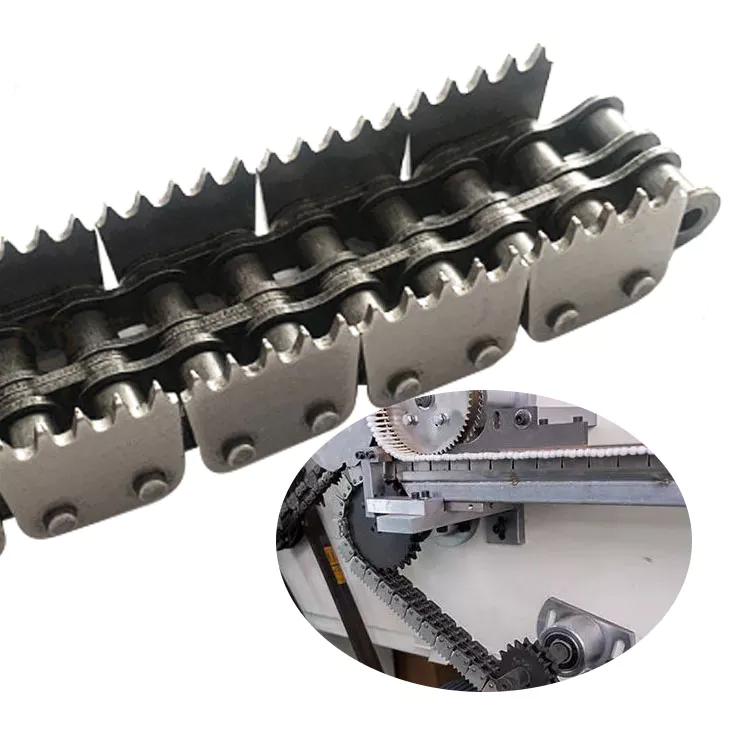
소음이 적은 컨베이어 체인을 사용하면 어떤 이점이 있습니까?소음 저감 컨베이어 체인이라고도 하는 저소음 컨베이어 체인은 컨베이어 시스템 적용 분야에서 여러 가지 이점을 제공합니다. 1. 소음 감소: 저소음 컨베이어 체인을 사용하는 주요 이점 중 하나는 소음 수준이 크게 감소한다는 것입니다. 이러한 체인은 작동 중 발생하는 소음을 최소화하도록 특별히 설계되어 더욱 조용하고 쾌적한 작업 환경을 조성합니다. 2. 개선된 근무 환경: 소음을 줄여주는 저소음 컨베이어 체인은 특히 제조 시설, 창고, 유통 센터와 같이 소음 감소가 중요한 환경에서 더 나은 작업 환경을 조성하는 데 기여합니다. 이는 직원 피로도를 줄이고, 소통을 원활하게 하며, 전반적인 직원 만족도를 향상시킵니다. 3. 소음 규정 준수: 일부 산업 또는 지역에서는 준수해야 하는 특정 소음 규정이 있습니다. 저소음 컨베이어 체인을 사용하면 이러한 규정을 준수하여 잠재적인 벌금 및 법적 문제를 방지할 수 있습니다. 4. 생산성 향상: 조용한 컨베이어 체인이 만들어내는 더욱 조용한 작업 환경은 생산성 향상으로 이어질 수 있습니다. 소음으로 인한 방해가 줄어들면 직원들은 업무에 더욱 집중할 수 있어 효율성과 생산량이 향상됩니다. 5. 체인 및 장비 수명 연장: – 저소음 컨베이어 체인은 내마모성과 내구성을 향상시킨 첨단 소재와 기술로 설계되는 경우가 많습니다. 이러한 체인은 무거운 하중을 견딜 수 있고, 마찰을 줄이며, 체인과 관련 장비의 마모를 최소화하여 수명을 연장하고 유지보수 비용을 절감합니다. 6. 다용성: - 저소음 컨베이어 체인은 다양한 구성과 디자인으로 제공되어 광범위한 컨베이어 시스템 및 응용 분야와 호환됩니다. 자동차, 식품 가공, 포장 등 다양한 산업 분야에서 사용할 수 있습니다. 소음이 적은 컨베이어 체인을 고려할 때는 해당 체인이 적용 분야의 특정 요구 사항을 충족하는지 확인하기 위해 평판이 좋은 체인 제조업체 또는 공급업체와 상담하는 것이 중요합니다.
What are the future trends and advancements in conveyor chain technology?The field of conveyor chain technology is constantly evolving, driven by the need for improved efficiency, productivity, and sustainability. Here are some of the future trends and advancements in conveyor chain technology: 1. Automation and robotics: The integration of conveyor chains with automation and robotics systems is a growing trend. This includes the use of advanced sensors, machine vision, and artificial intelligence to enable autonomous operation, precise positioning, and efficient material handling. 2. Smart and connected systems: Conveyor chains are becoming increasingly connected through the Internet of Things (IoT) technology. This allows for real-time monitoring, data collection, and analysis of various performance parameters such as chain wear, tension, temperature, and energy consumption. Smart systems can optimize maintenance schedules, detect potential failures, and improve overall system efficiency. 3. Lightweight and high-strength materials: The development of lightweight yet high-strength materials is an ongoing focus in conveyor chain technology. Advanced alloys, composites, and engineered plastics offer improved strength-to-weight ratios, reducing energy consumption and increasing the load capacity of conveyor systems. 4. Energy efficiency: Energy efficiency is a key consideration in conveyor chain design. Future advancements aim to minimize power consumption through the use of efficient drive systems, regenerative braking, and smart control algorithms that optimize speed and acceleration profiles. Energy recovery technologies, such as regenerative drives, can also capture and reuse energy during deceleration or braking. 5. Sustainability and environmental friendliness: Conveyor chain technology is moving towards more sustainable and environmentally friendly solutions. This includes the use of eco-friendly materials, improved lubrication techniques to minimize environmental impact, and the adoption of energy-efficient components and systems. Recycling and circular economy concepts are also gaining prominence in the design and manufacturing of conveyor chains. 6. Advanced wear monitoring and predictive maintenance: The future of conveyor chain technology involves advanced wear monitoring systems that can accurately predict the remaining useful life of chains and components. This enables proactive maintenance planning and reduces unplanned downtime. Predictive maintenance algorithms analyze data collected from sensors and provide timely alerts for chain replacement or repair. These are just a few examples of the future trends and advancements in conveyor chain technology. As technology continues to advance, we can expect further innovations that enhance performance, efficiency, reliability, and sustainability in conveyor systems.
What are the environmental considerations when using a conveyor chain?When using a conveyor chain, there are several environmental considerations to take into account: 1. Temperature and Humidity: Conveyor chains may be exposed to different temperature and humidity levels depending on the application and operating environment. Extreme temperatures or high humidity can affect the performance and lifespan of the chain. It is important to select a chain material and lubrication that can withstand the specific environmental conditions. 2. Contamination and Cleanliness: The presence of dust, dirt, debris, or other contaminants can impact the operation and efficiency of the conveyor chain. Regular cleaning and maintenance should be performed to prevent build-up and ensure smooth chain movement. 3. Chemical Exposure: Conveyor chains used in industries such as chemical processing or food production may come into contact with corrosive chemicals or cleaning agents. It is crucial to choose a chain material that is resistant to chemical corrosion and select appropriate lubricants compatible with the chemicals present in the environment. 4. Noise and Vibration: Conveyor systems can generate noise and vibration during operation, which may have environmental implications. Noise reduction measures, such as using noise-dampening materials or implementing vibration isolation techniques, can help minimize the impact on the surrounding environment and comply with noise regulations. 5. Energy Efficiency: Consideration should be given to energy consumption and efficiency when using a conveyor chain. Optimize the system design, minimize friction losses, and utilize energy-efficient components to reduce the environmental impact and operational costs. 6. Sustainability: Increasingly, sustainability is an important consideration in industrial operations. Choosing conveyor chains made from recyclable or renewable materials, implementing energy-saving measures, and practicing responsible waste management can contribute to a more environmentally friendly operation. By taking these environmental considerations into account, industries can ensure the proper functioning of conveyor chains while minimizing environmental impact and complying with relevant regulations.
|