هندسة السجل
الخطوة، والعرض، والبكرة/الجلبة، والدبوس، واللوحة، والعرض الكلي، ونمط التثبيت.
الدليل الفني لسلسلة المخابز
Chain Design for Frequent Cleaning is best answered by combining measured chain geometry, machine duty and the operating environment. This guide shows what to inspect, record and discuss before a replacement or new-chain decision.
Chain Design for Frequent Cleaning should be evaluated from the actual conveyor. Start with chain pitch, transverse geometry, sprocket condition and any carrier attachment, then add temperature, moisture, washdown, load, speed and take-up information. The objective is not to identify a chain by appearance; it is to produce an RFQ that preserves the machine interface and makes application-dependent choices explicit.
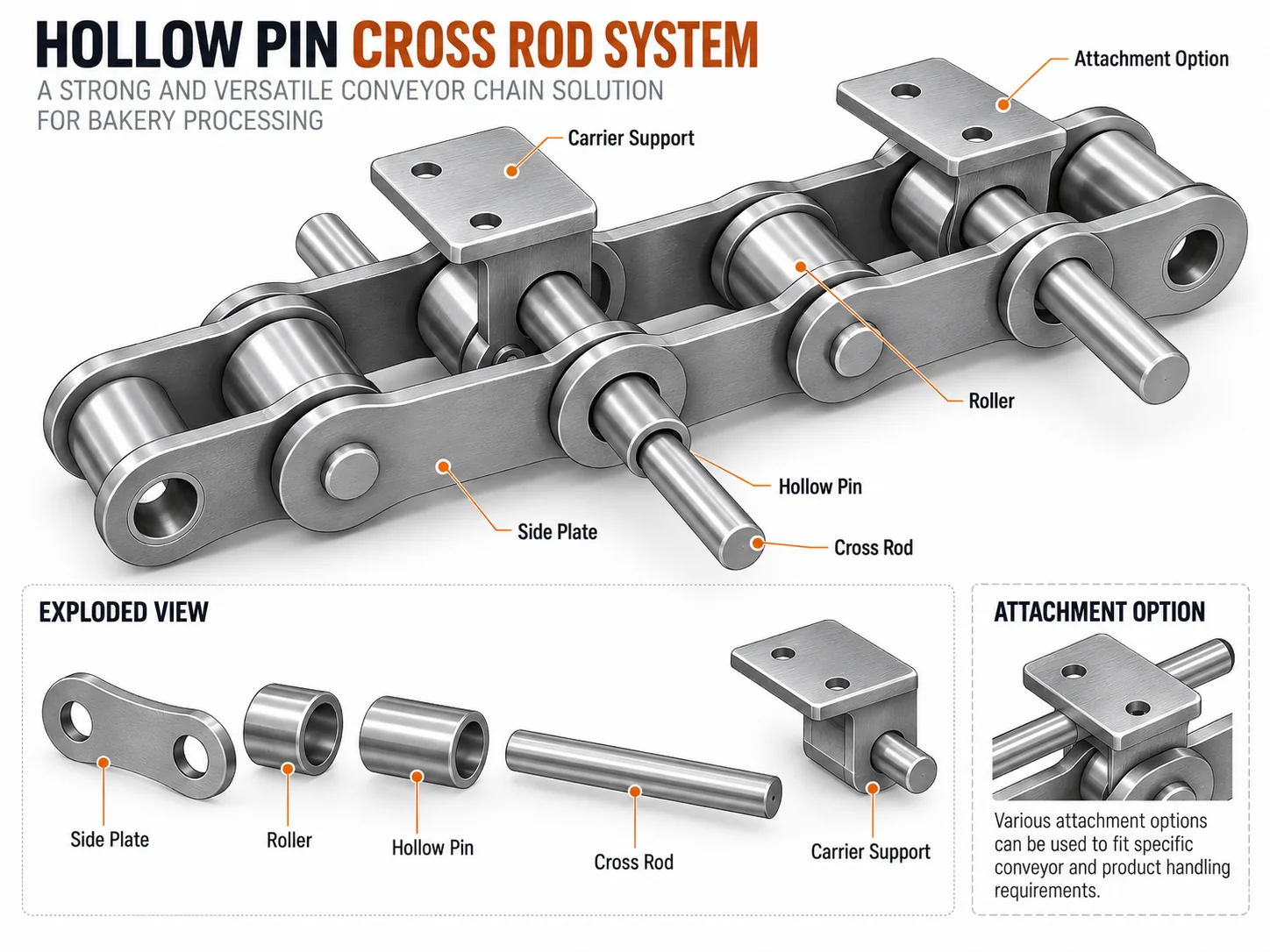
قم بقياس عدة خصائص قبل إزالة السلسلة. يحدد طول الخطوة علاقة التروس الأساسية، لكن العرض الداخلي، وقطر البكرة أو الجلبة، وقطر الدبوس، وارتفاع الصفيحة، والعرض الكلي، وأبعاد التثبيت تميز التكوينات التي يمكن أن تشترك في نفس طول الخطوة الاسمي.
بالنسبة للسلسلة البالية، قم بقياس المسافة التراكمية بين حلقات السلسلة. صوّر السلسلة من الجانب والطرف، وأضف الترس إن أمكن.
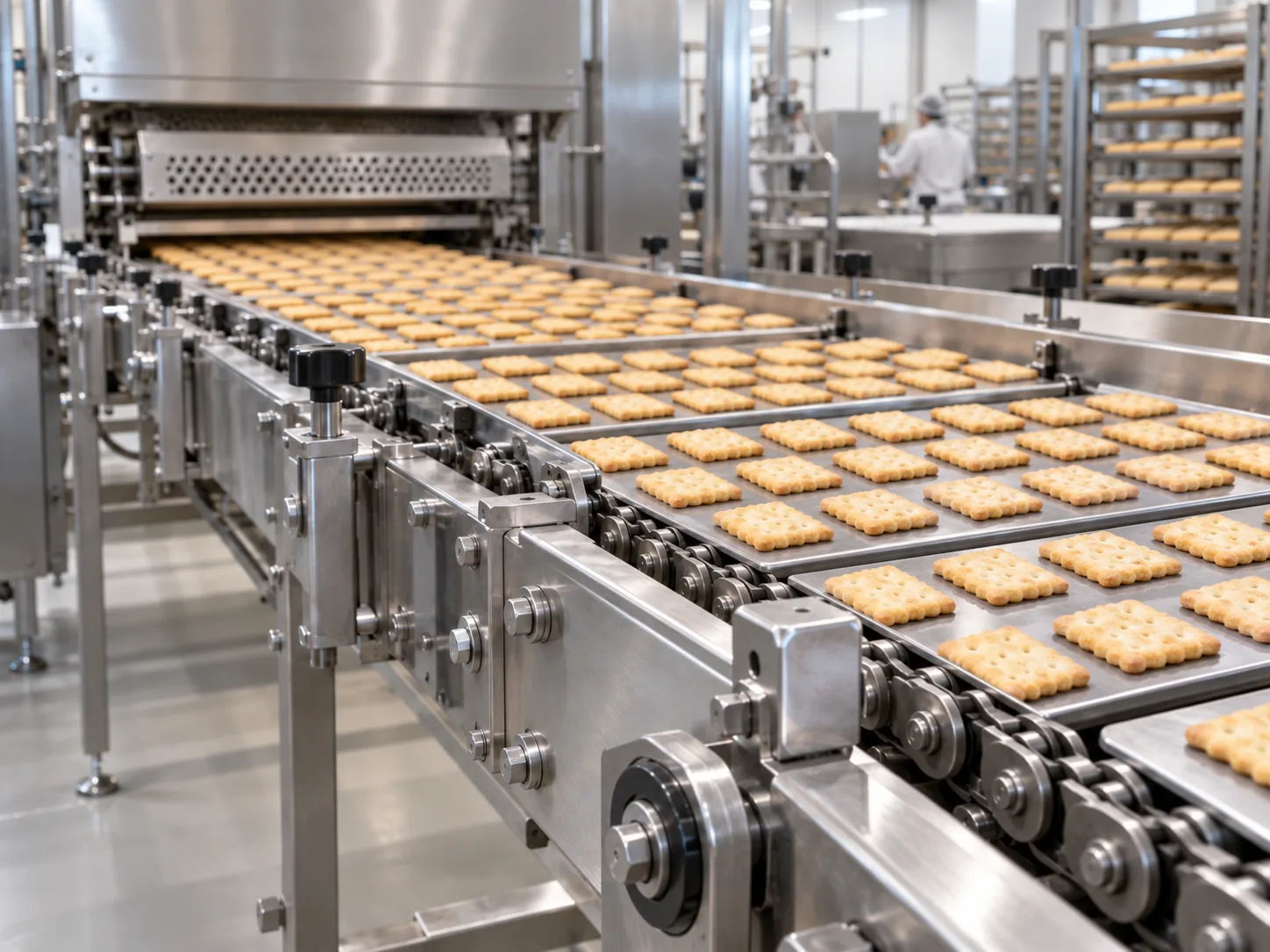
The same chain geometry can behave differently in a humid proofer, a hot oven, an ambient cooling section or a washdown area. For chain design for frequent cleaning, document the exact machine zone, whether the chain carries product directly or moves pans/fixtures, and whether the joint sees heat, moisture, cleaning chemicals or abrasive residue.
تساعد بيانات العملية في تحديد الخصائص الثابتة عن طريق التبادلية والخصائص التي يجب مراجعتها للتطبيق - مثل المواد أو الخلوص أو طريقة تصنيع الملحقات.
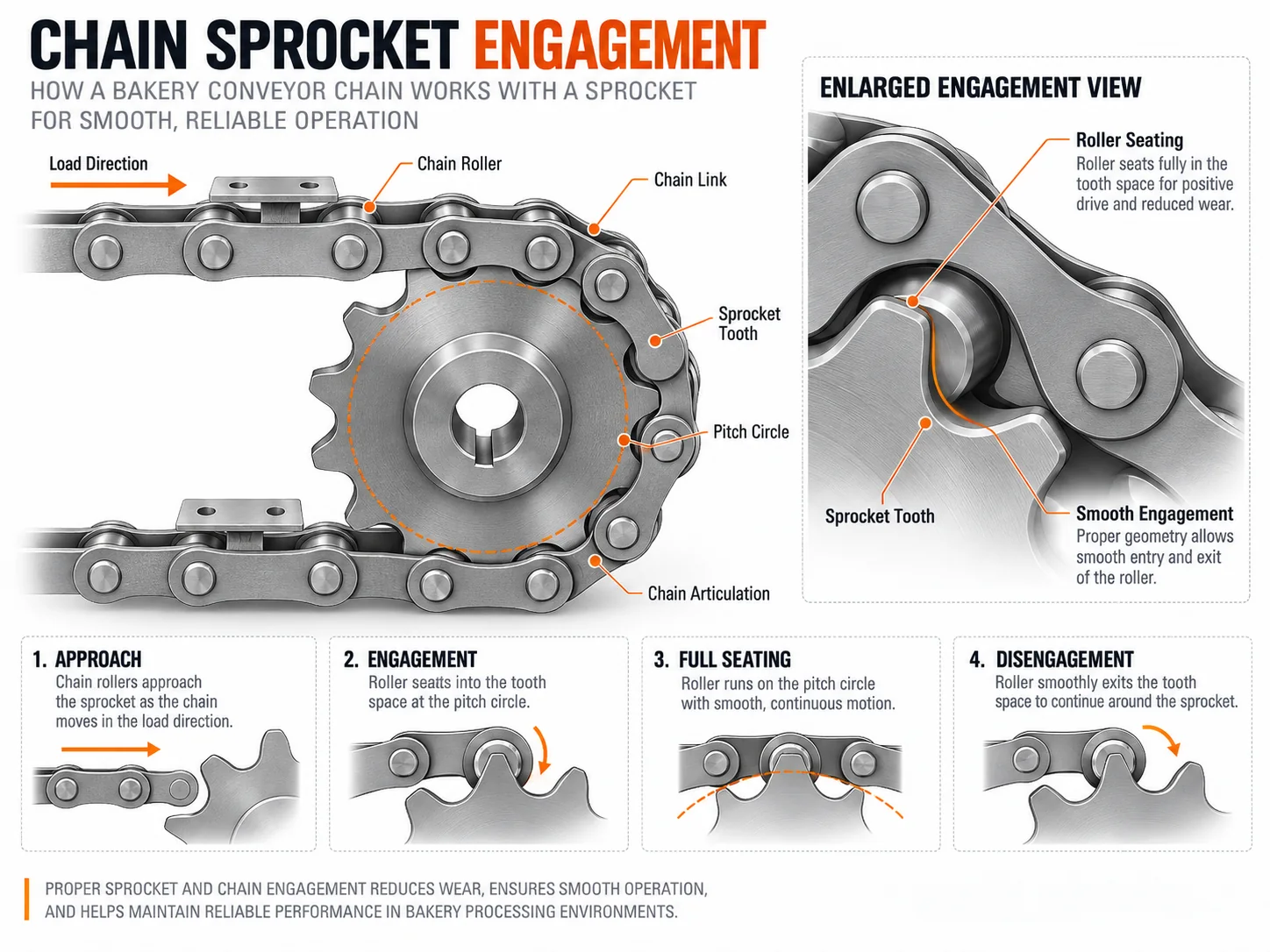
لا تعمل السلسلة بشكل مستقل. يجب أن تدخل البكرات أو البطانات وتخرج من فراغات أسنان العجلة المسننة بسلاسة، بينما تدعم مسارات التوجيه السلسلة دون إجبارها على الانحراف الجانبي. يمكن أن تؤدي الأسنان المعقوفة، أو عدم محاذاة العمود، أو العجلات المسننة اللامركزية، أو مسار التوجيه الضيق إلى تآكل السلسلة الجديدة بسرعة.
افحص المسار الكامل عبر دائرة كاملة. إذا تكرر التلف في نفس موقع الآلة، فافحص الدعم المحلي أو النقل أو الحامل قبل افتراض أن السلسلة نفسها معيبة.
الخطوة، والعرض، والبكرة/الجلبة، والدبوس، واللوحة، والعرض الكلي، ونمط التثبيت.
درجة الحرارة، الرطوبة، الغسيل، السرعة، الحمولة، ساعات الإنتاج وبدايات التشغيل.
العجلات المسننة، والموجهات، ومراكز السلسلة، والشد، والمحاذاة، وخلوص الحامل.
وافق على الشكل الهندسي النهائي المطلوب، والمواد، والتكوين المعتمد على التطبيق قبل التثبيت.
اسأل عن التغييرات التي طرأت قبل ظهور المشكلة: معدل الإنتاج، وزن المنتج أو المقلاة، دورة التنظيف، مادة التشحيم، درجة الحرارة، فترة الصيانة، أو التروس المسننة المستبدلة. معلومات الاتجاهات أكثر قيمة من صورة واحدة لأنها توضح ما إذا كان التآكل منتظمًا أم مركزًا.
أثناء الفحص الدوري، ابحث عن الوصلات المتصلبة، وتآكل البكرات، وحركة الدبابيس، والملحقات المتشققة أو المنحنية، والتلامس الجانبي غير الطبيعي، وعدم انتظام عملية السحب. حافظ على وسائل الحماية وإجراءات السلامة وفقًا لمتطلبات مالك الآلة.
أدرج الأبعاد المقاسة، واسم الآلة/العملية، والصور، والرسم إن وجد، وكمية السلسلة أو طولها المطلوب، وفترة التثبيت، والمسافة بين مركز السلسلة، ومعلومات العجلة المسننة، ودرجة الحرارة، وحالة الغسيل، والحمولة، وفترة التسليم المستهدفة. راجع دليل اختيار سلسلة المخابز و نظرة عامة على عائلة المنتجات لاتخاذ القرار التالي.
A useful diagnosis starts with evidence that can be repeated by a second person. designing the chain and carrier interface so cleaning access does not undermine joint performance. Record cleaning frequency, spray direction, chemistry, drainage path, joint exposure and re-lubrication practice. When the chain is worn, note which readings may be influenced by joint clearance or deformation, and prefer multi-pitch or multi-point measurements over one isolated dimension.
The chain does not operate by itself. In sanitary bakery transfer and washdown conveyors, inspect the sprockets, guides, return path, take-up and carrier interface at the same time. The symptom to watch is trapped residue, corrosion pockets, washed-out lubricant or slow drying. A local problem that repeats at one machine position often points to alignment, clearance or mating-hardware issues rather than a uniform chain problem.
The practical decision is to review cleanability, drainage and lubrication recovery as part of the original chain specification. That prevents a common error: changing chain tension, material or size before the root constraint has been identified. Use the chain drawing and the machine envelope together, because a configuration that looks correct in isolation can still interfere with a guard, transfer plate, sensor bracket or carrier.
صف دورة التشغيل بدقة بدلاً من استخدام صفة واحدة مثل "ساخن" أو "رطب" أو "مناسب للأغذية". حدد درجة الحرارة العادية والقصوى عند الاقتضاء، ومستوى الرطوبة أو التعرض للتنظيف، والسرعة، وسلوك التشغيل/الإيقاف، وقيود التشحيم. تحدد هذه التفاصيل ما إذا كانت هناك حاجة لتغيير الخلوصات أو المواد أو ممارسات الصيانة مع بقاء الشكل الهندسي الأساسي ثابتًا.
| يفحص | لماذا يُعد ذلك مهماً؟ | ما الذي يجب إرساله أو التحقق منه؟ |
|---|---|---|
| تعريف | Confirm cleaning frequency, spray direction, chemistry, drainage path, joint exposure and re-lubrication practice. Use a measurement sequence that can be repeated after removal so the installed and bench readings can be compared. | رسم تخطيطي بالأبعاد، وصور توضح المقياس، وأي رسم أو رقم جزء قديم. |
| موقع المسار | Map where the chain runs through sanitary bakery transfer and washdown conveyors. Mark the exact location of trapped residue, corrosion pockets, washed-out lubricant or slow drying instead of reporting the condition only as a whole-line problem. | صورة توضيحية تُظهر قسم الناقل، ومواقع القيادة/الذيل، ومسار العودة. |
| أجزاء التزاوج | افحص شكل السن، وموضع البكرة، ومحاذاة العمود/الترس، وتلامس الدليل، واحتياطي الشد. قد تُسبب هذه الأجزاء أنماط تآكل تُحاكي مشكلة في اختيار السلسلة. | عدد أسنان العجلة المسننة والصور، وتخطيط الدليل وموضع الشد الحالي. |
| مسار التحميل | Identify how product carriers, pans, rods or fixtures transfer load into the chain. For this topic, the key focus is designing the chain and carrier interface so cleaning access does not undermine joint performance. | رسم الحامل، وفترة التثبيت، والمسافة بين مركز السلسلة، والكتلة/القوة المدعومة حيثما كانت معروفة. |
| بيئة | سجّل درجة الحرارة والرطوبة وعمليات الغسيل والتلوث وقيود التشحيم لكل منطقة من مناطق الآلة. افصل التعرض المستمر عن فترات الذروة القصيرة أو عمليات التنظيف. | ملخص ظروف التشغيل وممارسات الصيانة/التشحيم. |
| يطلق | The final engineering action is to review cleanability, drainage and lubrication recovery as part of the original chain specification. The approved drawing should distinguish fixed interchange dimensions from selectable options. | cleaning SOP summary, chain geometry, materials, lubrication restrictions and photos. |
A uniform change along the whole strand suggests a different mechanism from damage concentrated at one sprocket, guide or transfer. For Chain Design for Frequent Cleaning, compare left/right sides and loaded/return paths. The distribution of wear can reveal whether the driver is joint wear, side loading, contamination, thermal change or a carrier that is forcing the chain out of its natural path.
Increasing tension can temporarily change noise or tracking without correcting the underlying cause. If the observed issue is trapped residue, corrosion pockets, washed-out lubricant or slow drying, first confirm alignment, take-up geometry and articulation. Excessive tension can add bearing load and make a marginal guide or attachment problem worse.
يمكن لمعدات المخابز أن تنتقل بين حالات الإنتاج والتنظيف والإيقاف. قد تعمل السلسلة بشكل طبيعي وهي باردة، وتصبح مشدودة عند تسخينها، أو قد تعمل بحرية أثناء الإنتاج ولكنها تتآكل بعد عمليات إيقاف متكررة في بيئة رطبة. سجّل الحالة التي يظهر فيها العطل حتى يُعالج الإجراء التصحيحي المُختار دورة التشغيل الفعلية.
For an unknown chain, one close-up is not enough. Pair a complete machine-zone image with side and end views of several pitches, a sprocket-engagement photo and a clear attachment/carrier view. Place a scale only where it does not hide the feature being measured. This photo set makes designing the chain and carrier interface so cleaning access does not undermine joint performance easier to evaluate remotely.
Record cleaning frequency, spray direction, chemistry, drainage path, joint exposure and re-lubrication practice, chain centers, sprocket tooth count and the carrier interface before changing components.
Describe what happens in sanitary bakery transfer and washdown conveyors, including temperature or moisture changes, speed, load and cleaning/lubrication constraints.
Document where trapped residue, corrosion pockets, washed-out lubricant or slow drying appears. Compare drive, tail, loaded run, return run and transfer points rather than averaging the entire conveyor.
Include cleaning SOP summary, chain geometry, materials, lubrication restrictions and photos. State the required quantity or chain length and any documentation needed with the order.
Review pitch, widths, pin/roller geometry, attachments and material notes on one controlled drawing revision. For Chain Design for Frequent Cleaning, the release decision should explicitly address designing the chain and carrier interface so cleaning access does not undermine joint performance.
بعد التركيب، راقب دورة كاملة واحدة على الأقل، وتحقق من دخول/خروج الترس وخلوص الحامل، وأعد فحص الشد وفقًا لإجراءات الشركة المصنعة للآلة. لا تستخدم سلسلة جديدة لتعويض الأجزاء البالية أو غير المحاذية.
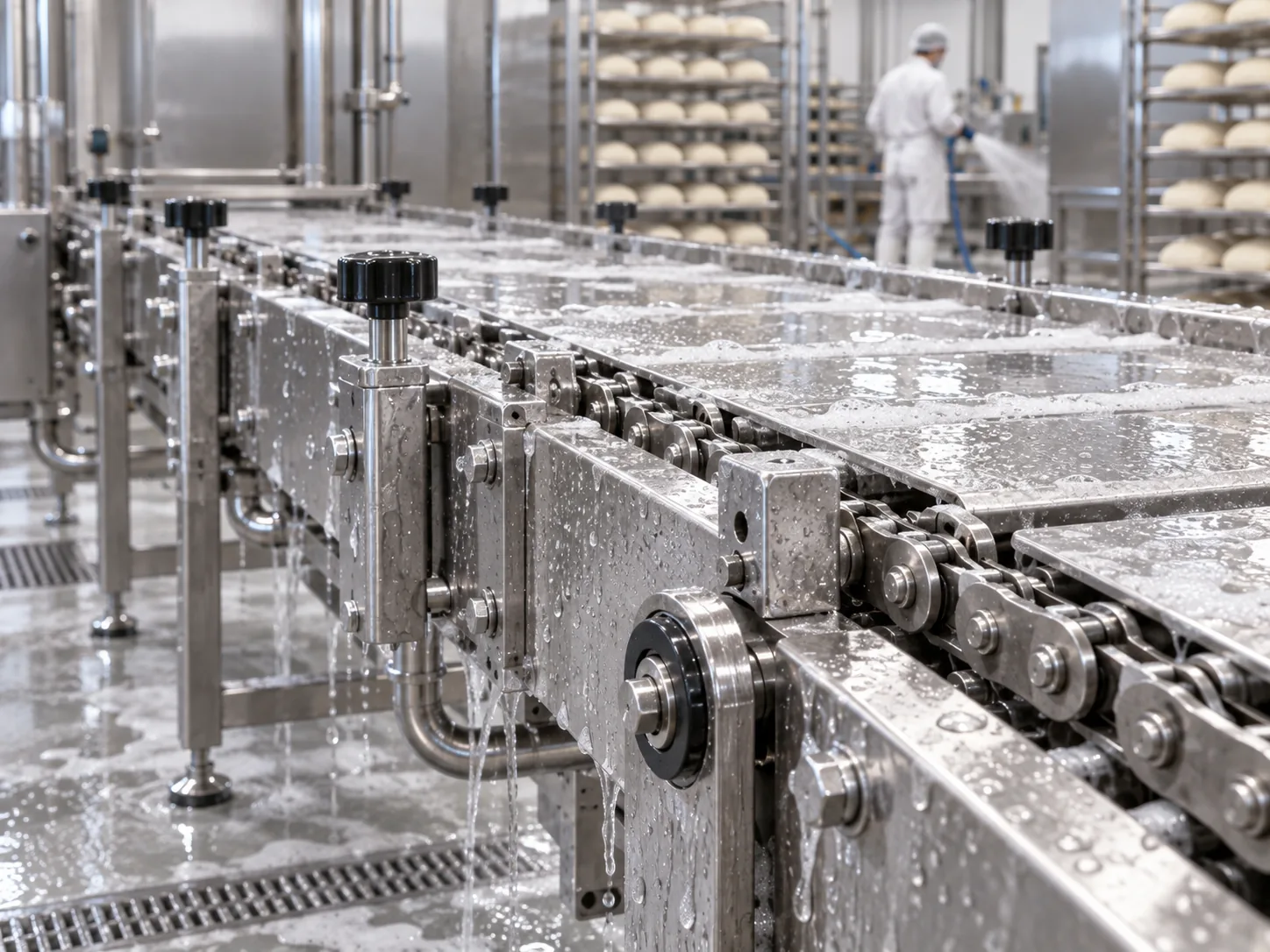
The main reason to keep this process structured is that designing the chain and carrier interface so cleaning access does not undermine joint performance interacts with more than one component. A change that improves one symptom can shift load into another part of the mechanism. For example, correcting guide alignment may reduce side wear but also expose a take-up setting that was previously compensating for the misalignment. Record changes one at a time so the result can be interpreted.
For planned maintenance, compare the present condition with a baseline whenever one exists. If there is no baseline, create one during the next shutdown: photograph the sprockets and guide surfaces, record take-up position, measure a defined number of pitches, and note the chain’s location in sanitary bakery transfer and washdown conveyors. Repeating the same observations later is more informative than relying on general statements such as “the chain has stretched.”
عند توفر رسم تخطيطي موجود، تحقق من تطابق الأجهزة المُثبّتة معه. غالبًا ما تُجرى تعديلات على معدات المخابز خلال فترة استخدامها: فقد تُصلح الحوامل، وتُنقل قضبان التوجيه، وتُستبدل العجلات المسننة، وتُغيّر فترات التثبيت. يبقى الرسم التخطيطي مفيدًا، لكن التحقق الميداني يمنع اعتبار أي وثيقة تاريخية دليلًا على التكوين الحالي.
Procurement and engineering should use the same evidence package. The RFQ should not separate commercial quantity from technical context: cleaning SOP summary, chain geometry, materials, lubrication restrictions and photos. This makes it possible to judge whether a standard series, a modified attachment or a custom replacement is the appropriate route without creating unnecessary back-and-forth.
Finally, treat the website as a preparation tool rather than the controlling product drawing. Measurements and diagrams narrow the family and help organize the RFQ; the released drawing defines the ordered configuration. That distinction is especially important where trapped residue, corrosion pockets, washed-out lubricant or slow drying could have more than one mechanical cause.
Use Chain Design for Frequent Cleaning as a machine-level question, not just a chain inspection. Compare the loaded and return runs, drive and tail ends, and any transfer or carrier transition in sanitary bakery transfer and washdown conveyors. Document whether trapped residue, corrosion pockets, washed-out lubricant or slow drying is distributed along the strand or repeats at one location. That pattern helps separate progressive joint wear from alignment, guide, sprocket or carrier problems that a new chain alone will not correct.
The working record should include cleaning frequency, spray direction, chemistry, drainage path, joint exposure and re-lubrication practice. Mark which values are fixed by the existing machine and which values can be changed to improve service. The central engineering focus is designing the chain and carrier interface so cleaning access does not undermine joint performance. When a legacy part number conflicts with field measurements, hold the RFQ until the installed interface and the controlled drawing can be reconciled.
A useful enquiry combines commercial quantity with the technical package: cleaning SOP summary, chain geometry, materials, lubrication restrictions and photos. Also state whether the request is a direct replacement, a planned modification or a new machine design. The release objective is to review cleanability, drainage and lubrication recovery as part of the original chain specification. This reduces quote revisions and prevents a visually similar chain from being treated as interchangeable before geometry and duty have been checked.
استخدم المرجع القديم إن وُجد، ولكن تحقق من هندسة التركيب وحمل التشغيل. قد تؤدي تعديلات الماكينة أو عمليات الاستبدال السابقة أو التآكل إلى عدم اكتمال رقم القطعة وحده.
استخدم قياسًا متعدد الخطوات عبر عدد عملي من الوصلات وسجل الطريقة. قارنها بالخطوة الاسمية وحدود صيانة الآلة بدلاً من الاعتماد على قياس واحد للوصلة المجاورة.
عند وجود تآكل في الأسنان، أو انحناءات، أو مشاكل في المحاذاة، أو تآكل مبكر متكرر للسلسلة، تعمل السلسلة والترس كنظام تعشيق.