产品描述
关于工厂
超过 18年历史我们是专业的锻造产品制造商,生产锻造链条(X348 X458 X658 X678 X698 F100 F160)、刮板链(10160、14218、14226、142N)、输送小车(X348、X458、X678、XT160)和驱动链(X348、X458、X678)等标准链条模具。
此外,我们还可以根据您的图纸或样品,根据客户的特殊要求生产特殊链节、推杆、销钉和板件。
产品描述
1) Material: Alloy steel, 20Cr, 45# steel and so on.
2) Types: X348 X458 X678 XT160, and so on. (Or as per your drawing)
3) Process: Moulding→Forging→Polishing & Blasting→Fine machining→Heat treatment→Blasting→Inspecting & testing→Assemly→Packing
产品展示
技术数据
| 模型 | Forging Parameter (mm) | 重量(公斤) | Single-point Load (Kg) | Allowable Load (Kg) | Limit Load (Kg) | ||||||||||
| Type | P | H | A | B | C | D | E | F | G | K | |||||
| X348-1 | A | 100 | 64 | 102 | 14 | 40 | 60 | 4° | 47.8 | 6 | 84 | 1.5 | 100 | 1100 | 1800 |
| X348-2 | B | 100 | 64 | 102 | 14 | 40 | 60 | 3° | 47.8 | 6 | 82 | ||||
| X348-3 | C | 100 | 64 | 122 | 16 | 40 | 60 | 6° | 47.8 | 6 | 94 | ||||
| X458-1 | A | 126 | 79 | 138 | 18 | 54 | 82 | 4° | 54 | 9.5 | 113 | 1.8 | 200 | 1800 | 3600 |
| X458-2 | A | 127 | 80 | 138 | 18 | 56 | 82 | 4° | 54 | 9.5 | 113 | ||||
| X458-3 | A | 130 | 83 | 138 | 18 | 54 | 82 | 4° | 54 | 9.5 | 113 | ||||
| X458-4 | B | 128.6 | 81 | 134.5 | 18 | 54 | 81 | 3° | 54 | 9.5 | 101.5 | ||||
| Extended Trolley | A | 150 | 103 | 138 | 18 | 54 | 82 | 4° | 54 | 9.5 | 113 | ||||
| X678-1 | / | 136 | 89 | 146 | 18 | 86 | 82 | 4° | 54 | 9.5 | 114 | 3.2 | 600 | 5000 | 7700 |
| X678-2 | / | 134.5 | 87.5 | 142 | 18 | 86 | 82 | 4° | 54 | 9.5 | 106 | 2.8 | 550 | 4500 | 7200 |
| XT160-1 | / | 171 | 103 | 180 | 26 | 84 | 120 | 6° | 70 | 15 | 140 | 9.7 | 750 | 4000 | 8000 |
| XT160-2 | / | 170 | 102 | 174 | 26 | 86 | 120 | 4° | 70 | 15 | 148 | 8.8 | 700 | 3500 | 7500 |
| X348-1 Reverse | / | 83 | 42 | 105 | / | 40 | 60 | / | 48 | 10 | / | 1.35 | 100 | 1100 | 1800 |
| X348-2 Reverse | / | 86 | 45 | 93 | / | 40 | 60 | / | 48 | 10 | / | 1.35 | 100 | 6 | 1800 |
| X458 Reverse | / | 95 | 44 | 120 | / | 54.5 | 60 | / | 54 | 10 | / | 2.5 | 200 | 1800 | 3600 |
产品及测试设备
产品应用
包装与配送
为什么选择我们?
1. 我们从事链条行业超过15年,拥有丰富的市场经验。我们不断改进生产技术。所有产品使用寿命更长,并通过了市场检验。
2. 我们可以根据您的要求或链条应用,设计出采用优质材料、具有良好耐磨性、良好耐腐蚀性、高强度等特性的合适链条。
3. 我们是链条生产厂家;您可以直接从我们这里购买价格低廉、质量优良的产品。
4. 我们拥有一支专业的国际贸易团队,他们经验丰富,随时准备为客户解决问题。所以您无需担心。
5. We have the long-term cooperative forwarder who can give us the lowest freight. And it can help you to save the freight. What’s more, for the FCL, we will design the packages as per the container sizes with the largest capacity to save the shipping cost for both of us
|
运费:
每件商品预计运费。 |
To be negotiated |
|---|
| 材料: | 合金 |
|---|---|
| 结构: | Combined Chain |
| 表面处理: | 抛光 |
| 示例: |
US$ 5/Set
1 Set(Min.Order) | 订购样品 |
|---|
| 定制化: |
可用的
| 定制请求 |
|---|
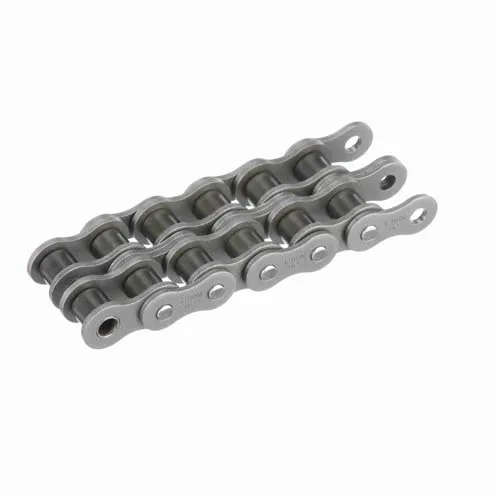
选择低维护成本的输送链需要考虑哪些因素?
选择低维护成本的输送链时,应考虑以下几个方面:
1. 材料选择:
– 选择由耐磨、耐腐蚀和抗污染材料制成的输送链。不锈钢、塑料或自润滑链因其耐用性和低维护需求而被广泛使用。
2. 免润滑设计:
– 选择具有自润滑设计或预先使用减摩材料润滑的输送链,这样可以减少摩擦,无需额外润滑。这有助于最大限度地减少与定期润滑相关的维护工作。
3. 密封结构:
– 考虑使用密封结构的输送链,以防止灰尘、碎屑和湿气进入。密封链条所需的清洁和维护频率更低,因此非常适合低维护应用。
4. 易于清洁:
– 选择易于清洁的输送链。光滑的表面、开放式的结构和易于检修的部件可以实现快速高效的清洁,从而减少维护时间和精力。
5. 抗污染能力:
– 选择耐污染的输送链。这包括耐受化学品、油污、油脂以及其他常见于应用环境中的物质。耐污染的输送链需要的清洁和维护频率更低。
6. 佩戴监测:
– 选择带有磨损监测功能的输送链,例如磨损指示器或传感器。这些功能有助于识别链条磨损情况,并提供及时的维护警报,从而实现主动更换或调整。
7. 厂商支持:
– 考虑链条制造商提供的支持。信誉良好的制造商会提供维护周期、更换计划方面的指导,并提供技术支持,以确保链条的正常运转。
通过考虑这些因素,您可以选择低维护成本的输送链,从而最大限度地减少频繁检查、润滑、清洁和更换的需求,进而减少维护工作量和成本。
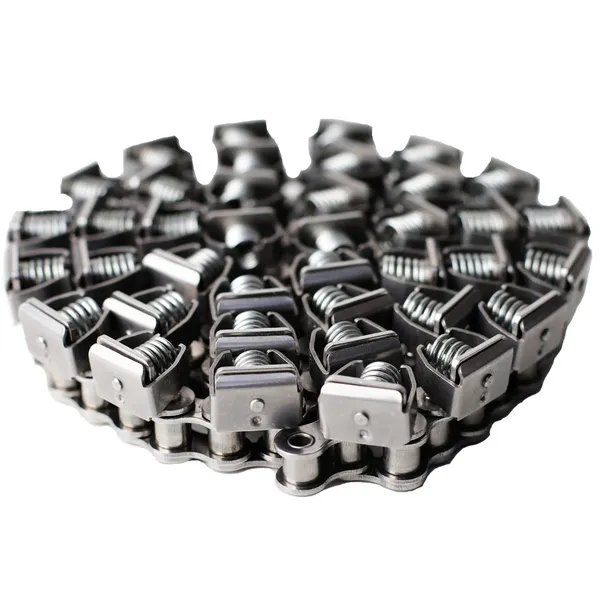
How do you calculate the power requirements for a conveyor chain?
Calculating the power requirements for a conveyor chain involves considering various factors. Here’s a step-by-step process:
1. Determine the total weight to be transported: Measure or estimate the total weight of the material or product that will be carried by the conveyor chain. This includes the weight of the product itself, any packaging, and additional loads.
2. Determine the speed of the conveyor: Determine the desired speed at which the conveyor chain will operate. This is typically measured in feet per minute (FPM) or meters per second (m/s).
3. Calculate the required capacity: Multiply the total weight by the desired speed to determine the required capacity of the conveyor system. This will give you the weight per unit of time (e.g., pounds per minute or kilograms per hour).
4. Consider the conveyor’s design factors: Take into account various design factors such as the type and pitch of the conveyor chain, the coefficient of friction between the chain and the conveyor components, and any incline or decline angles of the conveyor system. These factors affect the power requirements.
5. Determine the required power: Use the following formula to calculate the power requirements:
Power (in horsepower) = (Capacity × Friction Factor) ÷ (33,000 × Efficiency)
Where:
– Capacity is the weight per unit of time (from step 3)
– Friction Factor is the ratio of chain tension to chain weight, taking into account the design factors
– 33,000 is a conversion factor to convert the units to horsepower
– Efficiency is the overall efficiency of the conveyor system, typically expressed as a decimal value (e.g., 0.95 for 95% efficiency)
6. Select a suitable motor: Based on the calculated power requirements, select a motor that can provide the necessary power to drive the conveyor chain. Consider factors such as motor type, motor efficiency, and overload capacity.
It’s important to note that the power requirements may vary depending on specific conveyor system designs and operating conditions. Consulting with a qualified engineer or conveyor manufacturer is recommended to ensure accurate calculations and proper motor selection.

Can a conveyor chain be used in high-temperature environments?
Yes, conveyor chains can be designed and used in high-temperature environments, but it depends on the specific type of chain and the temperature range involved. Here are some key considerations:
- Material Selection: Conveyor chains for high-temperature applications are typically made from heat-resistant materials such as stainless steel or alloy steels that can withstand elevated temperatures without significant degradation.
- Lubrication: Proper lubrication is essential in high-temperature environments to minimize friction and wear. Special high-temperature lubricants are available that can withstand the operating temperatures and provide effective chain lubrication.
- Chain Design: Chains used in high-temperature environments may have specific design features to accommodate thermal expansion and minimize the risk of binding or seizing. These can include increased clearances, special joint designs, or heat-resistant coatings.
- Temperature Limitations: Each conveyor chain has a maximum temperature limit specified by the manufacturer. It is important to consider this limit and ensure that the operating temperature does not exceed it to maintain the integrity and performance of the chain.
- Proper Maintenance: Regular inspection and maintenance are crucial in high-temperature applications. This includes monitoring chain wear, lubrication levels, and any signs of heat-induced damage or degradation.
However, it is important to note that the suitability of a conveyor chain for high-temperature environments ultimately depends on the specific operating conditions, including the temperature range, duration of exposure, and the application requirements. It is recommended to consult with the chain manufacturer or an experienced engineer to select the appropriate chain and ensure its safe and reliable operation in high-temperature environments.


editor by CX 2023-08-03