Correntes para câmaras de fermentação • Correntes para fornos de padaria • Correntes de aço inoxidável • Correntes de fixação • Correntes com pino oco • Substituição personalizada • Correntes para câmaras de fermentação • Correntes para fornos de padaria • Correntes de aço inoxidável • Correntes de fixação • Correntes com pino oco • Substituição personalizada
Descrição do produto
|
Produto
|
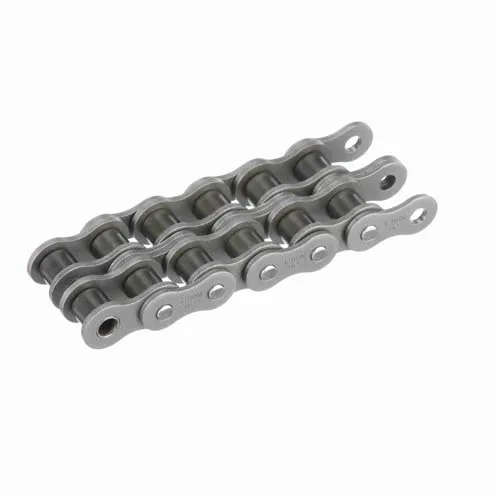
Standard Double Pitch Roller chain
|
|
Material
|
Aço 40Mn, aço inoxidável 304, aço inoxidável 316 e aço inoxidável 201.
|
|
Types
|
Standard chains and special chains, such as A or B series chains, roller chains, driving chains, conveyor chains, hoisting chains, agricultural chains, sprockets, gears, wheels and so on.
|
|
Series
|
A series(12.7-50.8mm pitches),B series (9.525-50.8mm pitches)and the heavy series.
|
|
Short pitch precision roller chain
|
Correntes de rolos e correntes com buchas Simplex:
04C-1,06C-1,085-1,08A-1,10A-1,12A-1,16A-1,20A-1,24A-1,28A-1,32A-1,36A-1,40A-1,48A-1
Correntes de rolos duplex e correntes com buchas:
04C-2,06C-2,085-2,08A-2,10A-2,12A-2,16A-2,20A-2,24A-2,28A-2,32A-2,36A-2,40A-2,48A-2
Correntes de rolos triplex e correntes com buchas:
04C-3,06C-2,085-3,08A-3,10A-3,12A-3,16A-3,20A-3,24A-3,28A-3,32A-3,36A-3,40A-3,48A-3
|
|
Chain link type
|
Standard links (without attachment) and non-standard links (with attachment).
A1: One-side,one hole cranked attachments.
A2: One-side,two holes cranked attachments.
K1: Both-side,one hole cranked attachments.
K2: Both-side,two hole cranked attachments.
D1: One-side,an extended pin on every outer link.
D3: One-side,two extended pin on every outer link.
|
|
Our Products Advantage
|
1. Every step from production order to the packing process has a strict quality inspection.
2. We have standard roller chain with 1.5 CZPT (DIN. ANSI.); Non-standard roller chain (customized acording to customer drawings).
3. Export products with high quality and low price.
4.We have a good service before and after-sale.
|
1.Fast delivery: Standard products can be delivered in as fast as 20 days
2.Good service: timely reply, prompt quotation, responsible for the product
3.High cost performance: can maintain price stability for a certain period of time, bringing greater profits to customers
4.Good quality: production and testing have corresponding supervision to ensure product quality and get high praise from customers
5.OEM service: products can be customized according to drawings and requirements
We are responsible for the ordered products. We are very confident in the products we produce. Of course, if you have any problems after receiving the goods, you can contact us directly. We will confirm and negotiate in time to solve your difficulties.
Custo do frete:
Frete estimado por unidade.
|
To be negotiated
|
| Material: |
Liga |
| Estrutura: |
Corrente de rolos |
| Tratamento de superfície: |
Polimento |
| Exemplos: |
US$ 35/kg
1 kg(Min.Order)
|
Solicitar amostra
|
| Personalização: |
Disponível
|
Solicitação personalizada
|

Can a conveyor chain be used in high-load applications?
Yes, a conveyor chain can be used in high-load applications. Conveyor chains are designed to withstand heavy loads and provide reliable and efficient material handling in various industries. Here’s a detailed explanation:
– Robust Construction:
A conveyor chain for high-load applications is typically constructed using durable materials such as alloy steel or stainless steel. These chains are designed to withstand the forces and stresses imposed by heavy loads without deformation or failure.
– High Load Capacity:
Conveyor chains for high-load applications are designed with larger and stronger components, including thicker plates, larger pins, and stronger attachments. These enhancements allow the chain to handle heavier loads and distribute the weight evenly across the chain’s links and rollers.
– Proper Selection:
When using a conveyor chain in high-load applications, it is crucial to select the appropriate chain type and size based on the specific load requirements. Factors such as the weight of the conveyed material, the conveyor speed, and the operating conditions should be considered during the selection process.
– Lubrication and Maintenance:
In high-load applications, proper lubrication and regular maintenance of the conveyor chain are essential. Adequate lubrication reduces friction and wear, ensuring smooth operation and extending the chain’s service life. Regular inspections and maintenance routines help identify any issues or wear that may affect the chain’s performance.
– Application-Specific Chains:
In some cases, specialized conveyor chains, such as forged link chains or roller chains, are used to handle extremely heavy loads. These chains offer enhanced strength and durability, making them suitable for demanding high-load applications.
Overall, a properly selected and maintained conveyor chain can reliably handle high-load applications, providing efficient and continuous material handling in industries such as mining, construction, automotive, and heavy manufacturing.
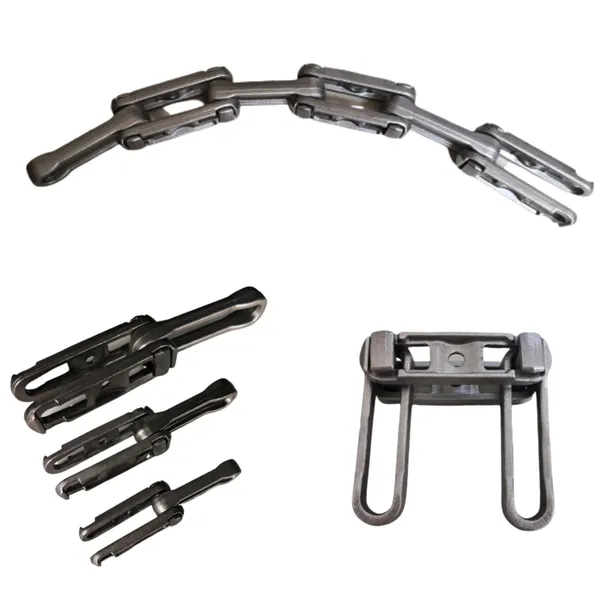
Como a lubrificação afeta o desempenho de uma corrente transportadora?
A lubrificação desempenha um papel crucial no desempenho e na vida útil de uma corrente transportadora. Uma lubrificação adequada ajuda a reduzir o atrito, o desgaste e a geração de calor, garantindo uma operação suave e minimizando o risco de falhas prematuras. Veja como a lubrificação afeta o desempenho de uma corrente transportadora:
1. Redução do Atrito: A lubrificação forma uma película fina entre os componentes da corrente, reduzindo o atrito entre as superfícies metálicas. Isso reduz a energia necessária para a operação, minimiza a geração de calor e evita o desgaste excessivo.
2. Prevenção do desgaste: A lubrificação forma uma camada protetora nos componentes da corrente, impedindo o contato direto metal com metal. Isso ajuda a reduzir o desgaste e prolongar a vida útil da corrente.
3. Proteção contra corrosão: Os lubrificantes geralmente contêm aditivos anticorrosivos que protegem a corrente contra ferrugem e oxidação. Isso é particularmente importante em ambientes com alta umidade ou exposição a substâncias corrosivas.
4. Redução de ruído: A lubrificação adequada reduz o ruído gerado durante a operação da corrente, minimizando o atrito e o contato metal-metal. Isso pode contribuir para um ambiente de trabalho mais silencioso e confortável.
5. Controle de temperatura: A lubrificação ajuda a dissipar o calor gerado durante a operação da corrente, evitando o aumento excessivo da temperatura. Isso é crucial em aplicações de alta velocidade ou serviço pesado, onde o calor pode levar ao desgaste acelerado e à redução do desempenho da corrente.
6. Manutenção e Vida Útil: A lubrificação regular e a seleção adequada do lubrificante são essenciais para manter o desempenho da corrente e prolongar sua vida útil. Uma lubrificação adequada reduz a necessidade de manutenção frequente, minimiza o tempo de inatividade e diminui os custos operacionais gerais.
É importante seguir as recomendações do fabricante quanto à frequência de lubrificação e usar o lubrificante apropriado para a corrente transportadora. Inspeções e verificações de manutenção regulares também devem ser realizadas para garantir os níveis adequados de lubrificação e solucionar quaisquer problemas prontamente. Práticas adequadas de lubrificação irão melhorar o desempenho, a confiabilidade e a durabilidade do sistema de corrente transportadora.
What safety precautions should be followed when working with conveyor chains?
Working with conveyor chains involves potential hazards, and it is essential to follow proper safety precautions to ensure the well-being of workers and prevent accidents. Here are some important safety measures to consider:
- Proper Training: Ensure that workers operating or maintaining conveyor chains receive proper training on safe practices, including chain handling, maintenance procedures, and emergency protocols.
- Personal Protective Equipment (PPE): Workers should wear appropriate PPE, such as safety glasses, gloves, and steel-toed shoes, to protect themselves from potential hazards, including flying debris, pinch points, or entanglement.
- Lockout/Tagout: Before performing any maintenance or repair tasks on conveyor chains, follow lockout/tagout procedures to isolate and de-energize the equipment to prevent accidental startup or release of stored energy.
- Guarding: Ensure that conveyor chains are adequately guarded to prevent access to moving parts, such as pinch points and rotating sprockets. Guards should be securely in place and not interfere with the chain’s operation.
- Housekeeping: Keep the work area clean and free of debris, tools, or other objects that could cause tripping hazards or interfere with the operation of the conveyor chain.
- Regular Inspections: Regularly inspect the conveyor chains for any signs of wear, damage, or misalignment. Address any issues promptly to prevent potential safety hazards.
- Safe Loading and Unloading: When loading or unloading materials onto the conveyor, follow safe lifting techniques and ensure the load is evenly distributed to prevent overloading or imbalance.
- Emergency Stop Devices: Install and clearly mark emergency stop devices along the conveyor system to enable immediate shutdown in case of an emergency or hazardous situation.
- Clear Communication: Establish clear communication protocols, including signals or signs, to ensure effective communication between workers operating different sections of the conveyor system.
These safety precautions are general guidelines, and it’s important to consult and adhere to specific safety regulations and guidelines provided by the equipment manufacturer and relevant safety authorities. Regular safety training, awareness, and a proactive safety culture are crucial in maintaining a safe working environment when working with conveyor chains.


editor by CX 2023-08-18
 Portuguese