Descrizione del prodotto
Descrizione del prodotto
Product name: Hardware Stainless Steel Link Chain
Raw material: SS304
Standard: DIN763, DIN766,Korean standard link chain, US type standard link chain, Japanese standard,, ASTM80 standard link chain etc.
Surface: Self color
Usage: hanging, rigging
Size: 2mm-12mm
| Product name: | 304/316 stainless steel link chain |
| Specification: | 5mm |
| Materiale: | 304/ 316/ carbon steel/ CHINAMFG request |
| Misurare | M2-M12 |
| Certification | ISO, BV, GB, JIS, ASTM, CE |
| Utilizzo: | Lifting, drag, connecting, construction etc. |
| Minimum order quantity: | 500 meters |
| Delivery time: | 15 days after receving deposit |
| Packing: | carton, pallet |
| Payment terms: | L/C, T/T, Paypal etc. |
Product Parameters
Detailed Photos
FAQ:
Q1, Can I get a sample of stainless steel wire ropes?
Yes, we welcome sample orders!
Q2, How can you guarantee your quality?
We employ high quality raw materials from famous steel company. We have ISO,CE certificates to prove our qualities. A third inspection is acceptable.
Q3, How do you ship the goods and what about the delivery time?
For small quantities, we use express like TNT, DHL, FedEx etc., which takes about 3-5 days. For mass quantities, we usually transport by ship, normally it takes about 10~30 days depending on quantity.
Q4, What’s your payment method?
We accept L/C, TT, Paypal and other regular payment method of foreign trade transaction.
Q5, Does your company has any MOQ for stainless steel wire ropes?
Low MOQ, 1 piece for sample checking is acceptable.
/* 22 gennaio 2571 19:08:37 */!function(){function s(e,r){var a,o={};try{e&&e.split(“,”).forEach(function(e,t){e&&(a=e.match(/(.*?):(.*)$/))&&1
| Utilizzo: | Transmission Chain, Drag Chain, Conveyor Chain, Dedicated Special Chain |
|---|---|
| Materiale: | acciaio inossidabile |
| Trattamento superficiale: | Lucidatura |
| Caratteristica: | Fire Resistant |
| Dimensioni della catena: | 1/2"*3/32" |
| Struttura: | Catena saldata |
| Esempi: |
US$ 1/Meter
1 Meter(Min.Order) | |
|---|
| Personalizzazione: |
Disponibile
| Richiesta personalizzata |
|---|
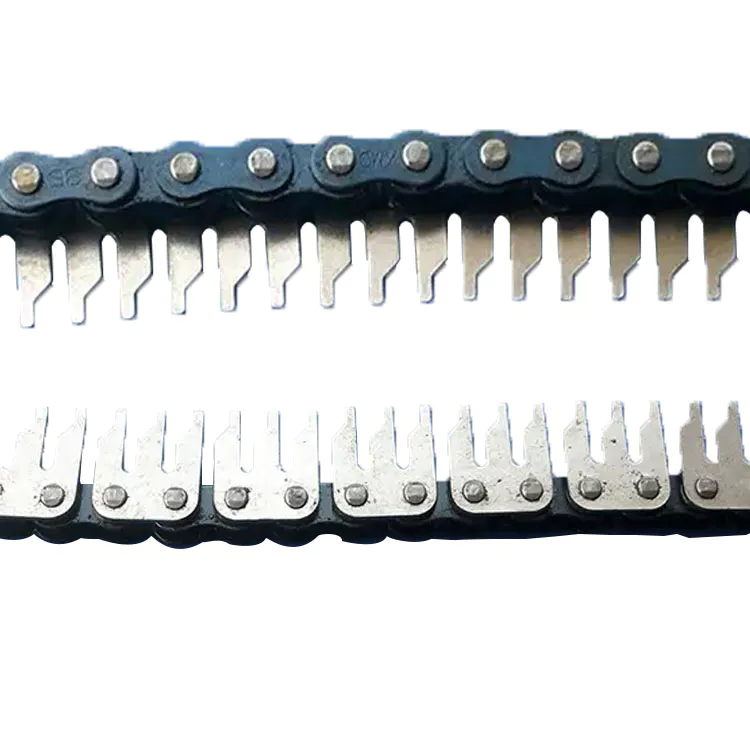
Can a conveyor chain be used in automotive assembly lines?
Yes, a conveyor chain can be effectively used in automotive assembly lines. Here are the reasons why:
1. Efficient Material Handling:
– Conveyor chains provide a reliable and efficient means of transporting automotive components and parts along the assembly line. They can handle heavy loads and withstand the demanding requirements of automotive manufacturing.
2. Versatility:
– Conveyor chains offer versatility in terms of design and configuration. They can be customized to accommodate various assembly processes, such as body welding, painting, assembly, and final inspection.
3. Precise Positioning:
– Conveyor chains allow precise positioning and synchronization of automotive components, ensuring accurate assembly and alignment during the production process. This helps maintain consistent quality and reduces errors.
4. Automation Integration:
– Conveyor chains can be easily integrated with automation systems in automotive assembly lines. They can work in conjunction with robotic arms, vision systems, and other automated equipment to optimize the production process and improve efficiency.
5. Assembly Line Flexibility:
– Conveyor chains provide flexibility in terms of line configuration and layout. They can be designed to accommodate different assembly line layouts, including straight sections, curves, inclines, and declines, to meet the specific requirements of automotive assembly processes.
6. Space Optimization:
– Conveyor chains help optimize space utilization in automotive assembly plants. They can be designed to navigate around existing equipment and infrastructure, making efficient use of available floor space.
7. Safety:
– Conveyor chains are designed with safety features to protect operators and prevent accidents. Emergency stop controls, guarding, and interlocking mechanisms ensure the safe operation of the assembly line.
8. Increased Production Speed:
– By using conveyor chains, automotive assembly lines can achieve higher production speeds, allowing for faster manufacturing cycles and increased output.
Overall, conveyor chains play a crucial role in enhancing the efficiency, productivity, and safety of automotive assembly lines, contributing to the smooth and streamlined production of vehicles.

Quali sono i fattori da considerare nella scelta del passo di una catena di trasporto?
Nella scelta del passo di una catena di trasporto, è necessario considerare diversi fattori per garantire prestazioni ed efficienza ottimali. Ecco i fattori chiave:
1. Capacità di carico: Il passo della catena del trasportatore deve essere scelto in base alla capacità di carico prevista del sistema. Considerare il peso e le dimensioni dei materiali trasportati per assicurarsi che la catena possa gestire il carico richiesto senza superare la sua capacità.
2. Velocità e applicazione: La velocità di funzionamento del sistema di trasporto e l'applicazione specifica influiscono sulla determinazione del passo. Velocità più elevate possono richiedere catene con passo più piccolo per garantire un funzionamento fluido e affidabile.
3. Lunghezza del trasportatore: La lunghezza del sistema di trasporto influisce sulla scelta del passo della catena. I trasportatori più lunghi possono richiedere catene con passo maggiore per distribuire il carico e ridurre la tensione sui singoli anelli della catena.
4. Vincoli di spazio: Considerare lo spazio disponibile per il sistema di trasporto. Nelle applicazioni con spazio limitato, si possono preferire catene a passo ridotto per minimizzare l'ingombro complessivo del trasportatore.
5. Usura e manutenzione: nella scelta del passo delle catene è necessario considerare anche l'usura prevista e le esigenze di manutenzione. Le catene a passo più piccolo offrono spesso una maggiore resistenza all'usura e possono richiedere lubrificazione e manutenzione meno frequenti.
6. Regolazione della velocità: Se il sistema di trasporto richiede la regolazione della velocità o un posizionamento preciso, la scelta del passo deve essere compatibile con le capacità di controllo del sistema di azionamento. Le catene con passo più piccolo offrono un controllo e una precisione maggiori.
7. Compatibilità: Assicurarsi che il passo selezionato sia compatibile con gli altri componenti del sistema di trasporto, inclusi pignoni, guide e accessori. Devono essere progettati per funzionare insieme in modo fluido ed efficiente.
8. Ambiente di applicazione: Considerare le condizioni ambientali in cui il trasportatore opererà. Fattori come temperatura, umidità, sostanze corrosive o materiali abrasivi possono influenzare la scelta del passo e del materiale della catena per garantire durata e longevità.
Tenendo conto di questi fattori, è possibile selezionare il passo appropriato per la catena del trasportatore, garantendo prestazioni ottimali, durata e funzionamento affidabile del sistema.
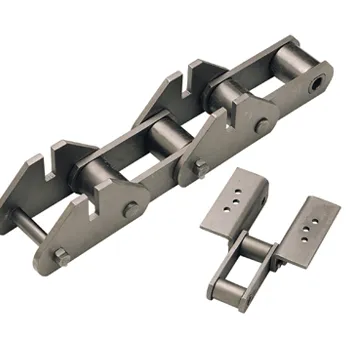
What are the industry standards and regulations for conveyor chains?
In the field of conveyor chains, there are several industry standards and regulations that help ensure safety, performance, and quality. Some of the commonly recognized standards include:
1. ISO 1977:2013 – Conveyor chains, attachments, and sprockets: This International Organization for Standardization (ISO) standard specifies the requirements and dimensions for various types of conveyor chains, attachments, and sprockets used in general industrial applications.
2. ANSI/ASME B29.1 – Precision Power Transmission Roller Chains, Attachments, and Sprockets: This American National Standard Institute (ANSI) standard provides guidelines for the design, dimensions, and performance of roller chains, attachments, and sprockets used in power transmission systems, including conveyor chains.
3. CEMA – Conveyor Equipment Manufacturers Association: CEMA publishes various standards and technical documents related to conveyor systems, including conveyor chains. These standards cover topics such as safety, design, installation, maintenance, and operation of conveyor equipment.
4. OSHA – Occupational Safety and Health Administration: OSHA is a regulatory agency in the United States that sets and enforces safety standards for workplaces. They have specific regulations related to conveyor systems, including requirements for guarding, maintenance, and employee safety.
5. Local and National Building Codes: Depending on the location and application, there may be specific building codes or regulations that dictate the design, installation, and operation of conveyor chains. These codes ensure compliance with safety and structural requirements.
It’s important for conveyor chain manufacturers, system integrators, and end-users to adhere to these industry standards and regulations to ensure the safe and reliable operation of conveyor systems. Compliance with these standards helps to maintain worker safety, promote system performance, and ensure compatibility and interchangeability of conveyor chain components.


editor by CX 2024-05-03