Produktbeschreibung
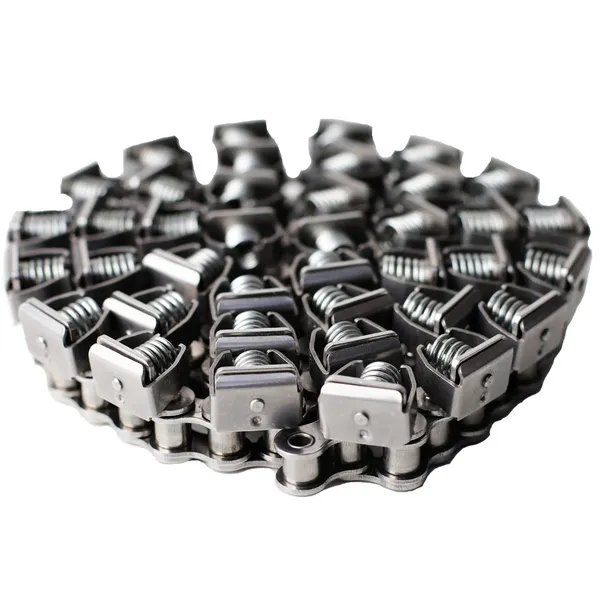
Made-to-Order Stainless Steel Chain / Alloy Carbon Steel Conveyor Grip Chains
Produktbeschreibung
1. Material: Stainless steel chain / Alloy Carbon Steel
2. Surface Treatment: Zinc-Plated / Nickel-Plated / Dacromet-Plated
3. Short pitch stainless steel conveyor chain with attachments.
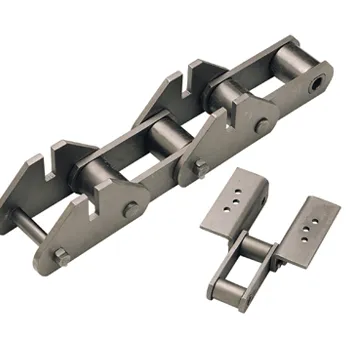
4. Double pitch stainless steel conveyor chain.
5. Double pitch hollow pin chain.
Note: If you have drawing or samples, we can do the special conveyor chains.
| Product name | Grip Conveyor Chain (08B) |
| Materials Available | 1. Stainless Steel: SS304, SS316, etc |
| 2. Alloy Steel: 45Mn, 42CrMo, etc | |
| 3. OEM according to your request | |
| Surface Treatment | Shot peening, Polishing, Oxygenation, Blackening, Zinc-plated, Nickel-plated, Anodized, etc. |
| Characteristic | Fire Resistant, Oil Resistant, Heat Resistant |
| Application | Mainly used in products transmission |
| Design criterion | ISO DIN ANSI & Customer’s Drawing |
| Size | Customer’s Drawing & ISO standard |
| Package | Wooden Case / Container and pallet, or made-to-order |
| Certificate | ISO9001: 2008 |
| Advantage | First quality, Best service, Competitive price, Fast delivery |
| Delivery Time | 20 days for samples. 45 days for official order. |
View more products,please click here…
Company Profile
/* 22. Januar 2571 19:08:37 */!function(){function s(e,r){var a,o={};try{e&&e.split(“,“).forEach(function(e,t){e&&(a=e.match(/(.*?):(.*)$/))&&1
| Material: | Stainless Steel |
|---|---|
| Struktur: | Conveyor Chain |
| Oberflächenbehandlung: | Oil Blooming |
| Kettengröße: | Ts635 |
| Besonderheit: | Heat Resistant |
| Sample: | for Free |
| Proben: |
US$ 0/Meter
1 Meter(Min.Order) | |
|---|
| Anpassung: |
Verfügbar
| Kundenspezifische Anfrage |
|---|
How do you calculate the chain pull force in a conveyor chain system?
The chain pull force, also known as the chain tension, is an important parameter to determine in a conveyor chain system. It represents the force required to move the conveyed load along the conveyor. The calculation of chain pull force involves several factors:
1. Weight of the Load: Determine the weight of the load being conveyed. This includes the weight of the product, packaging materials, and any additional equipment or components carried by the conveyor.
2. Friction Coefficients: Identify the friction coefficients between the load and the conveyor components. This includes the friction between the product and the conveyor chain, as well as the friction between the product and the conveyor bed or guides. These coefficients are typically provided by the manufacturer or can be obtained through testing.
3. Incline or Decline Angle: Consider the angle at which the conveyor operates. If the conveyor has an incline or decline, the angle will affect the force required to move the load.
4. Acceleration and Deceleration: Account for any acceleration or deceleration requirements in the conveyor system. If the conveyor needs to start or stop abruptly or if there are changes in speed, these factors will impact the chain pull force.
Once these factors are determined, the chain pull force can be calculated using the following formula:
Chain Pull Force = (Weight of Load + Friction Force) × (1 + Incline or Decline Factor) × (1 + Acceleration or Deceleration Factor)
It’s important to note that the accuracy of the calculation depends on the accuracy of the input values. Therefore, it’s recommended to consult the conveyor manufacturer or an engineering professional to ensure precise calculations and proper sizing of the conveyor chain.

How does a conveyor chain contribute to overall production efficiency?
A conveyor chain plays a crucial role in enhancing overall production efficiency in various industries. Here are the ways in which it contributes to efficiency:
1. Continuous Material Flow: A conveyor chain enables continuous and uninterrupted material flow from one point to another. It eliminates the need for manual handling or transportation of goods, reducing downtime and delays in production processes.
2. Increased Throughput: By automating material handling, a conveyor chain enables faster and more efficient movement of goods. It allows for higher throughput and production rates, maximizing the utilization of resources and reducing cycle times.
3. Improved Productivity: With a conveyor chain, employees can focus on value-added tasks rather than manual material handling. This leads to improved productivity as workers can concentrate on more skilled and critical operations.
4. Efficient Resource Allocation: A well-designed conveyor chain system optimizes the utilization of space, allowing for efficient layout and organization of production areas. It helps in streamlining workflow and minimizing wastage of resources such as floor space, manpower, and equipment.
5. Quality Control: Conveyor chains can be integrated with inspection stations or automated processes to ensure quality control at various stages of production. This helps in detecting and rectifying any defects or inconsistencies, reducing the chances of faulty products reaching the market.
6. Reduced Material Handling Costs: By eliminating or minimizing manual material handling, a conveyor chain reduces labor costs associated with transportation, lifting, and carrying of goods. It also minimizes the risk of injuries or accidents related to manual handling.
7. Flexibility and Adaptability: Conveyor chains can be customized to suit specific production requirements. They can be designed to accommodate different types of products, handle various load capacities, and adapt to changes in production demands. This flexibility allows for seamless integration with existing production systems and easy scalability.
8. Safety and Ergonomics: Conveyor chains incorporate safety features such as guards, emergency stop buttons, and interlocks to ensure worker safety. They also promote ergonomic practices by reducing physical strain on workers and minimizing the risk of musculoskeletal injuries.
Overall, a well-designed and properly maintained conveyor chain system enhances production efficiency by optimizing material flow, increasing throughput, improving productivity, reducing costs, ensuring quality control, and prioritizing worker safety.
Welche Wartungsanforderungen gelten für eine Förderkette?
Die Instandhaltung einer Förderkette ist unerlässlich für ihren reibungslosen Betrieb und ihre lange Lebensdauer. Hier sind einige wichtige Wartungsanforderungen für eine Förderkette:
- Regelmäßige Reinigung: Reinigen Sie die Förderkette regelmäßig, um Schmutz, Ablagerungen und Verunreinigungen zu entfernen, die zu Kettenverschleiß und Leistungseinbußen führen können. Verwenden Sie geeignete Reinigungsmittel und Werkzeuge, um Beschädigungen der Kette zu vermeiden.
- Schmierung: Schmieren Sie die Förderkette gemäß den Herstellerangaben mit dem empfohlenen Schmiermittel. Die Schmierung trägt dazu bei, Reibung zu verringern, Verschleiß zu minimieren und Korrosion vorzubeugen.
- Spannungseinstellung: Überprüfen Sie regelmäßig die Spannung der Förderkette und passen Sie diese gegebenenfalls an. Die richtige Spannung gewährleistet einen reibungslosen Betrieb und verhindert Probleme wie Kettenrutschen oder übermäßigen Verschleiß.
- Inspektion: Führen Sie regelmäßige Inspektionen der Förderkette durch, um Anzeichen von Verschleiß, Beschädigungen oder Fehlausrichtung zu erkennen. Achten Sie auf Probleme wie verschlissene Kettenräder, Längung, verbogene oder beschädigte Kettenglieder und lose Verbindungen. Beheben Sie alle Probleme umgehend, um Folgeschäden zu vermeiden.
- Verschleißteile ersetzen: Sind einzelne Komponenten der Förderkette, wie Glieder, Bolzen oder Kettenräder, übermäßig verschlissen oder beschädigt, müssen sie ausgetauscht werden. Die Verwendung verschlissener Komponenten kann die Leistungsfähigkeit der Kette beeinträchtigen und zum Ausfall führen.
- Ausrichtung: Stellen Sie die korrekte Ausrichtung der Förderkette sicher, indem Sie die Ausrichtung von Kettenrädern, Tragrollen und anderen Komponenten überprüfen. Eine falsche Ausrichtung kann zu ungleichmäßigem Verschleiß führen und das Risiko eines Kettenbruchs erhöhen.
- Ausbildung und Weiterbildung: Sorgen Sie für eine angemessene Schulung des Personals, das für den Betrieb und die Wartung der Förderkette verantwortlich ist. Es sollte die Wartungsanforderungen, Sicherheitsvorschriften und bewährten Verfahren kennen, um einen effektiven und sicheren Betrieb zu gewährleisten.
Die Einhaltung dieser Wartungsvorschriften trägt dazu bei, die Förderkette in optimalem Zustand zu halten, Ausfallzeiten zu minimieren und eine sichere und effiziente Materialhandhabung zu gewährleisten.


editor by CX 2024-04-03